
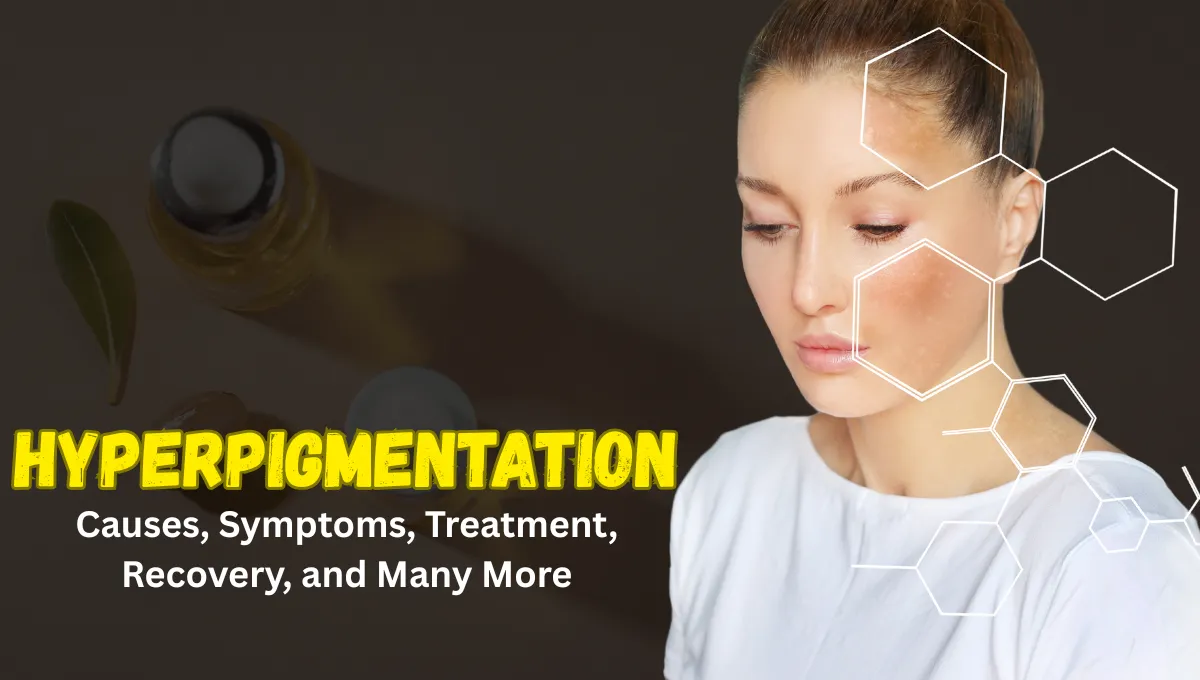

Have you ever gone in front of a mirror and realized that you had dark spots on your skin where there used to be none? You are not alone. Uneven skin color is among the most widespread skin issues across the globe. This is eithera trace of an old acne outbreak or some sun spots on your cheeks, but all these are referred to as hyperpigmentation. These dark areas, although normally harmless, may be quite irritating and may impact your confidence. The good news is, once you know the reason behind the problem, you are halfway to having the most visible and attractive skin. This guide will summarize all your knowledge about this condition in a simplified and professionally supported format. To learn more, head over to doctorfolk and explore the full guide with complete details.
Table of Contents
What is Hyperpigmentation?
The term hyperpigmentation is a general term. It refers to the areas of the skin that get darker in color in comparison to the normal skin around it. The basic mechanism through which it occurs is the deposition of melanin in the skin due to the excess of the pigment which is normally present in the human skin. It may occur in anyone regardless of skin and ethnicity, but it is commonly more severe in people of dark-coloured skin.
Consider your skin cells as mini-factories. Once these factories are damaged or overstimulated, they overdrive and spurt out excess pigments. This pigment forms clumps and this is what gives the dark spots you see on the surface. Although hyperpigmentation is not painful or irritating, it means that your skin is responding to an agent, whether it is UV rays from the sunlight or something happening in your body as you start to change hormones.
Types of Hyperpigmentation
Not everything is created in equal measure. Determining the type of condition you have is important in determining the selection of treatment adopted.
1. Age Spots (Solar Lentigines)
These are the most common ones; they are referred to as liver spots or sun spots. The effects of sun exposure cause them directly over time. This form of hyper pigmentation is usually observed on areas of the body that are the most exposed to the sun as in the case of your face and hands. They would be tiny, dark freckle-like spots but do not fade during the winter.
2. Melasma
Melasma is commonly described as enlarged spots of darkened skin. It is also commonly caused by hormonal variations, a fact that makes it very common in pregnancy (also known as the mask of pregnancy) or in women using birth control pills. This form of hyperpigmentation is typically based on the face, namely, on the cheeks, in the nose, on the forehead, and on the upper lip.
3. Post inflammatory Hyper pigmentation (PIH)
The PIH has happened to you, should you have ever had a pimple that left a dark spot on your face once it had healed. This happens due to the damage or swelling of the skin. Reasons are acne, eczema, psoriasis or even a scratch. In the process of healing, the skin is left with a flat spot of colorlessness. This problem may occur in any part of the body.
Read More About – Gond Katira: Uses, Recipes, and Health Benefits
What Causes Hyperpigmentation?
By knowing the triggers, you can be able to manage the condition. Although it involves genetics, a number of external and internal stimulates the production of melanin.
- Sun Exposure: The first one is the sun exposure. The UV rays activate melanocytes (pigment-producing cells) in order to defend the skin. This protection is not evenly spread over time and this results in hyperpigmentation.
- Inflammation: Since the skin is damaged through cuts, burns, acne, or harsh chemical treatments, any of these events may lead to inflammation. The skin heals and the skin produces excess pigment.
- Hormones: The overproduction of melanin by the skin upon being exposed to the sun can be induced by estrogen and progesterone. This is the chief cause of hyperpigmentation of the melasma type.
- Medications: Antimalarials, chemotherapy drugs, and some antibiotics are some drugs that have hyper pigmentation as a side effect.
- Medical Conditions: Cyclic conditions such as the generalized hyper pigmentation of the body, may be the result of more severe conditions such as Addison’s disease.
Symptoms: Recognizing Hyperpigmentation on Face and Body
Its primary manifestation is merely darkening of the skin. Nevertheless, the place can provide you with a hint related to the reason.
- Hyperpigmentation on Face: The face is the first area as it is in constant contact with the elements. In this case, melasma is presented in the form of symmetrical spots.
- Nose: Hyperpigmentation on Nose. Dark spots on the nose are mostly sun spots as the nose sticks out, hence it reflects more light.
- Hyperpigmentation on Hands: Age spots are major targets on the back of the hands because these are the areas of the hands that are exposed to the sun in the course of driving and daily activities.
- Hyperpigmentation on Body: Larger patches of darkening may be present on the neck, in the chest, or in the arms and these may be a result of the accumulation of sun damage or friction.
Effective Hyperpigmentation Treatment Options
Dark spots are time-consuming and laborious. No nighttime magic, but regular practice can be so tremendous.
Topical Treatments
The initial defense is normally a good hyperpigmentation cream or serum. The essential ingredients may include:
- Vitamin C: The potent antioxidant that inhibits the production of melanin and lightens the skin.
- Retinoids: These are derivatives of Vitamin A, which accelerate the process of turning over of cells; hence fades hyper pigmentation more quickly.
- Azelaic Acid: Excellent for all dark spots caused by acne; it lessens inflammatory conditions and the pigmentation.
- Hydroquinone: This is a powerful skin lightening product that doctors prescribe when other lightening agents fail to work.
- Niacinamide: Prevents the movement of colour to skin cells.
Cosmetic Procedures
To achieve quicker outcomes, dermatologists provide professional treatment suggestions for hyperpigmentation:
- Chemical Peels: These are applied using acids in order to shed off the uppermost layer of the skin making the skin underneath look fresher and even-toned.
- Laser Therapy: Laser treatments or Intense Pulsed Light (IPL) are aimed at the pigment and influence the pigment to disintegrate.
- Microdermabrasion: This is a physical exfoliation procedure that removes the skin on the surface.
Natural Remedies
Gentle home remedies are a relief for some people, but there is no uniform scientific evidence. Aloe vera has aloesin that can be used to reduce hyperpigmentation. Another natural ingredient that has gained a lot of popularity is licorice extract which is considered to prevent the enzyme that causes darkening.
Prevention Strategies
It is true that prevention is better than cure, and this applies to skin 100 per cent. Treatments will cost you a fortune, but they will not do you any good when you do not ensure that your skin is shielded against further damage.
- Sunscreen: This is Non-Negotiable: Wear at least SPF 30 that is a broad-spectrum one every day, even on a cloudy day. This eliminates the effect of UV rays to cause additional hyperpigmentation.
- Protective Clothing: Wear long sleeves and hats when going out in the intense sun.
- Don’t Pick: Picking at acne or scabs increases inflammation, which almost guarantees a dark mark will form.
Gentle Skincare: Avoid harsh scrubs that irritate the skin, as irritation can worsen hyperpigmentation.
Frequently Asked Questions
Ans. There isn’t one single “best” cream, but effective ones usually contain ingredients like hydroquinone, Vitamin C, retinoids, or kojic acid. Always take a prescription from a dermatologist.
Ans. Yes. For sensitive skin, ingredients like niacinamide and azelaic acid are often better tolerated than strong retinoids. Always take a prescription from a dermatologist.
Ans. The face requires gentle care. Use a daily Vitamin C serum in the morning and a retinol cream at night.
Ans. Absolutely. Hyperpigmentation on body parts is common, often from sun damage, insect bites, or friction.
Ans. The nose is a “high point” of the face and gets hit by the sun first. This makes hyperpigmentation on nose very common in the form of sun spots or freckles.
Ans. Common side effects include nausea, headache, dizziness, and loss of appetite. Always report any severe or bothersome side effects to your doctor promptly.
You must be logged in to post a comment.