
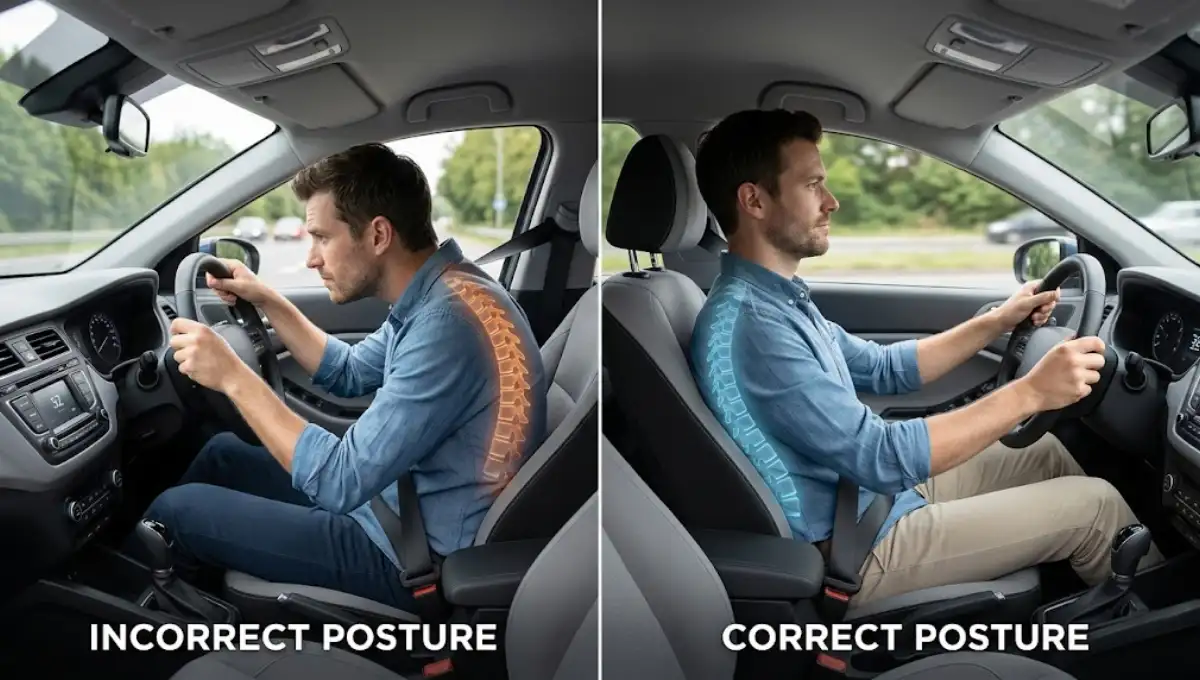

Driving is something that many people need to do in their day to day life, yet they are unaware of the level of influence it has on the spine. It may be a short trip or the long distance way but bad driving position may cause lower back pain, stiff back and eventual spinal problems inclusive.
That knowledge of how posture influences your body and these minor ergonomic changes would greatly negotiate comfort and avoid pains.
Table of Contents
Impact of Driving Posture on Lower Back
Your lower back (lumbar erect) supports most of the load in the long hours that you are sitting in the car. Sitting, forward bending, and bending forward reduce the stress on the spinal discs and muscle that enables the support.
Over time, this can lead to:
- Fatigue and stiffness of muscle.
- Heavy burden on the spinal discs.
- Poor spinal alignment
The reduction of this stress requires a neutral position of the spine when driving.
Common Back Issues Caused by Long Drives
Hardly the reason to have a lap supported by only improper hands-free gadgets, prolonged punches can also lead to a number of back-related issues:
Lower back pain: This is the most frequent problem as a result of constant pressure.
Sciatica- ache is the pain that will spread to the legs after back pain.
Muscle stiffness: Decreased action condition results in tight muscles.
Postural imbalance: Bad habits influence the whole body structure.
Reckless neglect of such initials might result in chronic pain and limited mobility.
Importance of Lumbar Support While Driving
Lumbar support would mean preserving the natural curve of the lower spine which is inward. The majority of car seats do not provide sufficient support forcing the spine to assume an unnatural position.
Why it matters:
- Maintains a good height of the spine.
- Lessens the tension of lower back muscles.
- Addiction prevents stooping during long drives.
- Enhances the general sitting ease.
One of best methods of spinal protection when driving is by wearing appropriate lumbar support.
Tools That Improve Driving Posture
Car Seat Cushion
A car seat cushion is an affordable ergonomic product that aims at making traveling comfortable and comfortable.
Benefits:
- Helps to maintain the healthy natural curve of the spine.
- Distributes the weight in the body.
- Lessens squash vine borne on the lower back and Hip.
- promotes upright sitting position.
It is particularly helpful with individuals who commute acutely or have to spend a lot of time driving.
Tips to Prevent Back Pain During Travel
Besides the application of ergonomic tools, healthy habits can also be adopted and remain comfortable:
Make the seat to suit the level of your knees or even lower than the level of your hips.
- Chair your back all the time against the seat.
- Get the steering wheel in the right position.
- Exercise by taking a break half an hour or two.
- Never feel like humping or bending to drive.
These habits are associated with great consistency which may help to reduce the risk of back pains considerably.
Conclusion
The posture of driving is also very important in the support of the spine. Long drives are the reason to have the long-term discomfort and some problems that cannot be eliminated, and they are all caused by the poor posture.
With the help of comfortable devices such as car seat cushions and with some easy posture guidelines, you can enhance comfort, safeguard your spine and ensure an injury-free drive in every journey.
FAQs
Driving posture affects how pressure is distributed along the spine. Poor posture increases strain on the lower back, leading to pain and discomfort over time.
Long drives involve prolonged sitting, limited movement, and often inadequate seat support, all of which contribute to lower back strain.
Lumbar support helps maintain the natural curve of the lower spine, reducing stress on muscles and preventing slouching.
A car seat cushion provides additional support, promotes proper alignment, and reduces pressure on the lower back, improving overall posture.
Common issues include lower back pain, sciatica, muscle stiffness, and postural imbalances.
Maintaining proper posture, adjusting your seat, taking regular breaks, and using ergonomic support tools can help prevent back pain effectively.
You must be logged in to post a comment.