
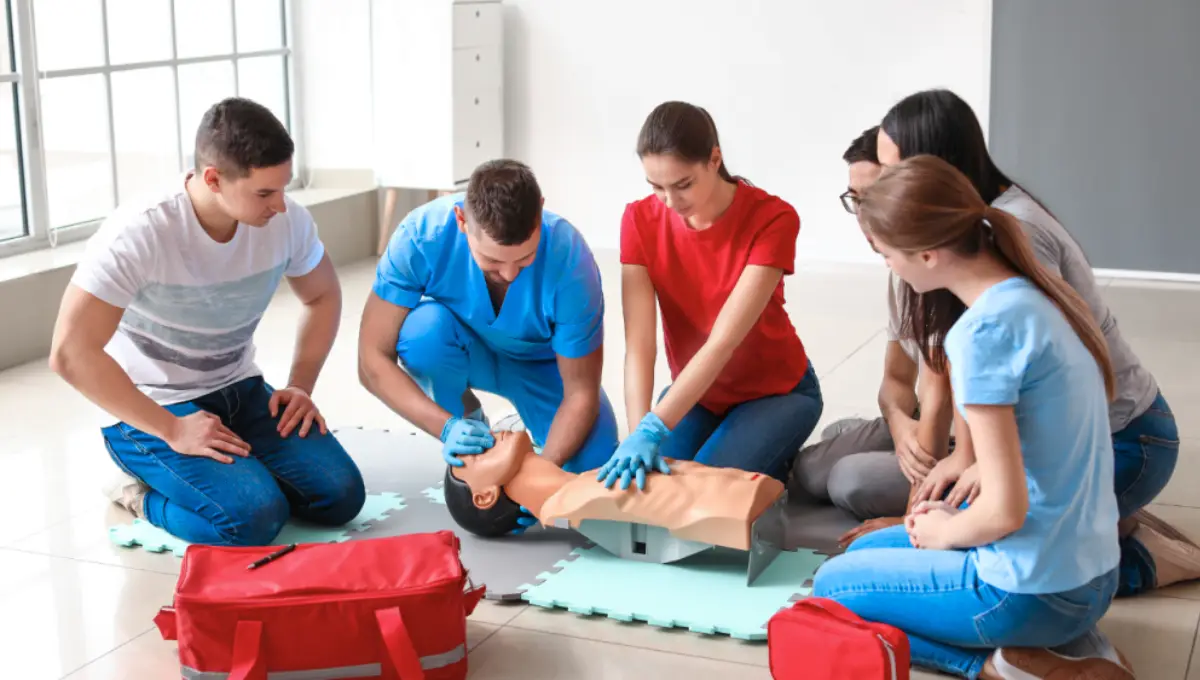

Online education has emerged as a current day solution to most forms of training, including life saving training such as CPR and First Aid. Nevertheless, the areas of the online certification continue to be full of myths to the people who might not know how good virtual learning can be. There is a lot of doubt in people concerning the efficiency of online CPR and First Aid classes as people do not believe that they can be as full and as trusted as real-life classes. In this paper, we will address some of the myths which are the most popular about online CPR and First Aid classes, and prove why this type of courses could be as useful as the conventional ones.
Table of Contents
Myth 1: Online CPR Classes Aren’t as Effective as In-Person Training
The falsehood that the online CPR and First Aid classes are inferior to the face-to-face training is one of the largest misconception people have regarding online courses. There are the opinions that virtual training does not give a hand-on experience to learn how to apply CPR or administer first aid in the field. Nonetheless, most of the online courses apply interactive tools such as videos, quizzes, and virtual simulations in ensuring that the learners understand the required skills and techniques.
Interactive Training Tools: The interactive online classes may need such phenomena as video demonstrations, detailed instructions, and practice scenarios so that the student can learn all the steps of the process.
Virtual Simulations: Virtual classes are simulations of CPR, on which students get to practice in real-time and experience the same advantages as it would in a physical course.
The fact is that the online courses of CPR and First Aid are focused on offering the same type of education and training with the bonus of flexibility and convenience.
Myth 2: Online CPR Classes Are Not Accredited
In other mythical beliefs, certification of CPR and First Aid online is not valid and accredited. This may be particularly worrying to medical workers or those who would have to qualify their qualifications to suit the requirements of the workplace. As a matter of fact, most online CPR and First Aid programs are accepted by well-known agencies like the American Heart Association or the Red Cross and your certification will not be questioned by employers or governmental agencies.
Certified Sites: Find those sites or courses that have been certified by a reputable body to have the certification.
State Recognition: A lot of states and healthcare organizations recognize certifications of accredited online courses as the valid evidence of the training on CPR and First Aid.
Thus, although a reliable platform should be selected, online certifications can be as valid as the ones received in real classrooms.
Myth 3: You Can’t Learn CPR Properly Without Physical Hands-On Practice
Other individuals believe online education about CPR is not enough since it does not offer the actual practical activities needed during situations of a cardiac arrest. Although it is true that it would be best to practice CPR on a mannequins or under the field setting, online learning in most cases offer detailed instructions that will enable the learners to do CPR correctly in the real world.
Blended Learning: A variety of online educational systems provide the hybrid learning opportunities where students might do the theoretical part of the education online and learn the practical skills at real classes.
Guided practice: To enable home practice, online CPR courses can frequently offer access to a series of educative videos that will show you the proper position of the chest compressions, and rescue breaths, as well as the proper techniques.
Thus, in as much as on-the-job experience is desirable, the online courses will see the learner well equipped to undertake CPR in an emergency event, without necessarily supervision.
Myth 4: Online CPR and First Aid Courses Are Too Short to Be Effective
Most individuals assemble that online courses in CPR and First Aid are shorter or less comprehensive than courses per se. They can be concerned that then they will not get the complete education they require. Nevertheless, the majority of online courses are structured to include all the necessary subjects in details, as it is in a face-to-face training.
Convenience in Learning Pace: Online students have a privilege to learn at pace; hence, students have time to learn the contents well before proceeding to the next part.
In-depth Materials: A good number of online CPR and First Aid courses present an enormous scope of material such as videos, resources to read and assessment, to make sure that the content is comprehensive and detailed.
The quality of an online course is not reduced by the length of time taken. These classes have been designed in a way that they offer a comprehensive grasp of CPR and First Aid without requiring one to take up a hectic program schedule.
Myth 5: Online CPR Classes Don’t Provide Certification
The other myth is that Internet based CPR training does not come with certification and an official credential. The issue that concerns many people is that once they pay money and time on an online course, they would not get a valid certificate. This is a myth that can be refuted quite easily with the majority of credible online CPR training programs issuing a certification at the end of the training, which can be printed out and submitted to employers or to regulatory agencies.
Immediate Certification: There are quite a number of online platforms that will give you your certificate immediately you have completed the course and any tests required.
Verification Options: There are also online courses which provide the employers with a chance to verify the authenticity of the certification of a student using the unique ID or a code.
Therefore, provided that you will make a well-selected and proven platform, you can be convinced that your online certification is as effective as one earned in an online classroom.
Conclusion
Although machines existed in the myths about the courses of https://cprcertificationnow.com, the fact is that it has one of the most effective and flexible courses with accreditation, which can be chosen by the person who wants to acquire life-saving skills. The courses will provide me with the tools and resources required to learn CPR and First Aid at my own pace, without compromising the quality of the education. Disproving these widely accepted myths, we will be able to make more people confident in having the necessary certification to be ready to act in the case of an emergency.
You must be logged in to post a comment.