
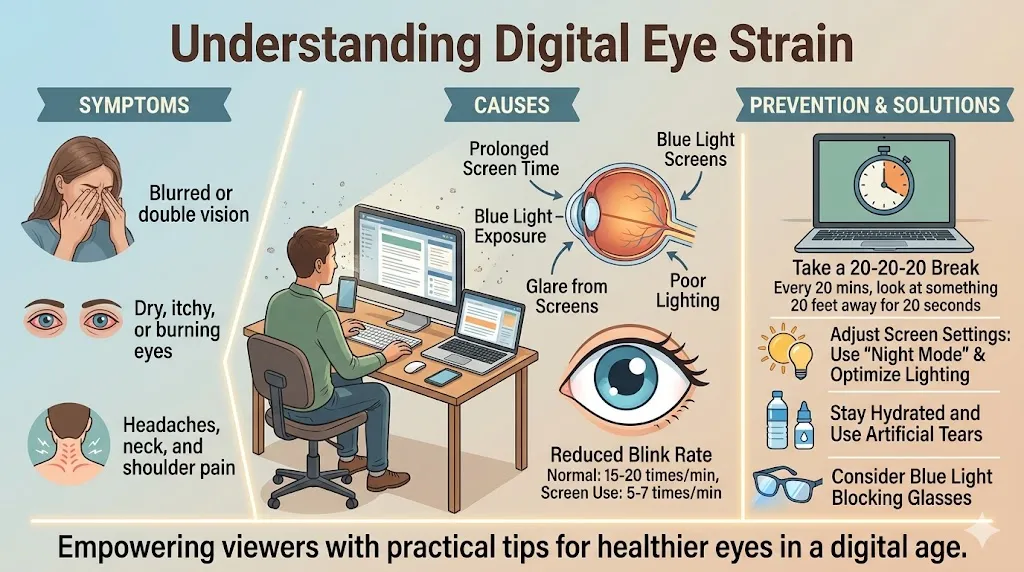

Modern life demands hours of continuous focus on digital displays. Whether navigating a demanding workday or winding down with a smartphone, your eyes bear the physical burden of this constant connectivity. Many individuals accept burning, dryness, and intermittent blurred vision as normal consequences of a digital lifestyle. However, these symptoms point to a distinct physiological shift in how the ocular surface interacts with its environment. Ignoring these early warning signs can lead to chronic discomfort and decreased visual acuity. Understanding the exact mechanical causes of digital eye strain is the first step toward protecting long-term vision health.
To maintain clarity and comfort, the human eye relies on a specialized, tri-layer liquid barrier known as the tear film. This microscopic barrier consists of an inner mucin layer that adheres to the cornea, a middle aqueous layer composed of water and electrolytes, and an outer lipid layer that prevents evaporation. Every blink replenishes this delicate system, distributing moisture evenly across the ocular surface.
When focusing on digital screens, human biology behaves differently. Studies show that the average blink rate drops by up to sixty percent during screen use, falling from fifteen blinks per minute down to five or six. Furthermore, these remaining blinks are frequently incomplete, meaning the eyelids do not fully meet. This drastic reduction in blinking deprives the ocular surface of crucial moisture.
Concurrently, typical office environments rely heavily on air conditioning systems. These units actively strip humidity from the air, creating a dry microclimate. When a low blink rate combines with low ambient humidity, the outer lipid layer of the tear film destabilizes. The underlying water layer evaporates at an accelerated rate, leaving behind high concentrations of salt. This hyperosmolar state triggers localized inflammation, surface friction, and the distinct burning sensation associated with severe eye strain.
Adjusting behavioral habits and environmental factors can significantly mitigate the drying effects of modern workspaces. To counteract the neuromuscular fatigue of prolonged close-up focus, practice the twenty-twenty-twenty rule. Every twenty minutes of screen time, shift your gaze to an object at least twenty feet away for a minimum of twenty seconds. This physical shift relaxes the ciliary muscle inside the eye, which remains continuously contracted during close-up reading. Looking into the distance resets the accommodative system and naturally triggers a deep, complete blink cycle to rehydrate the cornea.
The physical positioning of your workspace also influences tear evaporation rates. Position your digital display slightly below eye level, about twenty to twenty-six inches away from your face. Looking slightly downward narrows the eyelid aperture, exposing less corneal surface area to the drying effects of the air. Additionally, ensure that air conditioning vents, desk fans, or heating units are never blowing air directly toward your face. Redirecting airflow prevents the forced evaporation of your natural tear film.
Because indoor climate control systems actively remove moisture from the air, introducing a small ultrasonic humidifier to your immediate desk setup can alter the local microclimate. Raising the relative humidity of your personal workspace to between forty and fifty percent slows down the evaporation of the aqueous layer of your eye. This environmental adjustment supports the structural integrity of the tear film, even during periods of intense, low-blink focus.
When lifestyle adjustments alone cannot fully offset severe environmental dryness, direct physiological support becomes necessary. Flooding the eye with standard water-based drops often provides only fleeting relief, as unregulated fluids quickly wash away or further destabilize the fragile tear film balance. True recovery requires replicating the natural biochemical composition of human tears. The ocular surface needs specific electrolytes, such as potassium and sodium, to regulate osmotic pressure and maintain cellular volume.Without these minerals, corneal cells experience metabolic stress. Further, prolonged visual focus depletes cellular energy stores within the eye tissue. Incorporating targeted nutrients like Neostigmine Methylsulfate directly addresses this fatigue by improving the accommodation function of the focus muscles. For comprehensive relief from screen-induced dryness and redness, integrating Sato Pharm Dorama Neo eye drops into your daily self-care routine helps restore this critical biochemical equilibrium, stabilizing the tear film while delivering soothing nourishment to fatigued eyes.
You must be logged in to post a comment.