
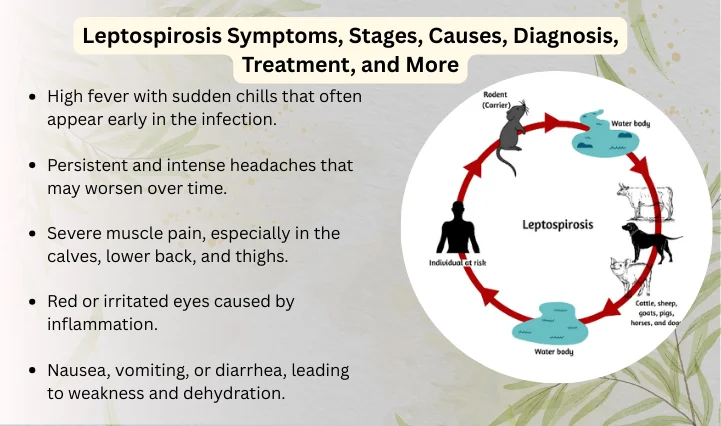

Leptospirosis is a bacterial infection caused by the Leptospira bacteria and is mainly spread to humans by the water, soil, or urine of diseased animals (usually rats) that are contaminated. Even though the illness is common in the tropics and during the rainy season, it may still occur anywhere. The problem with this disease is that the symptoms of leptospirosis are those of the flu, dengue, or viral fever in which are not diagnosed early enough. Here, we will elaborate on the major leptospirosis symptoms, risk factors, diagnosis, treatment and prevention guidelines in detail in this blog.
Table of Contents
What Is Leptospirosis?
Leptospirosis is an animal-to-human infection- which is a zoonotic infection. The bacteria grow in wet areas and penetrate the organism via cuts or scratches on the skin, eyes, nose, and mouth and by consuming contaminated water.
After getting in, the bacteria spread via blood vessels to other body organs like the liver, kidneys, the lungs and even the brain.
Leptospirosis Symptoms: A Total Breakdown
The symptoms differ according to the extent and stage of infection. There are two stages of leptospirosis:
- Acute or Septicemic Phase first 310 days.
- Immune or Severe Phase -1 2 weeks (in only a few instances)
Let us take a closer look at the symptoms of each stage.
Read More About – Chikungunya Symptoms: Early Signs, Stages & Diagnosis
1. Symptoms of the first stage of Leptospirosis (Mild Stage)
The vast majority of infected individuals have symptoms of flu-like syndrome, and it is hard to tell whether it is dengue, malaria or a viral fever. The symptoms may come out early 2-14 days after exposure.
The frequent initial symptoms are:
High Fever
It is one of the first signs, and, in most cases, it appears suddenly. Fever can rise up to 102–104°F.
Severe Headache
In the case of pain that is located behind the eyes, especially like the dengue headaches.
- Muscle Pain (Myalgia)
Intense pain in:
- Calves
- Lower back
- Thighs
This form of muscular disorder is a typical sign of leptospirosis.
Chills and Shivering
The fever is usually accompanied by recurring chills.
Nausea and Vomiting
As a consequence of liver involvement or just because of general infection.
Fatigue and Weakness
The bacteria multiply very fast leaving the individual very tired.
Eyes (Conjunctiva): Redness in eyes.
This is a peculiar symptom that is not common with viral fevers. The eyes appear:
- Red
- Irritated
- Watery
But non-purulent unlike conjunctivitis.
Abdominal Pain
Mild to moderate pains, which are occasionally confused with acidity.
Joint Pain
Can be similar to chikungunya or dengue.
2. Acute or Slow Leptospirosis Symptoms
Symptoms aggravate within days in case they are not treated. Moderate leptospirosis may present:
Rashes
Flat, reddish spots on the body.
Chest Pain
As a result of a lung involvement or bacterial inflammation.
Dry Cough
One might experience chronic cough.
Swollen Lymph Nodes
Indication of the immune reaction of the body to bacteria.
Anorexia and Polyuria
The symptoms are the indicators that the infection is progressing and requires the urgent medical treatment.
Read More About – Caripill Tablet: Uses, Dosage, Side Effects, Price & More
3. Severe Leptospirosis Symptoms (Weil’s Disease)
About 10-15% of the cases develop the infection into a severe form known as the Weil Disease that may be life-threatening.
Severe leptospirosis symptoms include:
- Skin and eyes are yellowish-white.
- Liver enlargement.
- Soft and painless hepatic heaves.
- Serious infection as liver damage.
Kidney Failure Symptoms
- Reduced urine output
- Swelling in feet and ankles
- Body fluid retention
- Severe Lung Problems
Severe Lung Problems
There are instances where leptospirosis causes:
- Difficulty breathing
- Coughing blood
- Acute respiratory distress syndrome (ARDS).
The presence of lung involvement is a great risk factor.
Read More About – Zifi 100 Syrup: Uses, Dosage, Side Effects & Safety Guide
Meningitis Symptoms
Bacteria are capable of infecting the brain and the spinal cord and result in:
- Stiff neck
- Severe headache
- Light sensitivity
- Confusion
Irregular Heartbeat
- As a result of swelling of heart muscles.
- Internal Bleeding
Indicated by:
- Blood in urine
- Bleeding gums
- Nosebleeds
- Bruises on the skin (petechiae)
Severe Dehydration
- Brought about by continual vomiting, diarrhea and fever.
Severe leptospirosis needs to be hospitalized and occasionally intensive care.
Leptospirosis Symptoms in Children
Children can exhibit relatively different symptoms:
- High fever
- Severe vomiting
- Rash
- Irritability
- Weakness
- Abdominal pain
- Loss of appetite
Leptospirosis Symptoms in Adults
Leptosprosis symptoms in adults are:
- Display flu-like symptoms and pains.
- Jaundice
- Kidney failure
- Difficulty breathing
- Low blood pressure
Adults need treatment as soon as they are infected.
What Is the Diagnosis of Leptospirosis Symptoms?
Doctors can combine to diagnose the leptospirosis symptoms include:
Blood Tests
To identify antibodies or the bacteria itself.
Kidney and Liver Function Tests
To determine organ damage.
Urine Samples
To identify the Leptospira bacteria.
Chest X-Ray
In case of suspicion of lung involvement.
Early detection is better for recovery.
Treatments of Leptospirosis Symptoms
1. Antibiotics
Optimal outcomes when initiated early. Common medicines include:
- Doxycycline
- Penicillin G
- Ceftriaxone (Monocef SB Injection)
- Amoxicillin
(To be taken only when medically prescribed).
Read More About – Clavam 625 Tablet: Uses, Side Effects, Price, Dosage, Composition
2. Hospitalization
Needed in severe cases for:
- IV fluids
- Electrolyte balance
- Ventilator assistance (in case of lung involvement)
- Kidney dialysis (renal failure)
3. Supportive Care
- It has medicine to treat fever, hydration and nutrition.
When Should You Visit a Doctor?
Consult emergency treatment in case of:
- High fever for more than 2–3 days
- Red eyes along with fever
- Vomiting and dehydration
- Severe muscle pain
- Yellowing of skin or eyes
- Reduced urine output
Prevention of Leptospirosis Symptoms
Here are the prevention of Leptospirosis:
- Do not walk on muddy water without shoes.
- Drink clean, boiled water
- Do not swim in polluted ponds or lakes.
- Cover up lacerations and head outside.
In the case of high-risk workers (farmers, sewage workers), preventive antibiotics can be prescribed occasionally.
Leptospirosis versus Dengue: Know the Difference
Knowledge of these differences aids in the diagnosis at an early stage.
| Feature | Leptospirosis | Dengue |
|---|---|---|
| Muscle Pain | Calf-focused | Whole body |
| Eye Symptoms | Redness without discharge | Pain behind eyes |
| Jaundice | Common in severe cases | Rare |
| Exposure | Contaminated water | Mosquito bite |
Summary
Leptospirosis, in short, is a bacterial infection that can turn fatal if it is not at the onset. It is good practice to know the leptospirosis symptoms to be able to distinguish in a situation of a fever and muscle pain and in an even more severe case of jaundice, renal failure, and pulmonary hemorrhage.
Leptospirosis can be well treated and prevented through good hygiene, proper protection and timely medical care in the rainy season.
You must be logged in to post a comment.