

A viral infection can be any kind of infection that is particularly related to a virus. According to science, a virus is a germ that is generally small in size, and it also takes advantage of your body cells to multiply itself to survive in the environment. In most cases, infections that occur in the human body are flu, stomach flu, cold, fever, HPV, COVID-19, and herpes simplex virus. All of them are counted as the most common that can easily occur in the human body if proper treatment or prevention is not used against them. Many infections fade away with time because of their over time weak effect. However, some viruses are quite deadly and cause serious problems if you, by any chance, ignore them. In this blog, we will talk more about symptoms, treatments, medicines, the difference between viral and bacterial infection, and much more.
Table of Contents
What is Viral Infection?
Viral infection is one of the most common kinds of viruses that occurs when it enters the cells of your body and then creates problems like common cold, flu, norovirus, or COVID-19. After a certain duration, it shows signs like fever, cough, body aches, and digestive problems. This virus can be transmitted through direct contact such as contaminated surfaces, insect bites, and unhealthy foods. To treat yourself from this common infection, you have to take proper rest, manage your intake of fluids, and use specific antiviral medicines.
Read More About – How to Cure Mouth Ulcers Fast Naturally at Home Easily
Types of Viral Infection
There are many types of viruses discovered by medical researchers, and according to them, they are divided based on location in body parts, their symptoms, and causes. Specific type of viruses, such as adenoviruses and herpes viruses, can create different kinds of problems in your body. Below are all the known types of viruses:
- Viral hemorrhagic fevers
- Respiratory infections
- Neurological infections
- Digestive system infections
- Congenital infections
- Sexually transmitted infections (STIs)
- Exanthematous (rash-causing) infections
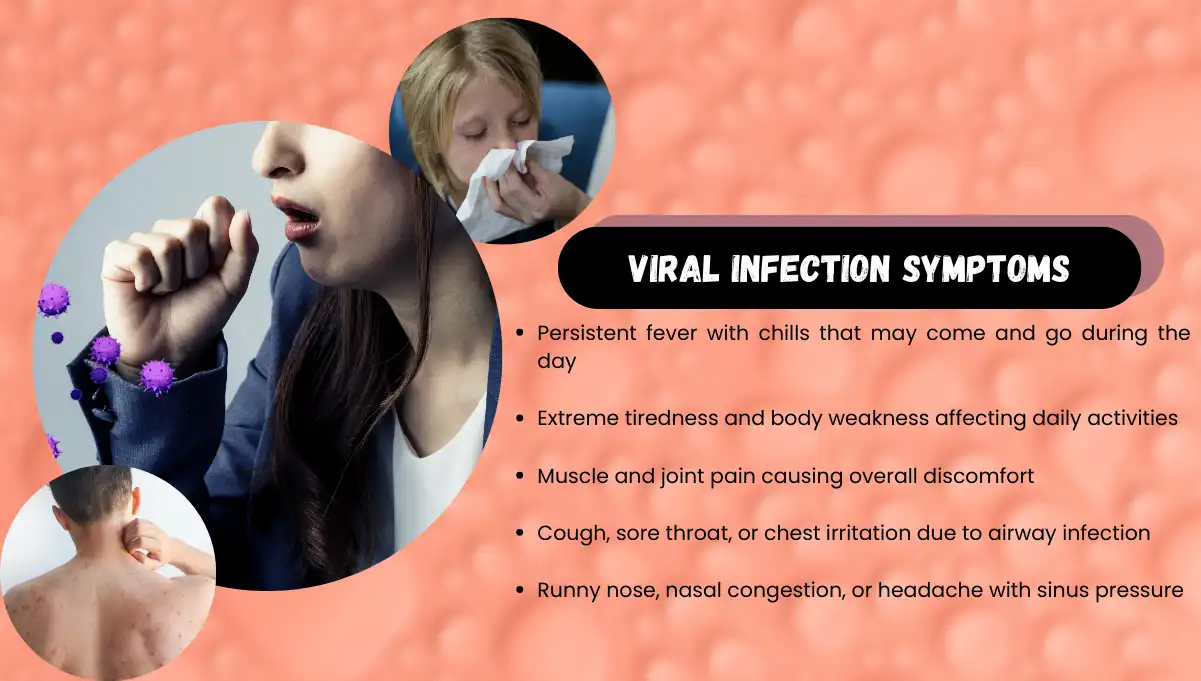
Viral Infection Symptoms
Signs of the infection are completely dependent on which body parts are infected, and it can spread from one body part to another. Below are the most common types of viral infection symptoms:
- Upper respiratory symptoms: sore throat, cough, sneezing
- Skin-based problems: rashes, sores, blisters, warts
- Flu-like symptoms: fever, fatigue, headache, body pain
- Digestive system-based symptoms: nausea, vomiting, diarrhea
Keep in mind that most of the viral infections do not show any kind of symptoms when they appear in your body. So, you will not be able to identify them first until they show their signs.
Read More About – Paracetamol Paediatric Oral Suspension Ip? Uses & Dosage
Causes of Viral Infection
Due to many kinds of viruses, they can cause different kinds of infections, and all of them are quite problematic. They infect humans mainly through their respective body parts, such as the nose, eyes, mouth, genitals, or anus, which they use as their entry point. These infections can even use cuts or skin irritation to enter, which is particularly easy for them as compared to entering directly through body parts. After they enter your body and begin to move to the place where they can multiply and create space for themself.
Diagnosis of Viral Infection
Medical practitioners usually diagnose an infected person by understanding their current health condition and the stage of symptoms. For that, they may ask for swabbing your nose or throat, and also, if needed, take a blood sample. Here are all the diagnostic methods they use to understand your condition:
- Blood sample
- X-rays
- Ultrasound
- MRI
- CT scan
- Saliva
- Phlegm or sputum
- Nasopharyngeal swab
- Skin tissue
- CNS fluid
- Pee
- Stool
- Pap smear
Viral Infection Treatment
Treatment for the infection is only possible if your healthcare provider knows the source of the problem. Such as they use antiviral medicines for chronic problems. A specific kind of virus, such as the common cold, can be treated at home even without visiting a doctor. Because in most cases, these kinds of viruses fade away with time since they are not a permanent type of problem. Below are the viral infection medicine mentioned based on their uses for a particular virus.
Read More About – Azithral 250mg Tablet Uses, Dosage, Benefits & Side Effects
Antiviral Medications
The most notable effect of antiviral medications is that they slow down or stop the process of making multiple viruses from the host virus. They are mainly used to control serious or chronic problems to occur inside your body and also help slow down the respiratory system-related problems.
The drawback of using antiviral medications is that they do not have their positive effect on more than one type of virus. In short, they are very limited and specific virus-centric medications. So, it is better if you avoid using them on other infections. Currently, they are available for mpox, hepatitis B and C, flu, HIV, and Covid-19.
Convalescent Plasma
If the antiviral medication does not work on you, then the medical practitioner will recommend do blood transfusion so that you get treated properly. For that, they use the convalescent plasma method, which is considered to be quite effective on an infected person. However, this treatment only works when your healthcare provider uses blood from a person who recovered from the same viral infection. Your doctor will use the plasma from that recovered individual’s blood and insert it into your body through using IV. This plasma has a special kind of antibodies that help to protect your body’s immunity and fight against the virus.
Post-exposure Prophylaxis
Sometimes, a person who has been previously treated becomes sick again after they have been exposed to the infection. Therefore, if you want to be safe from that, the doctor will use the post-exposure prophylaxis procedure. The therapy is effective only if it is delivered before the symptoms appear. For that, they administer immunoglobulin (antibody) and antiviral medicines. This treatment is useful only if, you have:
- Rabies
- Chickenpox
- HIV
- Hepatitis B
Prevention of Viral Infection
Figuring out the cause of the problem and then implementing preventive measures appropriately can help you avoid serious consequences. Thus, vaccination is by far the most effective solution and your physician will assist you in deciding which one is appropriate based on your current health condition.
Further comprising, you can make yourself safe by doing some straightforward and helpful things like washing your hands frequently, especially after having contact with things that are not clean. Also, you can maintain good dietary habits like reheating food before eating it, washing vegetables and fruits.
Some other preventive measures are:
- Using protection: Unprotected sexual intercourse can create serious problems like HIV and Hepatitis B. So, it is better to protect yourself by using a condom. Keep in mind that it should be of good quality, and do not forget to check for any kind of puncture or rupture on it.
- Keep distance from an infected person: If someone is infected with a viral infection, it is better to keep at least 1 meter distance from them so that the infection of virus can not be transferred to you.
- Protect from bug bites: Bugs, especially mosquitoes, can be quite problematic if you do not use any prevention against them. So, try to wear clothes that cover all of your body, like full-sleeve shirts or jackets, jeans, pants, pyjamas, etc. If possible, buy bug spray, it is quite helpful in case of killing bugs, and also, sleeping in mosquito netting can be beneficial.
Conclusion
A viral infection is the result of a common virus. Such infections are basically not a serious kind that can cause deadly problems unless you are infected with HIV, COVID-19, and Hepatitis B. So it is good to consult your healthcare professional who can evaluate your problem and recommend the most suitable treatment for you. Further, you can also keep yourself away from any serious consequences by washing your hands thoroughly, having regular vaccinations, and using contraceptives that ensure safe and healthy intercourse.
Frequently Asked Questions
Ans. Names of tablets for flu (Oseltamivir), herpes (Acyclovir, Valacyclovir), COVID-19 (Remdesivir), and Hepatitis C (Sofosbuvir).
Ans. Yes, not all, but most of them are contagious and create serious problems.
Ans. The recovery time for common cold (1-2 weeks), flu (5-7 days), dengue (7-10+ days), or COVID-19 (7-14 days).
You must be logged in to post a comment.