
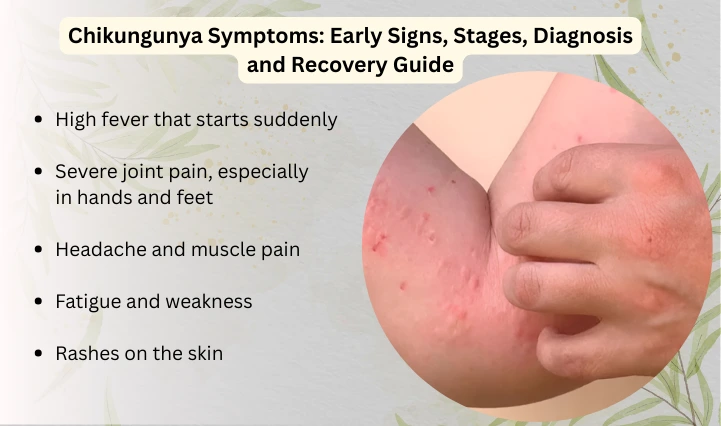

Chikungunya is a viral disease, spread by a mosquito, that has been blamed for the cases of thousands of people yearly. Most people are not able to bear the symptoms of the chikungunya for more than a few weeks, however, there are instances in which the symptoms may remain for weeks and sometimes even months. Identifying the first-stage chikungunya symptoms will enable you to get the right medical help and avert the complications. Such a stepwise guide will delve into the basics of the symptoms of the kinds of chikungunya, the progression of the disease, diagnosis, and treatment if you are infected or if someone you know is infected.
Table of Contents
What Is Chikungunya?
Chikungunya is the disease that arises from the virus called Chikungunya virus (CHIKV). It is the bite of infected Aedes mosquitoes, in particular, the one that transmits the disease. These are the same mosquitoes that cause dengue and Zika. It creates the extreme joint pain that led to this name.
Chikungunya Symptoms: The Full List
Symptoms of Chikungunya are obvious 3-7 days after a bite of the mosquito, however, the incubation period may be 2-12 days.
The most frequent and clinically known symptoms are the following:
1. High Fever (Sudden Onset)
Among the first and most observable chikungunya effects is an increase in temperature, which frequently is acute:
- 102–104°F (38.8–40°C)
- Fever usually lasts 2–3 days
- Healing within a defined interval (biphasic fever).
This acute high fever is also a contributor to the confusion of chikungunya and dengue.
2. Pain in the Joints (Arthralgia) is Severe
The characteristic symptom of chikungunya is joint pain which may be:
- Intense and debilitating
- Examined in the wrists, ankles, hands, knees, and feet.
- Symmetrical (each side of the body)
- Worse in the morning
- In some cases chronic (weeks to months).
In other patients, the pain in the joints can be similar to rheumatoid arthritis.
3. Muscle Pain (Myalgia)
Joint pain is accompanied by general body weakness and in the form of muscle aches. Some people would describe the pain as:
- Deep and continuous
- Influencing large muscle groups.
- Removing the ability to stand, walk, or to lift things.
4. Skin Rash
Chikungunya causes a rash in nearly half or two-thirds of the affected patients. Common features include:
- Patches or blotchy look red or patchy.
- Typically follows 2-5 days following the onset of fever.
- May itch mildly
- Frequently found on limbs, chest or face.
In other instances, hyperpigmentation can persist for weeks following recovery.
5. Headache and Eye Pain
Chikungunya often causes:
- Persistent headaches
- Pain around the eyes
- Light-sensitivity (photophobia)
Such symptoms can be similar to dengue or viral flu.
6. Fatigue and Prostrating Weakness
One of the protracted chikungunya symptoms is weakness. Patients may continue to experience:
- Low energy
- Difficulty concentrating
- Weakness and pain result in slow movement.
There are those who feel tired a few weeks.
7. Nausea and Vomiting
The incidence of digestive symptoms can be listed as:
- Nausea
- Occasional vomiting
- Loss of appetite
- Mild abdominal pain
To avoid complications, it is important to be hydrated.
8. Swelling of Joints
Due to inflammation, one can observe swelling, in particular, of:
- Fingers
- Knees
- Ankles
- Wrists
This is among the factors that make mobility a challenge during infection.
9. Conjunctivitis (Red Eyes)
In some patients, there is the development of viral conjunctivitis that leads to:
- Red, watery eyes
- Mild itching
- Sensitivity to light
It is not severe, but it contributes to the discomfort.
Severe or Less Common Chikungunya Symptoms
Although majority are mild to moderate, few patients particularly the elderly, children, and those with chronic conditions may present with:
1. Neurological Symptoms
- Seizures
- Confusion
- Meningitis (rare)
- Encephalopathy
2. Cardiovascular Complications
- Irregular heart rhythms (arrhythmia)
- Myocarditis
3. Hepatic or Renal Complications
- Presented in immunocompromised people mostly.
- In case you observe any dangerous symptoms, take emergency treatment.
Chikungunya Symptoms: Stages
The stages of the infection are useful in order to better understand the symptoms of chikungunya:
Stage 1: Acute Phase (0–7 days)
Symptoms:
- High fever
- Severe joint pain
- Headache
- Rash
- Nausea
It is the most serious period that must be properly rested and hydrated.
Stage 2: Sub-Acute Phase (7–90 days)
Symptoms:
- Persistent joint pain
- Swelling
- Muscle stiffness
- Fatigue
This long term pain is being confused with other illnesses by many patients- but is normal during chikungunya recovery.
Stage 3: Chronic (3 months to 1 year)
Approximately 20-30 percent of patients, particularly the elderly might experience:
- Long-term joint pain
- Recurrent stiffness
- Weakness
- Discomfort leads to depression after a long period.
This is similar to rheumatoid arthritis but tends to fade away with time.
Chikungunya Symptoms vs Dengue Symptoms
It is important to differentiate the two diseases because the same species of mosquito is the cause of the two diseases.
| Feature | Chikungunya | Dengue |
|---|---|---|
| Fever | Sudden, very high | High, fluctuating |
| Joint Pain | Severe | Mild |
| Muscle Pain | Moderate | Severe |
| Rash | Common | Common |
| Platelet Drop | Rare | Very common |
| Bleeding | Rare | Common in severe dengue |
| Recovery Time | Weeks | Days to weeks |
When the number of platelets in the blood is decreasing at a high rate then it might rather be dengue than chikungunya.
Diagnosing Chikungunya Symptoms
A doctor may use:
1. Blood Tests
- RT-PCR test (detection of virus at an early stage)
- ELISA test (checks on IgM/IgG antibodies)
2. Clinical Examination
- Joint physical assessment.
- Checking fever patterns
- Inspection of rashes and inflammation.
Diagnosis as early as possible assists in quick recovery.
Steps to Chikungunya Treatment
Antiviral treatment is not a particular therapy, yet symptoms can be well treated using:
1. Pain Relievers
Paracetamol (preferred). NSAIDs such as ibuprofen should be avoided at all costs.
2. Adequate Rest
Your body needs time to heal.
3. Hydration
Drink plenty of water, ORS, coconut water, and soups.
4. Cold Compress
To decrease swelling and pains in the joints.
5. Gentle Stretching
Light exercises can enhance mobility after the acute symptoms disappear.
Home Remedies for Chikungunya Symptoms
A number of natural practices are useful to alleviate pain and stimulate recovery:
1. Turmeric Milk
Anti-inflammatory effect assists in alleviating the stiffness of the joints.
2. Tulsi (Basil) Tea
Increases the immunity and lowers fever.
3. Giloy Juice
Good in immunization and alleviation of the post-viral fatigue.
4. Papaya Leaf Extract
They are usually prescribed as part of the recovery of viral fevers, particularly in platelet issues.
5. Epsom Salt Bath
Pain reliever of muscle and joint pain.
Read More About – Pain Management Specialists Vs Physical Therapists
Chikungunya Symptoms in Children
Children exhibit minor symptoms:
- High fever
- Irritability
- Crying all the time because of pains in the joints.
- Red eyes
- Rash
- Loss of appetite
Babies require urgent pediatric attention in order to prevent complications.
Chikungunya Symptoms in Elderly People
Elderly persons and those with chronic illnesses such as:
- Diabetes
- Hypertension
- Arthritis
- Heart disease
When to See a Doctor?
When any of the following occur to you, seek medical attention:
- Severe dehydration
- Persistent vomiting
- Pain in joints which makes it hard to walk.
- Chest pain
- Breathing problems
- Fever over 5 days in duration.
- Neurological symptoms
Timely treatment aids in the prevention of complications.
Prevention of Chikungunya Symptoms
Not a single vaccine has been invented so far, thus the only protective measure is prevention:
- Put on mosquito repellents
- Wear long-sleeved clothes
- Use mosquito nets
- Do not leave still water around your house.
- Install mesh doors and window screens.
- Keep the environment clean.
The mosquitoes (Aedes) are generally target during the day and it is thus imperative to protect oneself not only outdoors but also indoors.
Final Thoughts
The chikungunya symptoms may be very painful and exhausting, though the majority of patients are cured after a sufficient rest, hydration, and treatment of the symptoms. The knowledge of such initial symptoms as high fever, excruciating joint pain, rash, and fatigue can make you distinguish between it and the other viral infections and get the necessary treatment in time.
When you have persistent joint pains even after getting over chikungunya, have no panic, it is normal and it tends to go away with time. Personalized treatment always goes with consultation by a doctor.
Frequently Asked Questions
Ans. Acute symptoms like fever and body ache last for 7–10 days.
Ans. Yes. Children are vulnerable and may show symptoms like fever, rash, irritability, vomiting, and red eyes. Infants need immediate medical care.
Ans. Doctors use blood tests such as RT-PCR and ELISA to detect the virus or antibodies and confirm the infection.
You must be logged in to post a comment.