
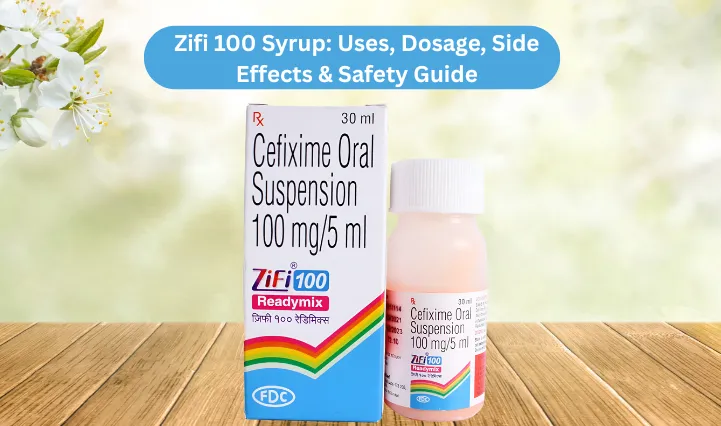

It’s tough seeing your kid deal with a fever or that nagging ear pain, or just a bad cough. Parents always look for something safe that actually works to help out. Doctors frequently turn to this one go-to antibiotic called Zifi 100 syrup for treating everyday bacterial infections in youthful kiddies. These meds work in specific ways, and parents need to know how to give them right. The thing is, this breakdown covers all the basics in plain, simple terms anyone can follow.
| Name | Zifi 100 Syrup |
| Price | Rs. 76.55 for a bottle of 30ml |
| Manufacturer | FDC Ltd |
| Uses | Treatment of Bacterial Infections |
| Composition | Cefixime (100mg/5ml) |
Table of Contents
What is the Zifi 100 Syrup?
Zifi 100 syrup is a popular antibiotic medicine produced especially for children. It comes in dry powder form in a bottle, which you mix with water at home to get a liquid suspension. This “dry syrup” form makes it ideal for kids who have difficulty swallowing pills. Once mixed, it then becomes a tasty, usually strawberry-flavored liquid beverage that is easier to administer. Zifi 100 syrup falls into a powerful group of antibiotics called cephalosporins. They stop the bacteria that cause infections from growing inside a child’s body.
Zifi 100 Syrup Composition
The active ingredient responsible for the active nature of this syrup is Cefixime. More precisely, every 5 ml, i.e., one tablespoon of the set Zifi 100 syrup, contains 100 mg of Cefixime, in any case, when it’s about an infection being treated in a child. In addition to the active element, the saccharinity also contains a number of inactive constituents, like sucrose( sugar) and natural flavors, to ameliorate the taste and make it more respectable for children. Always check the component list on the package insert for a complete list in the case where your child has any given disinclinations.
Zifi 100 Syrup Uses
Doctors recommend Zifi 100 syrup for different kinds of bacterial infections. It works really well against bugs in the ears, nose, throat, and breathing passages. The most common cases that it is used for include:
- Otitis media or ear infections: These are nasty and extremely common causes of fever and irritation in children.
- Sore Throat & Tonsillitis: Particularly those that have been caused by some bacteria, e.g., Streptococcus.
- Bronchitis and Pneumonia: For infections in the lungs and airways, causing a weight residually and it is also wet cough and a high temperature.
- Urinary tract infections: These are treated with it in children who have UTIs.
Keep in mind, this antibiotic only fights bacterial problems. It does not work on viral stuff like the common cold or flu, so never use it for those.
Zifi 100 Syrup Dosage
The most important thing about it is getting the right dose. The dosage of Zifi 100 syrup for child is carefully estimated based on the body weight of your child and the magnitude of the infection. Here is a general guide:
- The normal dose of Zifi 100 syrup, in syrup form, for a child who is per kg of 1.5 to 3 mg per kg body weight, in 2 divided doses (every 12 hours).
- A doctor can prescribe up to 6 mg /kg /day in case of stronger infections.
- Always use the measuring cup or the oral syringe that my bottle came with. The usage of a kitchen spoon is not accurate and can lead to under- as well as overdosing.
- Example: For a child weighing 10kg, the dose would be 3mg/kg, which would mean 30 mg of Cefixime at a time. However, as this syrup is 100mg/5ml, this will mean 1.5 ml per dose.
The Golden Rule: All of the medication that your pediatrician prescribes should always be completed (usually 5-7 days), even if your child begins to feel better after a few days. Stopping early can cause the infection to rejoin and render the bacteria resistant to further treatment with antibiotics.
Zifi 100 Syrup Storage
Proper storage ensures proper safety and performance of the medicine.
- Before mixing: Distribute the bottle of dry powder sealed in a cool, dry place and away from direct sunlight.
- After mixing: After putting water and shaking it to make the syrup, it must be stored (between 2C to 8C of °C) in a refrigerator.
- The liquid prepared is almost always stable for 7 to 14 days. Read the label as to what exact duration it lasts. Do not use the expiration of this time.
- At all times, keep this bottle out of reach of children – tightly closed.
Zifi 100 Syrup Benefits
Most importantly, the most beneficial aspects of this medication include being effective while also being kid-friendly.
- Fast-acting relief: Fast-acting used against a broad spectrum of bacteria. 2-3 days to find clinical improvement.
- Easy Administration: Liquid form and pleasant taste make the time to administer medicines much less stressful and easier to do.
- Proven Track Record: This is an established antibiotic and hence considered dependable in treating common childhood infections as a first-line treatment.
Read More About – Doxcef CV 200: Uses, Dosage, Side Effects & Precautions
Zifi 100 Syrup Side Effects
Generally Safe. Some children may still experience Zifi 100 syrup side effects. Most are mild and temporary.
Common side effects include:
- Indicators that lead to constipation are: – Mild diarrhea or loose stools
- Stomach ache or upset
- Nausea or indigestion
Less common but serious side-effects to be on the lookout for:
- Sharply watery or bloody diarrhea, which may be a type of new infection
- Skin rash, itching, or hives (leading to the fact that you’re allergic reaction)
- Employing or taking emetics or other sedatives
- If you feel that you have any severe reactions, discontinue use of the medicine and contact your doctor immediately.
Zifi 100 Syrup Precautions
A few easy steps help keep treatment safe overall.
- Tell the doctor about your child’s full medical history and any meds they take. That way, they can check for allergies to penicillin or other cephalosporins, or issues with the kidneys or stomach.
- Always finish the full course of the antibiotic, even if symptoms start to fade.
- To help with gut problems, offer yogurt or probiotic supplements while on the course. They ease side effects like stomach upset.
- No Sharing: Do not administer this medicine to any other child, even if the symptoms appear to be the same.
Prescription Only: This is under no circumstances available as a non-prescription medication. It should also be used only under the management of a qualified doctor.
Frequently Asked Questions
Ans. It is primarily used to treat bacterial infections in children, including ear infections, throat/tonsil infections, bronchitis, pneumonia, and urinary tract infections.
Ans. Its active ingredient is Cefixime (100mg in every 5ml). It also contains flavorings and sugar to make it taste better for kids.
Ans. The dosage is weight-based. Your doctor will calculate it, typically between 1.5 to 3 mg per kg of your child’s weight, given twice a day. Always follow the prescribed amount exactly.
Ans. Yes. If your child weighs 12 kg and the dose is 3 mg/kg, they need 36 mg per dose. Since the syrup strength is 100mg/5ml, you would give 1.8 ml per dose using the provided measuring device.
Ans. The most common side effects are mild gastrointestinal issues like diarrhea, stomach pain, or nausea. Allergic skin rashes are possible but less common.
Ans. The Zifi 100 syrup price can vary depending on your location and pharmacy. On average, a 30 ml bottle costs between ₹70 to ₹150. Prices may differ, so it’s best to check with your local chemist or trusted online pharmacy.
You must be logged in to post a comment.