
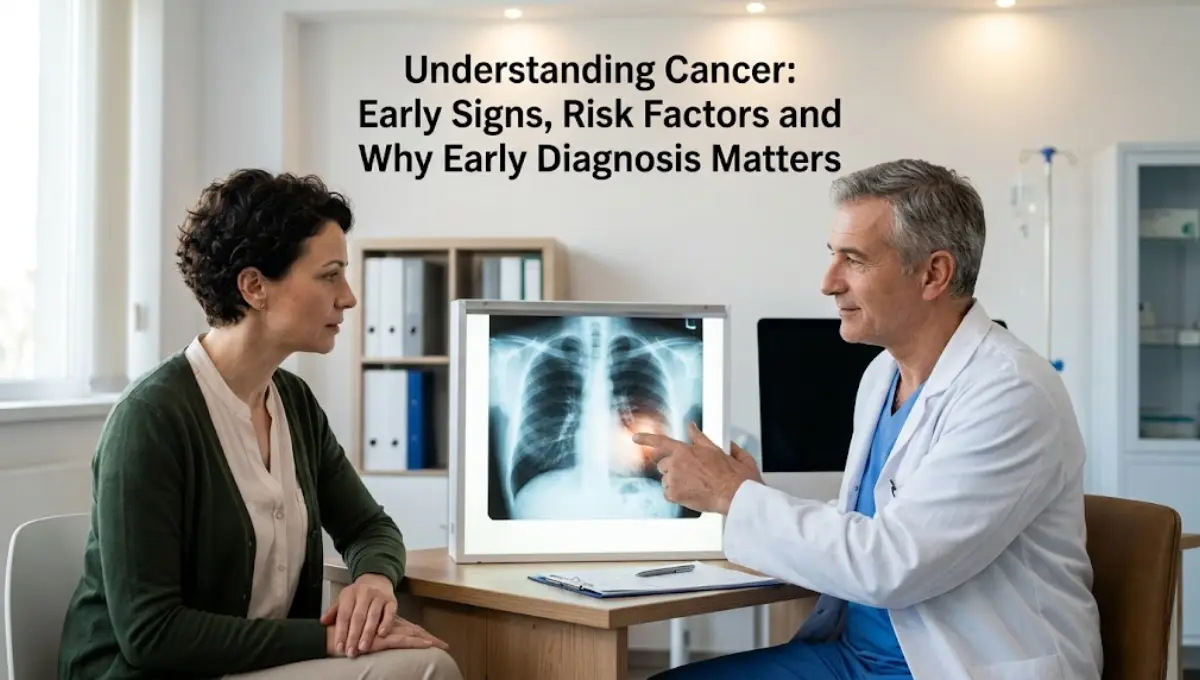

Cancer develops when cells in the body start growing uncontrollably and spread to different regions of the body. The disease develops through a combination of environmental exposure and genetic factors, together with unhealthy lifestyle choices and infections. The first signs of the condition include people developing strange lumps which lead to sudden weight loss, experiencing continuous exhaustion, persistent discomfort, and unusual bleeding.
Table of Contents
Key Takeaways
- Cancer occurs when the body’s cells lose normal growth control and begin to grow uncontrollably, damaging nearby tissues.
- Symptoms such as unexplained weight loss, ongoing fatigue, or a new lump should be taken seriously.
- Daily lifestyle, infections, and family genetics all influence whether a person’s cancer risk increases or decreases.
- Routine check-ups and screening tests are among the best tools available for finding cancer.
- A diagnosis made early almost always opens the door to better treatment options and a stronger chance of recovery.
- With the right medical team, medicines, and support, most patients can maintain a reasonable quality of life.
The World Health Organisation states that cancer is a leading cause of death worldwide, responsible for about 10 million deaths each year. It happens when certain cells in the body start multiplying without any of the normal brakes that keep growth in check. Those cells can clump together into tumours and, in some cases, spread to distant organs. That said, the picture isn’t all bleak.
A great deal has changed in how we understand and treat cancer. For people who catch it early, the odds have never been better. Knowing what to look for, understanding what puts you at risk, and not putting off that check-up are things within most people’s control.
What is Cancer?
At its core, cancer is the story of cells that have lost their discipline.
In a healthy body, there’s a careful rhythm in which cells grow, do their job, divide when needed, and eventually die off to make room for fresh ones. That cycle keeps everything running smoothly.
Malignant tumours push into neighbouring tissue and can send cells travelling through the blood or lymphatic system to take root in distant organs, a process doctors call metastasis.
Cancer isn’t one disease. It’s actually a whole family of diseases, each originating in a different tissue and behaving differently. Some of the more commonly known types include:
- Breast cancer – developing within breast tissue.
- Lung cancer – starting in the lungs.
- Prostate cancer – affecting the prostate gland in men.
- Blood cancers – originating in bone marrow and blood cells.
- Skin cancer – arising from the cells that make up the skin.
Treatment often draws on several strategies, such as surgery, radiation, chemotherapy, immunotherapy, or more targeted therapies, sometimes in combination.
Oncology Medicines and support services also play an important role in helping patients manage side effects and stay as well as possible throughout the process.
How Cancer Develops in the Body
Cancer rarely arrives without warning from the body’s biology. It tends to unfold slowly, the result of gradual changes in the genetic material inside cells. These aren’t changes you can feel happening, but over time, they shift how cells behave, sometimes dramatically.
The process generally moves through a few stages:
1. DNA Damage
Inside every cell sits DNA, a kind of instruction manual for how that cell should function. This DNA can be damaged by environmental pollutants, certain chemicals, viral infections, or the wear and tear of ageing. A damaged instruction manual could cause the cell to start making bad decisions.
2. Uncontrolled Cell Division
Healthy cells know when to divide and when to hold off. Cancer cells have lost that awareness. They keep multiplying, regardless of whether the body has any use for the extra cells they produce.
3. Formation of Tumours
As rogue cells accumulate, they begin to form a mass. Some tumours stay confined in one spot. Others begin pushing into surrounding tissue, which is where things become more serious.
4. Spread of Cancer Cells
The most concerning development is when cancer cells break away and travel through blood vessels or the lymph system to set up shop elsewhere in the body. Once metastasis has occurred, treatment becomes considerably more complex.
Common Early Warning Signs
One of the trickier aspects of cancer is that it can develop quietly before making itself known. But the body does sometimes send signals, and paying attention to those signals can change everything.
Some of the more common early warning signs are worth knowing:
Unexplained Weight Loss
Dropping weight without changing your diet or exercise habits is something a doctor should look into, particularly if it happens quickly.
Persistent Fatigue
Everyone gets tired, but a bone-deep exhaustion that doesn’t lift even with proper rest is a different matter and may point to something going on beneath the surface.
Unusual Lumps or Swelling
A new lump, whether in the breast, the neck, the armpit, or anywhere else, should be examined. Most turn out to be harmless, but it’s not something to leave to chance.
Changes in Skin
A mole that’s changing shape, size, or colour; patches of unusual skin discolouration; or sores that aren’t healing the way they should; these can all warrant a closer look.
Long-lasting Cough or Hoarseness
A cough that lingers for weeks without an obvious cause, or a persistent change in your voice, is worth bringing up with a doctor.
Difficulty Swallowing
Trouble getting food or liquid down, or a nagging throat discomfort, shouldn’t be ignored for long.
Unusual Bleeding
Bleeding from the mouth, nose, bowel, urinary tract, or anywhere unexpected, particularly when it has no clear explanation, is a reason to seek advice.
Persistent Pain
Pain that hangs around for an extended period without a logical cause deserves proper investigation rather than repeated doses of over-the-counter painkillers.
Major Risk Factors (Lifestyle, Genetics, Infections)
Cancer rarely has a single cause. It tends to develop when several influences converge. Some of those influences are things people can change; others are beyond their control. Understanding both is useful.
Lifestyle Risk Factors
Day-to-day habits and choices have a real bearing on cancer risk. Things that push that risk up include:
• Smoking and using other tobacco products.
• Drinking heavily over a sustained period.
• A diet that’s consistently poor in quality, paired with carrying excess weight.
• A largely sedentary lifestyle with little regular exercise.
• Extended exposure to harmful chemicals, whether at work or at home.
• Spending large amounts of time in strong sunlight without adequate protection.
The good news is that these are modifiable. Steps that genuinely reduce risk include:
• Eating a varied diet built around vegetables, fruit, wholegrains, and lean proteins.
• Getting some form of physical activity most days.
• Not smoking and avoiding exposure to others smoke.
• Keeping alcohol intake within sensible limits.
• Using sunscreen and covering up when UV levels are high.
Genetic Risk Factors
For some people, the risk of certain cancers runs in the family. Inherited genetic mutations can mean a significantly higher likelihood of developing specific types of cancer over a lifetime.
If cancer has appeared repeatedly in close relatives, genetic counselling can be a worthwhile conversation to have with a doctor, as can more frequent or targeted screening to catch any problems as early as possible.
Infections
A number of infections are known to raise the risk of specific cancers:
• Human papillomavirus (HPV) has a well-established link to cervical cancer.
• Hepatitis B and Hepatitis C infections are associated with liver cancer.
• Helicobacter pylori, a stomach bacterium, is connected to an increased risk of stomach cancer.
Vaccination programmes, prompt treatment of infections, and regular participation in screening can all help limit the impact of these risk factors.
Importance of Early Diagnosis
The benefits of an early diagnosis are substantial:
Better Treatment Results
Medical professionals find it easier to treat smaller, localised tumours using surgical methods, medication, radiation therapy, and their combined use.
More Treatment Options
Patients who receive an early diagnosis have access to multiple treatment options, including safer methods that produce fewer side effects.
Reduced Spread of Disease
When cancer prevention occurs before the disease spreads beyond its first location, treatment becomes much more effective.
Improved Survival Rates
The data on this is consistent and compelling: people diagnosed with cancer at an early stage have significantly better survival outcomes than those whose cancer is found later.
The treatment plan might include specialist medicines which are required for patient care. For instance, some patients may be prescribed medications such as Abiroot 250mg Tablet as part of their oncology care, depending on their individual diagnosis and treatment pathway.
MrMed provides reliable healthcare platforms which enable patients to obtain their prescribed medications during this period.
When to See a Doctor
People naturally expect that unpleasant situations will resolve themselves without intervention. Resolution happens at times, but in certain situations, such as cancer detection, waiting for results is inappropriate.
You should schedule an appointment when you observe these signs
- A lump that continues to expand or persists for several weeks requires medical evaluation.
- You experience persistent fatigue and overall body weakness that does not improve.
- You experience ongoing pain with no clear cause for its duration.
- You notice unusual bleeding or discharge from your body.
- Your bowel and bladder operations have altered from their normal patterns.
- You experience trouble swallowing together with sudden breathing difficulties, which have no clear cause.
- The cough has lasted beyond three weeks, while the voice changes remain permanent.
People whose parents or siblings had cancer should consult their doctors about suitable screening methods and recommended testing frequencies.
What’s Worth Remembering
Cancer encompasses a wide range of conditions, each with unique characteristics and challenges. However, they all have one thing in common: the sooner you can detect the cancer, the greater the chance of effective treatment.
By recognising early warning signs, understanding your risk factors, and scheduling regular health check-ups, you are not only receiving medical advice but also taking practical steps that could save your life.
Awareness, early action, and access to good care remain the most powerful tools available. The rest follows from there.
Disclaimer:
The information in this article is provided for general educational and informational purposes only. It should not be considered a substitute for professional medical advice, diagnosis, or treatment. Always consult a qualified healthcare professional if you have any questions about symptoms, medical conditions, or treatment options. Do not ignore medical advice or delay seeking care because of information you have read here.
Frequently Asked Questions
There are a variety of possible causes behind different types of cancers. People may develop certain types of cancer for many reasons due to some combination of changes in their genes, habits, exposure to hazardous environments, infections, or inherited genetic changes.
While there are many ways to help prevent certain types of cancer, there are also many risk factors that are beyond your control. However, you can reduce your risk of developing cancer in many ways by maintaining healthy habits and getting the right vaccines.
Many people believe that regular health and wellness examinations and screening tests do not change how healthy they are; however, there are several major reasons why these tests are extremely beneficial to individuals.
No. Many cancers, particularly those detected early, are successfully treated. Advances in research over the past few decades have substantially improved survival rates across a wide range of cancer types.
People who smoke, have close relatives who’ve had cancer, carry certain chronic infections, or are regularly exposed to harmful environmental agents face a higher baseline risk. Age also plays a role, as the likelihood of developing cancer generally increases over time.
See a doctor. Don’t wait for things to get worse or assume the symptoms will sort themselves out. A proper medical evaluation is the only way to find out what’s actually going on.
You must be logged in to post a comment.