
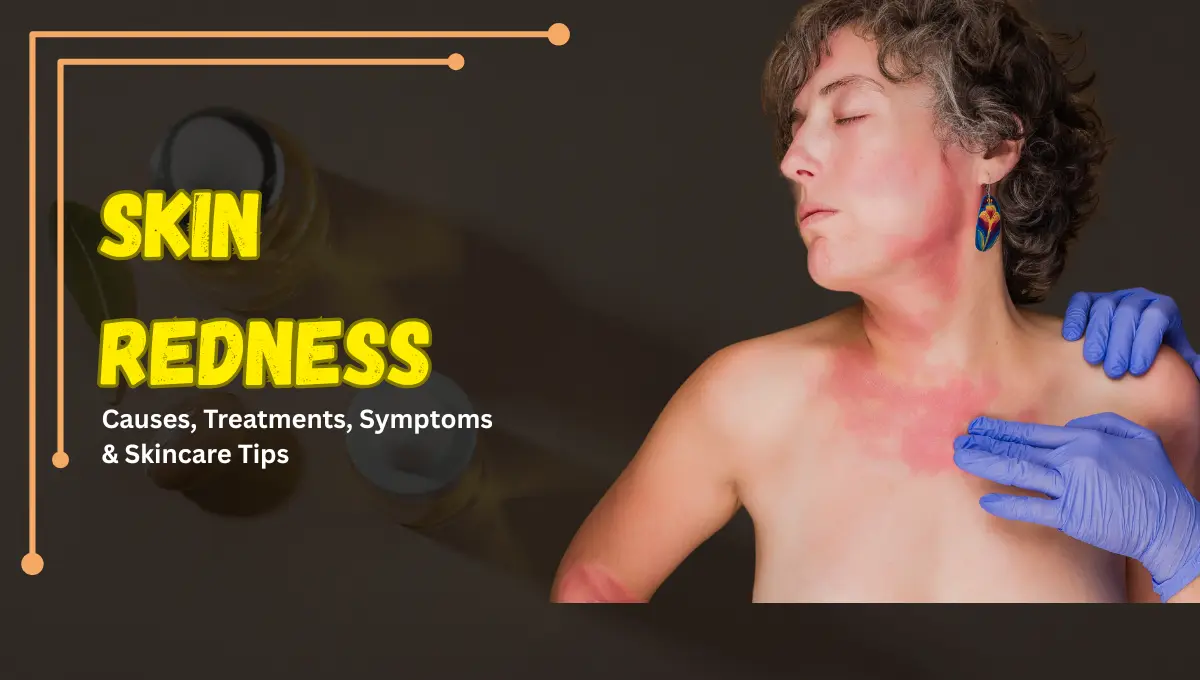

It is so easy to get redness on skin, and it may occur due to simple causes (sun) or serious ones (infection). The condition is nothing but an external manifestation of the irritation, inflammation, or heating of your skin, and thus, the key to the solution begins with the actual problem. Basic care should work in case your problem is slight and temporary. In case it spreads rapidly, is very painful, or is accompanied by fever or difficulty breathing, do not wait, get medical help.
Table of Contents
What is Skin Redness?
This condition occurs when additional blood flows nearer to the skin surface and this is more likely to occur due to your body responding to irritation or attempting to heal something. It is possible that you also experience this problem following hard exercise or exposure to heat and seems warm or uncomfortable.
According to Physicians, Redness of skin is called erythema (doctor’s term for red skin). Depending on the underlying cause, the problem may present itself in the form of patches, small bumps, face flushing or a complete rash.
Common Causes of Redness
There are numerous varieties of problems that can cause red skin, and to examine the pattern (where it is, how quickly it began, etc.), you also feel it.
- Sunburn: This is caused by UV rays and this problem occurs when your body directs more blood to heal it; it can be accompanied by tenderness, itching, blisters or peeling.
- Burns (heat, chemicals, friction, radiation, electric): Burns may result in Redness and pain and more serious burns may blister or destroy additional layers.
- Dermatitis/eczema (contact, atopic, seborrheic): It is commonly associated with Redness with itching, dry/scaly skin or rash-like patches.
- Rosacea (on the face): This may begin with flushing and evolve to be more chronic, up to red skin, with stinging or bumps.
- Heat rash: It is caused by hot/humid weather and may include itching with small raised bumps frequently on folds of the skin.
- Folliculitis: Follicles of hair become inflamed and produce red skin and small bumps around the hair; it may be tender and itchy and may have pus-filled blisters.
- Psoriasis: Has the potential of creating red, dry psoriasis flares with silvery scales.
- Shingles: This type of infection is a viral infection and can cause painful Redness with blisters. However, it needs urgent help when it develops around the eye.
- Cellulitis (skin infection): It may lead to red skin which is swollen, tender, warm, and can deteriorate rapidly. Without urgent care, it may become severe.
- Drug allergy: It may lead to rash, hives, itch, swelling and in severe cases, anaphylaxis (a life-threatening situation).
- Spider veins: Benign veins, small purple veins that resemble a web, and are a result of small blood vessels that are located close to the skin surface.
- Diaper rash (babies): May result in wet-appearing, Redness of parts of skin in contact with the diaper.
Symptoms that can Come with Redness
This problem does not always stand on its own, and the additional hints allow you to make a guess about the cause. Symptoms associated with the use of common add-ons are itching, dryness, scaling, swelling, tenderness, blisters, peeling, or warmness of the skin.
In case of Redness on skin and itching, eczema/contact reactions can be thought of, but there are also infections and other causes that lead to itch. Look out for pus, contagiousness, excruciating pain, or feverishness. These may indicate infection, which requires medical treatment.
Redness on Skin Treatment Options
Redness on skin treatment depends on the cause of your red skin. The following are some of the best strategies:
Home Care Measures
- Wash the affected area clean using soap and water.
- Wipe the area dry to minimize the symptoms.
- Use a cold compress so as to cool down inflamed skin.
- Do not use harsh soaps, hot water and familiar allergens.
- Drink water and keep the skin hydrated.
Over-the-Counter Solutions
The redness creams are of anti-itch creams, non-fragranced moisturizers, and hydrocortisone creams. Calamine lotion assists in removing the red skin and irritation of the skin. Antihistamines reduce allergies and itching.
To treat a mild sunburn at home, use moisturizers and consume a high amount of fluids. Minor irritation can be treated with a redness on skin cream with aloe vera or other soothing ingredients.
Prescription Treatments
Chronic cases may be treated with prescription-grade creams, ointments, shampoos, or moisturizers. Those bacterial infections such as cellulitis are treated by antibiotics. The antiviral drugs are used in managing shingles and other viral infections.
Premium services consist of laser therapy in the case of chronic condition, breakout-induced red skin, acne cream, and special drugs in cases such as rosacea and psoriasis.
When to See a Doctor for Redness
Mild Redness (as sunburn) may be annoying and can be treated at home, but there are symptoms that indicate that you should seek assistance. Consult a doctor when the red skin takes longer than a few days, recurs, is widespread, comes on abruptly and extends rapidly, has blisters, is extremely painful or seems to be infected (warm, pus, leaking fluid).
Seek immediate treatment in case the condition is accompanied by difficulty breathing, loss of consciousness, severe pain, or a big burn (such as bigger than the size of your palm), or it is close to the eyes and is affecting vision. In addition to this, seek medical attention for bites that may cause infection or complications.
Skincare Tips to Reduce Redness (Daily Routine)
Unless it is an emergency, a light routine can make your skin relax as you find out triggers when your condition is not an emergency. Make things simple by applying a slight and fragrance-free moisturizer, omit severe scrubs and do not saturate your skin with a lot of new items at once.
Redness on skin face: This is the area where it is essential to be delicate since facial skin tends to respond more quickly, and disorders such as rosacea tend to become more acute with triggers and consequently more persistent. In case of a burn or a sting then you have to stop it and resort to simple hydration until your skin has recovered.
When you are looking to buy a Redness cream or Redness on skin cream, you need to choose one that is fragrance-free and it should be applied to sensitive skin, and you should not choose one that causes your skin to tingle violently. Other individuals use the aloe vera to treat this condition, particularly when the skin is hot or irritated, although some people have not experienced the same effect.
Prevention Tips for Redness
Prevention of the problem is best achieved through the identification and avoidance of triggers that are personal (such as heat, irritating products, or some medicines in case your doctor confirms the association). Wear a hat, long sleeves or pants to protect your skin against the sun to reduce the risk of sunburn related condition, and treat irritation at the earliest stage before it progresses.
Skin health can be at risk due to vitamin problems but one source observes that there is no specific one-vitamin correlation that is always used to explain Redness. However, deficiencies of vitamin D, B12 or zinc can be linked to any skin change in some individuals. In case you have a suspicion that you are deficient, it is better to consult a clinician and not to make a self-diagnosis.
Frequently Asked Questions
Ans. Redness of the skin is called erythema. Redness is a sign, not a diagnosis, many different issues can cause it.
Ans. For mild Redness, gentle cleansing, keeping the area clean and dry, and avoiding the trigger can help. If it’s from the sun or heat, it often improves over time, but blistering, fever, or spreading needs medical advice.
Ans. A safe first step for Redness is a non-fragranced moisturizer made for sensitive skin. If you need medicated options (like hydrocortisone), follow a doctor’s advice because the wrong cream can worsen some rashes.
Ans. Redness on the face can happen from rosacea, eczema, or other conditions. Rosacea often starts with flushing and can become more lasting over time.
Ans. Redness on the skin and itching are common with eczema and allergic reactions, but other causes exist, too. If itching comes with warmth, pus, fast spread, or fever-like symptoms, get checked for infection.
You must be logged in to post a comment.