
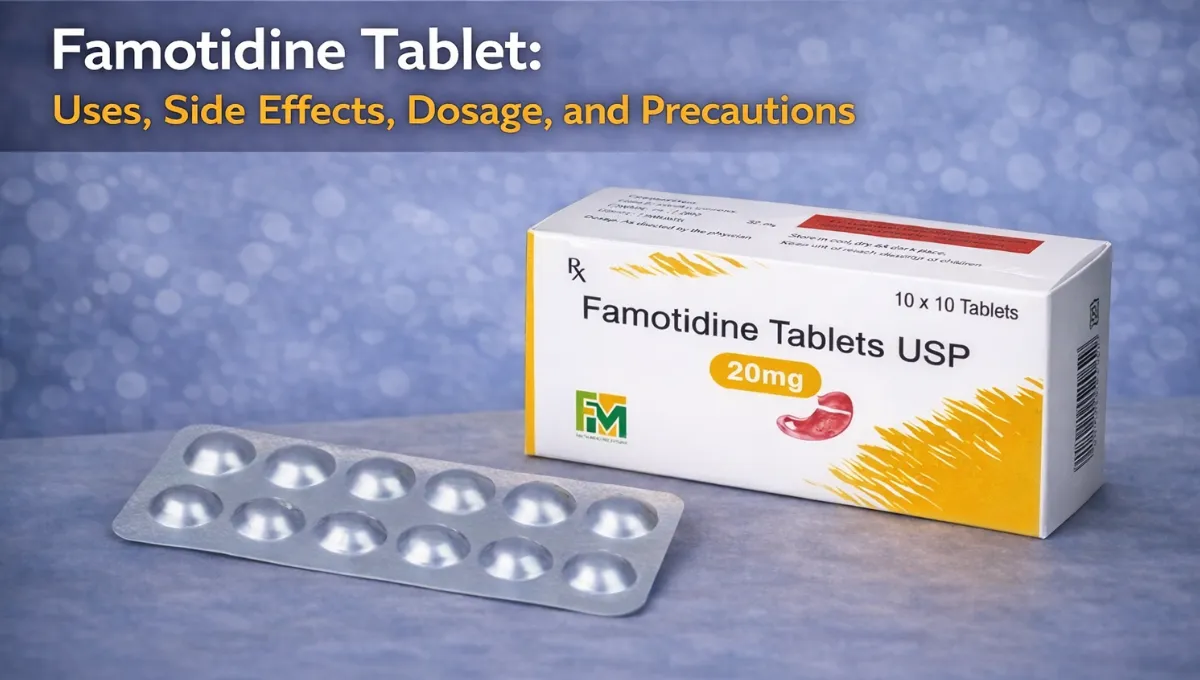

The sore chest from hot food or coffee at night will not ruin your day. In this case, Famotidine enters the scene as the H 2 blocker that you can rely on to decrease the excessive production of stomach acid and give your esophagus a chance to heal. It can be bought over-the-counter as a temporary solution or as a prescription medication for more serious issues, as it is the first choice in regard to fixing acid issues, whether it is a large or small problem. This guide will cover all the bases, from the uses of this medicine to the tips, so you stay informed and comfortable.
Table of Contents
What is Famotidine Tablet?
Famotidine is an H 2 receptor antagonist that works by preventing the secretion of histamine from the stomach and also by decreasing the production of acid. It helps to loosen the heartburn, indigestion, and pain associated with ulcers by making the environment less acidic. It is either sold as prescription strength to use on a long-term basis or over-the-counter as Pepcid to use on a short-term basis, in tablet, chewable, and capsule forms, as well as in liquid form.
Famotidine Tablet Composition
The active component that works on the stomach acid cells is famotidine. The fillers in the 10, 20, or 40 mg tablet consist of microcrystalline cellulose, magnesium stearate, and a shape and stability coating. Others combine it with antacids such as calcium carbonate, magnesium hydroxide or even ibuprofen; consult labels of food allergies or dietary requirements.
Famotidine Tablet Uses
Famotidine is what you want to do to calm your hyperactive stomach. Its applications are focused on decreasing the acidity to alleviate the symptoms and facilitate the healing:
- Treatment of Ulcers: It assists in the healing of painful ulcers in the stomach or small intestine (duodenal ulcers), and prevents occurrence of the affected ulcers.
- Treatment of GERD: In gastroesophageal reflux disease (GERD), the stomach acid regularly returns to the esophagus and therefore with famotidine, the acid levels in the stomach are decreased so that the heartburn decreases and the irritated area is able to heal.
- Heartburn and Indigestion Relief: The OTC form is ideal in addressing the burning pain and sour stomach that come with food, beverages or even stress.
- Management of Rare Acid-Overproduction Disorders: It is one of the treatments of multiple diseases such as Zollinger-Ellison syndrome in which the stomach produces high amounts of acid.
- Other Medical Uses: It can be prescribed by doctors occasionally, though not due to stress ulcer prevention, to patients in the hospital.
Famotidine Tablet Dosage
It is important to ensure the dosage of famotidine is correct and effective and safe. Never forget to do as your doctor says or what the label on OTC products tells you to do. Do not overdo the instructions.
Occasional Heartburn (OTC): 10- 20mg as required with a maximum of 2 times a day. Should not take longer than 14 days at a time without a doctor.
To treat Prescription Treatments (normal doses in adults):
- GERD or Stomach Ulcers: 20 mg twice a day or 40mg once at bedtime, on average, it takes 6-8 weeks.
- Erosive Esophagitis: 20-40mg/day up to 12 weeks.
- Zollinger-Ellison Syndrome: An increased administration of 20 mg every 6 hours which is more personalized.
- Major Advice: Take tablets with a complete dose of water. Chewable tablets- swallow the pills. Never measure your dose with a kitchen spoon. Never put your liquid suspension into any measuring device.
Famotidine Storage
Keeping your medicine safe and effective: Storing your medicine properly.
- Store it in its original container which is in a tight sealed manner and at room temperature.
- Keep out of the reach of too much heat, too much moisture and direct light (not in the bathroom).
- Do not freeze the liquid form.
- Properly dispose of any leftover liquid in 30 days and out-of-date pills. Give them to a drug program; there is no requirement for flushing of medicines.
- Medicine should never be in the sight or touch of the kids and even pets.
Famotidine Tablet Benefits
Why is the doctors and patients confident in famotidine? The benefits are clear:
- Quick, Rapid Relief: It begins to balance the body within 15-60 minutes, and the duration of effect is 12 hours.
- Heals: It helps to heal the damaged esophagus and the ulcerated stomach lining because it makes the environment less acidic and hence the tissue can heal.
- Flexible Use: It can be used both for short-term, on-need type of relief and permanent control of chronic diseases with a physician.
- Generally Well-Tolerated: It provides relief to a large majority of individuals without frequent and annoying side effects with a fair chance of being used correctly.
Famotidine Tablet Side Effects
Famotidine may create problems in most people, yet it is essential to be aware of what can happen as side effects of famotidine.
Side effects are common and are mostly mild and include:
- Headache
- Dizziness
- Constipation or diarrhea
- These tend to fade away due to the adaptation of your body.
Side effects are serious and are unlikely, but must be addressed immediately. Finally, quit and seek medical attention with your doctor in case you experience:
- Symptoms of allergic reaction (hives, difficulty breathing, facial/throat/lips/tongue swelling).
- Irritation, delusion, or anxiety.
- Rapid/vigorous heartbeat, acute dizziness.
- Muscle pain/tenderness/weakness, unexplainable, particularly with fever or dark urine.
Note: This is likely to be absorbed by long-term use of Vitamin B12. Talk to your doctor about your nutrition in case you are on long-term therapy.
Famotidine Tablet Precautions
It is very simple to take famotidine in a safe manner but a couple of simple steps would satisfy:
- Full Health History: You should inform your physician whether you have kidney disease (you may need an increased dose), liver problems, or even allergies to any of the similar medications, such as ranitidine or cimetidine.
- Check the List of Your Medications: Famotidine may interact with other medications. Important ones that should be discussed include: ketoconazole, itraconazole, and tizanidine. Be sure to present a full list of all that you take to your doctor or pharmacist.
- Mind Your Lifestyle: Do not smoke or take alcohol since they are irritants on the stomach. Pain relievers such as aspirin, ibuprofen, or naproxen should be used cautiously, as they provoke stomach problems.
- Be aware of the Red Flags: In case you come up with black and tarry stools or coffee-ground looking vomit, make an immediate visit to the doctor, as this could be the symptom of a bleeding ulcer.
Do not Self-Treat Severe Symptoms: When the use of OTC does not improve your symptoms in 2 weeks or when your symptoms become worse, visit a doctor. Heartburn may be confused with a heart attack. Emergency medical assistance is required in case of chest pain that is accompanied by pain that radiates to your arm/jaw, perspiration, nausea, or dyspnea.
Frequently Asked Questions.
Ans. Famotidine tablet treats excess acid issues like heartburn, GERD, and ulcers by blocking stomach acid production.
Ans. Yes, famotidine 40 mg suits severe prescription cases like ulcers, taken once daily under a doctor’s watch.
Ans. Famotidine is used for heartburn relief, GERD healing, ulcer treatment, and rare acid disorders.
Ans. Famotidine side effects include mild headache/dizziness; rare severe ones like allergies or confusion.
Ans. Famotidine dosage: OTC 10-20 mg twice max; prescription 20-40 mg daily per condition.
Ans. Famotidine pregnancy use needs a doctor’s approval to balance the benefits and risks.
You must be logged in to post a comment.