
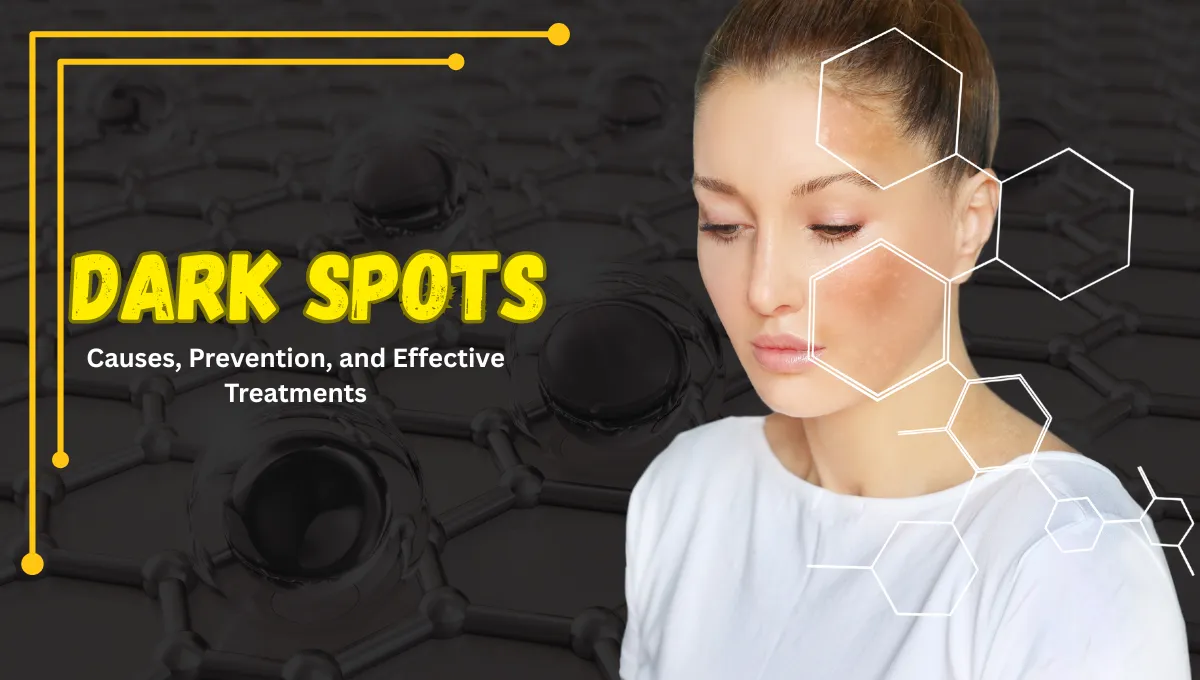

One of the most recurrent and nagging skin issues that bothers individuals of any age and skin color is dark spots. These are discoloured patches of skin that are flat in nature, which may be seen anywhere on the body, but mostly on the face. Although these spots are hardly an indication of a severe health condition, they can significantly impact your self-esteem and the general state of your skin.
These are caused by a surplus of melanin which is the natural pigment in the skin. The result of this overproduction would be dark spots that are not smooth and they might be hard to cure, due to sun exposure, hormonal change or acne scarring. The positive outcome is that they could be treated and faded through appropriate knowledge and regular skincare.
Table of Contents
Understanding Uneven Skin Tone
Hyperpigmentation, or dark patches as they are also known, are patches of skin that seem much darker than the surrounding skin color. They appear when melanin is concentrated in a particular region as opposed to being evenly distributed, and it forms patches or blotches that are uneven in terms of shade, being light brown to deep gray-brown. These spots are different in size, location, and intensity in people. These spots may spread to the face, hands, back, shoulders, and other parts of the body. Even though typically the dark spots and pigmentation are harmless, the initial step will be to figure out what type of pigmentation and what its cause is to be able to select the therapeutic method that is best suited.
Different Patterns of Uneven Tone
Not all spots are the same. Identifying the right type helps in choosing the best treatment.
- Sun Spots (Solar Lentigines): Flat brown patches are caused by prolonged exposure to the sun. They are placed on the places that are exposed to the sun, like the face, hands, and shoulders. Dark spots are prevalent in individuals more than 40 years old.
- Melasma: It is larger and symmetrical brown or gray areas, which are due to hormones. They usually develop in the course of pregnancy, menopause, or with birth control pills and hormone therapy.
- Post-inflammatory Hyperpigmentation (PIH): The spots at the end of the healing process of the skin following acne, burns, cuts, or inflammation related to eczematous or psoriatic areas.
- Postinflammatory Erythema: This is formed by the appearance of pink or red pigmentation-like spots that are in fact inflammation, which occur following acne on fair skin.
Signs of Uneven Pigmentation
Dark spots appear as discolored spots that are flat, regardless of the color of the skin. The age spots and sun spots most frequently occur on the areas of the body that are exposed to the sun, including the forehead, upper lip, chin, back of the hands, and shoulders. Hyperpigmentation may occur in any part of the body, particularly where acne is located. Hyperpigmentation can also naturally disappear in a time period of 6 to 12 months in people with darker skin complexion, in case of cause management. However, with no special treatment, deeper discoloration may take a much longer time to recover.
Read More About – Niacinamide and Vitamin C for Glowing, Healthy Skin
Why Uneven Tone Develops
Dark spots on face are developed by a number of factors. The principal causes are:
- Too much exposure to the sun: UV rays trigger the skin to create more melanin, resulting in sun spots.
- Hormonal changes: Pregnancy, menopause and contraceptive pills may create changes in the level of estrogen and progesterone that may lead to melasma.
- Skin inflammation and acne: Dark spots can be present when the pimples, eczema, and psoriasis have healed.
- Medication side effects: Pigmentation can be caused by some drugs, including NSAIDs, antimalarials, chemotherapy agents and anticonvulsants.
- Skin irritation: The skin may be irritated by over-exfoliation, harsh products or waxing and cause spots to be developed.
- Wound healing: Dark patches temporarily form on the body near the burns, insect bites, and cuts during wound healing.
- Diabetes: The skin may become dark in such cases as acanthosis nigricans or diabetic dermopathy, both of which are diabetes related conditions.
How to Remove Dark Spots
To eliminate the black spots, you should be aware of the type, degree, and cause. The most acceptable ones are:
- Apply a targeted dark spots serum: Use a serum that has lightening properties, such as Vitamin C, niacinamide, alpha arbutin, kojic acid, azelaic acid, or retinol. These assist in eliminating melanin and lightening spots in the long run.
- Wear sunscreen every day: A broad-spectrum sunscreen with an SPF of 30 or higher is essential. The most effective treatments yield little results without providing daily sun protection.
- Use prescription creams: A dermatologist can prescribe creams that have hydroquinone or tretinoin, which have proven themselves as the most effective dark spots remover as they prevent melanin production and increase skin cell turnover.
- Chemical peels: A professional peel sheds off the skin layer, which stimulates a new layer of cells and slowly removes pigmentation that is hard to remove.
- Laser treatment: Laser treatment involves the laser destroying melanin-producing cells, which makes the skin appear more even in appearance after several treatments.
- Microdermabrasion: In this process, an abrasive instrument is used to peel off the topmost layer of skin, which aids in the production of new skin and enhances collagen production, which results in smoother skin.
- Cryotherapy: Liquid nitrogen is now applied with care in order to freeze the pigmented cells so that the skin may heal in a more balanced and even tone.
- Natural Ingredients: Aloe vera, turmeric, papaya, cucumber, and yogurt, and these ingredients can have some slight brightening effects when used regularly, but again, they are not a treatment and just an addition to a proper skincare routine.
Read More About – Neurobion Forte: The Vital Vitamin Boost Your Body Needs
When to See a Dermatologist
A majority of the dark spots on face are harmless and not an emergency to treat. Nevertheless, one should always visit the dermatologist in case a spot comes out surprisingly and has no apparent reason, it itches, tingles, bleeds, or brings any unpleasant feelings. A spot that grows substantially in size or alters its shape or color or has an undulated margin or seems to be excessively large should be referred to a dermatologist. These symptoms can be causes of melanoma and other skin cancers. A dermatologist will be able to make the diagnosis of the spot and prescribe the necessary treatment, which may include the use of a Wood’s lamp or biopsy.
Frequently Asked Questions
Ans. The ideal dark spot remover is one that has hydroquinone, kojic acid, alpha arbutin, or niacinamide. Creams that are prescribed by a dermatologist and chemical peels are quite effective in stubborn spots.
Ans. These are mainly caused by sun exposure, hormonal changes, acne scars, skin inflammation, and certain medications.
Ans. A dark spot serum delivers concentrated brightening actives like Vitamin C, retinol, and niacinamide deep into the skin. It reduces melanin production and visibly lightens spots with consistent daily use.
Ans. Pigmentation is a broad term for any skin discoloration caused by excess melanin. Spots are simply a localized, visible form of pigmentation appearing as patches on the skin.
Ans. Removing them depends on their type and severity. You can use brightening serums, apply sunscreen daily, try chemical peels, or consult a dermatologist for laser treatment or prescription creams for faster results.
You must be logged in to post a comment.