
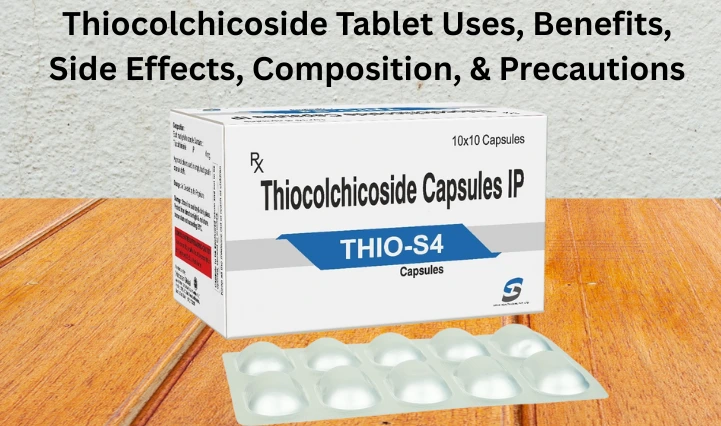

Ever deal with a sore that sudden neck twitch that just kills you? It sucks pretty bad. Doctors usually prescribe muscle relaxants in those cases to ease the discomfort. Thiocolchicoside counts as one of the go-to ones they prescribe a lot. This blog give you a guide to understanding Thiocolchicoside tablet uses, what they are, how they work, their side effects, and crucial precautions you must know.
Table of Contents
What is thiocolchicoside?
Thiocolchicoside is derived from the plant Gloriosa superba. It contains the colchicine compound. They make the drug semi-synthetic from that. It works differently from steroids. It hits the central nervous system. Eases stiffness without much hassle. Stops those spasms that hurt so bad. Does not mess with your muscle strength at all.
Additionally, it contains built-in anti-inflammatory properties. Relieves pain, too. So yeah, that makes a triple-action deal for musculoskeletal pain. That’s pretty effective relief there
Thiocolchicoside Tablet Uses
- Thiocolchicoside mainly works as a muscle relaxant.
- Treating acute and chronic back pain
- Relieving muscle cramps, stiffness, and all that painful contracting in the muscles.
- It manages postoperative pain
- Handling of musculoskeletal disorders, such as ankylosing spondylitis, rheumatoid arthritis, and other joint diseases.
- It alleviates vertebral damage, traumatic injuries, and nerve-related muscle conditions like persistent torticollis.
- It is used as an adjuvant treatment in orthopedic, rheumatologic, and neurological disorders, including post-stroke hemiplegia and muscle symptoms related to Parkinson’s disease.
- It acts as an anti-inflammatory and analgesic. By blocking enzymes involved in pain and inflammation. Through cyclooxygenase inhibition.
Benefits of Thiocolchicoside
It has two main benefits.
The central part: It acts directly within the brain and spinal cord, part of the central nervous system. It copies this neurotransmitter called GABA, which stands for gamma-aminobutyric acid. GABA is our body’s big inhibitory one. It calms down all that nerve firing. By boosting the effects of GABA, thiocolchicoside reduces the overactive signals from nerves. Those signals cause muscles to tighten and spasm in a painful manner.
The peripheral action: At the muscle level, it directly fights inflammation. That helps ease the swelling and pain from muscle injuries locally.
All this together helps knock out those muscle spasms well.
Thiocolchicoside Dosage
- Your doctor will determine the exact dosage based on your specific condition. They also examine the severity of the situation.
- For most adults, the recommended dosage is 4 mg, taken twice daily. That’s what sites like 1mg and Saya Care say anyway.
- It comes in different shapes. Tablets work fine. Capsules too. Injections are there for when things get really rough fast. Doctors switch you to pills after that.
- Stick with the full treatment time your doctor sets, even if you feel okay sooner. Don’t go on alone. Talk to them first.
Side Effects Come with Thiocolchicoside.
It is like most medicines. They can happen. But not to everyone. Vinmec and Care Hospitals mention these in their sources.
Common Side Effects
- Drowsiness hits first. Sleepiness follows closely. Dizziness rounds it out.
- Mild stomach upset might bother you. Nausea can tag along, too.
- Lightheadedness sneaks in there sometimes.
These effects pass quickly. They are transient usually. Still, you should avoid driving. Skip operating heavy machinery. And stay away from alcohol. All that contributes to the drowsiness and dizziness setting in more intensely.
Rare Side Effects get Serious Fast
- Allergic reactions give warning signs. Skin rash appears. Itching starts up. Swelling hits the face or tongue. Severe dizziness comes on strong.
- Severe stomach pain demands attention.
- Unusual tiredness drains you. Confusion clouds things.
- Liver problems signal trouble. Dark urine shows first. Yellowing affects the eyes or skin.
Thiocolchicoside Precautions
Pregnancy: Thiocolchicoside is a total no-go during pregnancy. That holds doubly true for the later months. It could cause significant problems for the baby.
Same deal with breastfeeding: Nursing moms should steer clear. The stuff might get into the milk.
Avoid Alcohol: Please do not mix this medication with any other medicines. That combination increases sleepiness and dizziness. You could end up hurt by accident.
Inform your doctor of any existing health issues:
- Kidney Or Liver issues
- Past stomach ulcers
- Any Allergies
Drugs Instruction: Let your doctor know every pill you take. That includes other pain medicine or relaxants. Stuff for anxiety or depression falls in there. CNS depressants, especially. Even over-the-counter things.
Driving or running machines is risky: This medicine makes you drowsy. It messes with focus. Hold off on those jobs until you see how it hits you.
Thiocolchicoside Tablet Storage
Location: Store this item in a cool, dry spot. Keep it at room temperature. That means around 20 to 25 degrees Celsius. Or 68 to 77 Fahrenheit if you prefer that. Some people recommend setting the temperature below 30 degrees Celsius. And stay away from direct sunlight.
- Access: Keep it out of children’s and Pets’ reach
- Check the Container: Always store the medicine in its original container.
- Check Before Use: Always use the original container for the medicine. Check the tablets before you take them.
Dispose of Expired Medicine: If they look discoloured or crumbly. Or smell off. Please get rid of them. That means they might be bad. Do not use thiocolchicoside past the expiration date. Dispose of any leftover or old items properly.
Disclaimer: This blog is only for informational purposes. It gets compiled from publicly available medical sources. It is not a substitute for professional medical advice, and it is not a substitute for diagnosis also It is not a substitute for treatment. You should always consult your physician for advice. Or consult with another qualified healthcare provider. Do that with any questions you have about a medical condition.
Frequently Asked Questions
Ans. No way. That is not what it is for at all. Doctors design it specifically for those painful muscle issues, the kind that cause spasms.
Ans. No, Thiocolchicoside does not count as a steroid. They get it from this plant called Colchicum autumnale. However, its structure and mechanism of action differ from those of colchicine, which is used to treat gout.
Ans. Just take it when you remember, unless it is almost time for the next one. Then skip the missed bit. Keep going with your usual schedule. Never double up to catch up, that is a bad idea.
Ans. Generally no. They prescribe it for short-term conditions, such as acute muscle spasms. Long-term is not recommended. Side effects could build up. Additionally, there is a lack of data on safety over time.
You must be logged in to post a comment.