
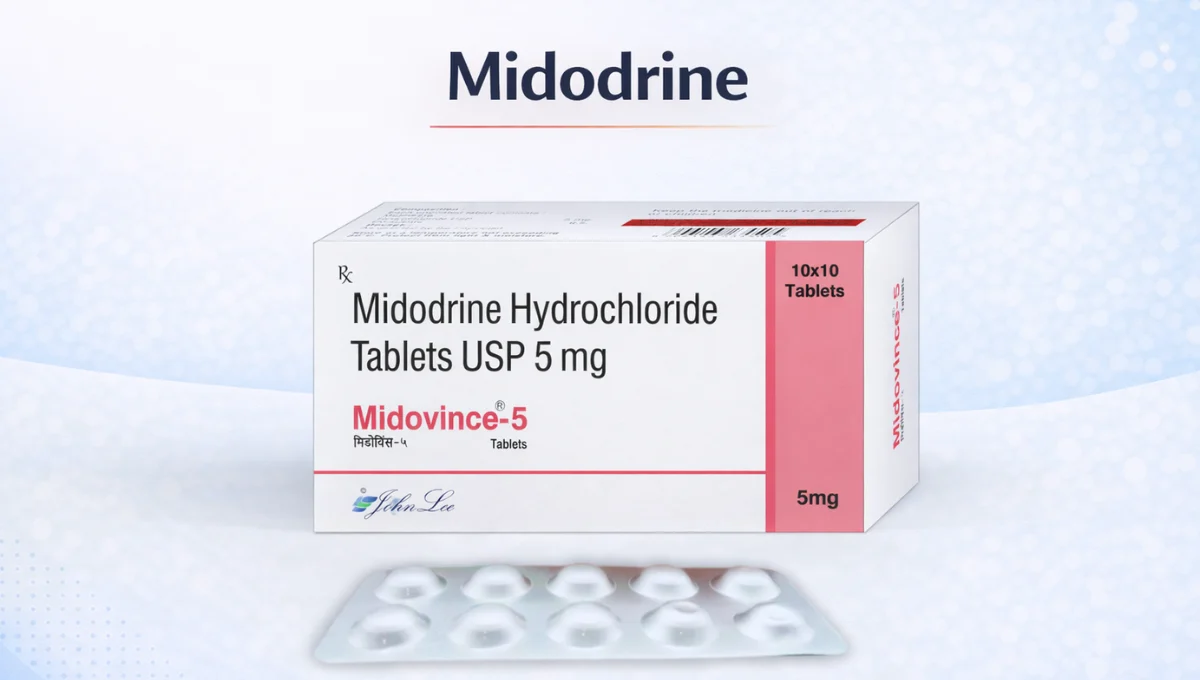

Midodrine is an oral prescription medication used to treat orthostatic hypotension (low blood pressure on standing). It works by constricting blood vessels, which increases blood pressure and helps reduce dizziness and fainting. Midodrine hydrochloride is commonly prescribed as a low BP medicine for managing postural hypotension. It is widely used when lifestyle changes alone are not enough to control symptoms.
Table of Contents
Quick Overview: Midodrine
| Catagory | Information |
|---|---|
| Drug Class | Alpha-agonist (Vasopressor) |
| Primary Use | Orthostatic hypotension |
| Common Brands in India | Gutron, Midodrive, Midocan, Cipmido |
| Average Price in India | ₹350 – ₹900 per strip (depends on brand/dose) |
| Prescription Needed? | Yes |
What is Midodrine?
Midodrine is an oral prescription medication used to treat a medical condition called severe orthostatic hypotension, which is a sudden drop in blood pressure when a person stands up. It helps to prevent fainting and dizziness by tightening blood vessels.
Drug Composition
The composition of midodrine tablets is classified under a group of drugs known as alpha-adrenergic agonists, also known as vasopressor drugs. The active salt is midodrine hydrochloride, which directly impacts blood pressure regulation by narrowing the blood vessels.
Midodrine Uses
What is midodrine used for? This medicine is used to treat orthostatic hypotension when other non-medical treatments have been ineffective.
- Treats orthostatic hypotension
- Helps prevent dizziness while standing
- Improves blood flow to the brain
- Used when other treatments fail
Orthostatic Hypotension
The primary use of this medicine is to treat orthostatic hypotension. This condition results in severe dizziness when a person stands. This happens when blood collects in the legs. Midodrine for orthostatic hypotension helps push the blood back up to the brain and heart.
Learn more about different types of blood pressure medicine and how they work.
How Does Midodrine work
The midodrine mechanism of action is that it stimulates the alpha-1 receptors that are present in the vessels. This action increases vascular resistance and activates the sympathetic nervous system, helping maintain stable blood pressure when changing posture.
Vasoconstriction Explained Simply:
Imagine your blood vessels like a garden hose. When the hose becomes too wide, the pressure inside can drop. Certain medications work by narrowing (constricting) the blood vessels, which helps increase blood pressure and ensures that enough blood reaches the brain when you stand up. This mechanism is especially helpful in conditions like orthostatic hypotension
Midodrine Dosage Guide
It is important to find the appropriate midodrine dosage. This will ensure safety and efficacy. Your doctor will adjust your dosage depending on your blood pressure response.
Standard Dosage
The standard dosage of this medicine for an average adult begins at 2.5 mg. This should be taken two to three times a day.
Dose Adjustments
When 2.5 mg proves to be insufficient, your doctor may increase your dosage to 5 mg or 10 mg. However, the daily dosage should not exceed 30 mg.
Timing (Crucial for Safety)
It is important to take this medicine during the daytime when you are in an upright position. Doses should be spaced 3 to 4 hours apart. Avoid taking this medicine just before lying down.
Daily Dosage Schedule Example:
| Dose | Best Time | Note |
|---|---|---|
| Dose 1 | Shortly before getting out of bed | Helps with morning dizziness |
| Dose 2 | Midday (12 PM – 1 PM) | Take with or without food |
| Dose 3 | Late afternoon (4 PM – 5 PM) | Must be 4 hours before bedtime |
Missed Dose & Overdose
If you miss a dose and plan to lie down, skip it. Do not double the dose to compensate. An overdose can cause dangerously high blood pressure, requiring immediate emergency medical care.
Symptoms of overdose may include:
- Severe headache
- Chest pain
- Blurred vision
- Slow or irregular heartbeat
- Extremely high blood pressure
Seek emergency medical help immediately if overdose is suspected.
How to Monitor Blood Pressure While Taking Midodrine
Regular monitoring of blood pressure is essential while taking midodrine to avoid complications.
- Check blood pressure before taking each dose
- Measure again 1 hour after taking the medicine
- Keep a daily record of readings
- Contact your doctor if BP exceeds 180/110 mmHg
Monitoring helps ensure the medicine is effective and prevents dangerously high blood pressure.
How & When to Take Midodrine
The timing to take this medicine entirely depends on your daily activity plan. You should only take it when you are going to be in an upright position for the next few hours.
- Morning/Evening Timing: Take your first dose as soon as you wake up. Take your last dose at least 4 hours before going to bed. Can midodrine be taken at night? No, it is not safe to take this medicine at night because it is extremely dangerous to take it at night due to the risk of “supine hypertension.”
- Avoid Lying Down: After taking this medicine, you should not lie flat during the day. If you need to rest, then you should use a “recliner.”
Doctor Tips: You should not lie flat after taking this medicine, as it may cause your blood pressure to increase, which is dangerous. You should keep your head elevated at a 45-degree angle if you need to rest.
How Long Does Midodrine Take to Work?
Midodrine begins to take effect rapidly to counteract dizziness and maintain blood pressure.
- Onset Time: This medicine begins to take effect after 30 to 60 minutes of administration.
- Duration: The effects of this medicine are temporary, lasting only 3 to 4 hours, hence the need to take it frequently.
Midodrine Side Effects
Like all alpha agonist medications, this medicine comes with potential adverse effects. Monitoring midodrine side effects is crucial for a safe treatment journey.
Common Side Effects
Most side effects are harmless but can feel unusual or uncomfortable.
- Goosebumps and chills
- Scalp tingling or itching
- Frequent urge to urinate
Serious Side Effects
Seek medical help if you experience severe headaches, blurred vision, or a pounding heartbeat. These indicate dangerously high blood pressure.
Side Effects Severity Table:
| Severity | Side Effect | What to Do |
|---|---|---|
| Mild | Tingling/Goosebumps | Normal reaction usually fades |
| Mild | Nausea/Stomach upset | Take with food if needed |
| High | Pounding in ears/Neck | Stop the drug, check the blood pressure |
| High | Difficulty urinating | Call your doctor immediately |
Doctor Consultation Trigger
Contact your doctor immediately if your blood pressure becomes very high (above 180/110 mmHg) or if you experience severe headache, chest pain, or vision disturbances.
Warnings & Precautions
Is Midodrine safe for use? Midodrine is generally safe when used under medical supervision, but careful monitoring is required to prevent complications.
Supine Hypertension
The most important risk of midodrine is supine hypertension, which means high blood pressure while lying down. This happens because the medicine continues to constrict blood vessels even when you are resting.
If not controlled, it may increase the risk of complications such as stroke.
Prevention tips:
- Avoid lying flat during the day
- Do not take the medicine close to bedtime
- Sleep with your head elevated (30–45 degrees)
Kidney Disease
Due to the fact that the drug is metabolized by the kidneys, patients with severe kidney disease are advised to use the drug with extreme caution or avoid it entirely.
Heart Conditions
Patients with heart failure or slow heart rates are advised to be closely monitored while taking the drug, as it could slow the heart rate even further.
Who Should Not Take Midodrine?
Some individuals are advised to avoid the drug entirely due to the serious health risks associated with their conditions.
Contraindications Table:
| Condition | Why to Avoid |
|---|---|
| Severe organic heart disease | Can overwork a weak heart |
| Acute kidney disease | The drug builds up to toxic levels |
| Urinary retention | Worsens the inability to urinate |
| Thyrotoxicosis (Overactive thyroid) | Risk of severe heart arrhythmias |
Drug Interactions
Dangerous interactions with other drugs are possible. It is always important to inform your physician about your medications before taking the drug.
- BP Meds: It can cause a hypertensive crisis when combined with medications that also increase blood pressure.
- MAO Inhibitors: Antidepressants can increase the effects of the drug.
- Digoxin: It can cause an extremely slow heart rate when combined with it.
Midodrine vs Other Treatments
The appropriate low blood pressure treatment depends on your specific symptoms and the cause of low blood pressure.
Midodrine vs Fludrocortisone
Although midodrine works rapidly to constrict blood vessels, fludrocortisone, a steroid, works by helping your body retain salt and water to increase blood volume. Also, whereas this medicine works within 30 minutes, fludrocortisone takes days to work.
Midodrine vs. Droxidopa
These two medications are used to treat orthostatic hypotension. Midodrine works by constricting blood vessels, whereas droxidopa is converted to norepinephrine, which works naturally to increase blood pressure.
Comparison Table:
| Feature | Midodrine | Fludrocortisone | Droxidopa |
|---|---|---|---|
| Action Type | Vasoconstrictor | Fluid retainer | Norepinephrine booster |
| Speed | 30-60 mins | Days to weeks | Hours |
| Supine BP Risk | High | Moderate | High |
What to Avoid While Taking Midodrine
In order to make sure this drug works safely, you must control your lifestyle and your daily habits.
- Alcohol: It makes blood vessels dilate, completely counteracting the effects of this medicine.
- Caffeine: Too much caffeine can raise blood pressure when taken with this medicine.
- Lying Flat: As was mentioned a few times, this is the worst thing you can do while this drug is in your system.
Food Interactions
- Large meals may worsen post-meal low blood pressure.
- High salt intake may further increase blood pressure.
- Maintain a balanced diet as advised by your doctor.
Midodrine in Special Populations
Specific groups that need special care and monitoring when taking this drug are as follows.
- Pregnancy: It can be used during pregnancy when the benefits are considered to outweigh the risks to the fetus.
- Elderly: The incidence of midodrine side effects in elderly tends to be higher, especially urinary retention and supine hypertension.
Midodrine Price in India & Availability
If you are searching for this medicine in India, you can easily get this drug in various brands. The price of midodrine in India varies from ₹350 to ₹900 for a strip of 10-15 tablets, depending on the dose (2.5 mg or 5 mg). The drug is strictly a prescription drug and cannot be bought as an over-the-counter drug.
How to Store Midodrine
- Store at room temperature (below 25°C).
- Keep away from moisture and direct sunlight.
- Keep out of reach of children.
- Do not use expired medication.
References
- Mayo Clinic
- NHS UK
- MedlinePlus
- Drugs.com
Conclusion
Midodrine is a highly effective treatment for severe orthostatic hypotension, enabling patients to resume their mobility by preventing dizziness and fainting. However, it is important to use it correctly, especially in adherence to the strict daytime dosing schedule, to prevent blood pressure surges. Always consult your healthcare provider to achieve the correct dosage balance.
Frequently Asked Questions
This medicine is used to treat symptomatic orthostatic hypotension, a condition where your blood pressure drops severely when you stand up, causing dizziness or fainting.
It works by tightening the blood vessels (vasoconstriction), which increases blood pressure and helps pump blood efficiently to your brain and upper body when you are upright.
Common side effects include goosebumps, scalp tingling, chills, and a frequent urge to urinate. A serious side effect is dangerously high blood pressure when lying down.
You should take it during the daytime when you are upright and active. Doses are usually spaced 3 to 4 hours apart, and the last dose must be taken at least 4 hours before bedtime.
It acts quickly, usually within 30 to 60 minutes after taking a tablet, and the effects last for about 3 to 4 hours.
It can be safe for long-term use if closely monitored by a doctor, but regular check-ups are necessary to ensure it isn’t causing chronic high blood pressure.
People with severe heart disease, acute kidney failure, urinary retention, or an overactive thyroid should avoid taking this medication entirely.
Medical Disclaimer
The content of this article is for informational purposes only and should not be considered a substitute for medical advice, diagnosis, or treatment. Always consult a qualified healthcare professional before taking, stopping, or modifying any medication, including midodrine.
You must be logged in to post a comment.