
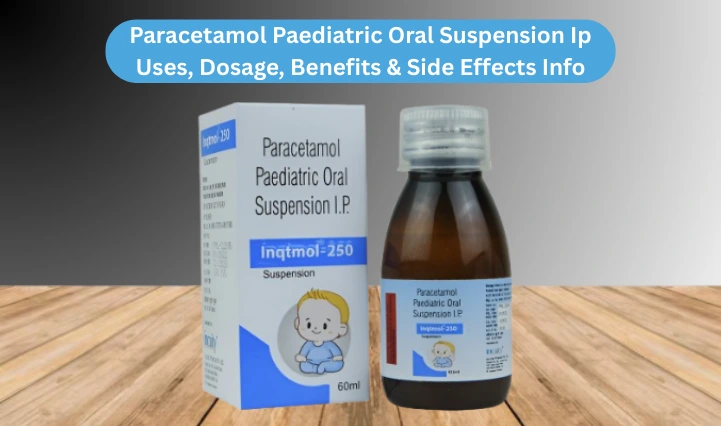

Seeing your child sick with a fever is stressful for any parent. When your little one feels hot and uncomfortable, you want a safe and reliable solution. This is where Paracetamol Paediatric Oral Suspension IP comes in. This guide will provide doctor-level clarity in simple language, so you know exactly how to safely use this medication to help your child feel better.
| Product | Paracetamol Paediatric Oral Suspension IP / pediatric oral suspension or drops for children |
| Common strengths | 100 mg, 250 mg, and 120 mg/250 mg variants are shown across the listed products |
| Common pack size | A 60 ml bottle is a frequently listed pack size |
| Typical price range | Around ₹20 to ₹60 per 60 ml bottle |
| Example manufacturers | Azaris Pharma, Medok Lifesciences, Plenum Biotech, Rapidchem Healthcare, Rabnew Pharma, Mediboon Pharma, and Aingo Pharma |
| Best use in intro | Useful as a quick snapshot before explaining dosage, safety, and age-wise use |
Table of Contents
What is the Paracetamol Paediatric Oral Suspension IP?
Paracetamol Paediatric Oral Suspension IP is a widely trusted antipyretic medicine and pain reliever formulated specifically for young children. Unlike adult tablets, this liquid suspension is easy for kids to swallow and is absorbed quickly into the body.
Composition And Medicine Strength
The most common formulation you will find is Paracetamol oral suspension 120mg/5ml. This means every 5 milliliters of the liquid contains 120 milligrams of the active salt. For older children, doctors might prescribe a stronger 250mg/5ml version. Always check the label to confirm the exact strength before giving any fever medicine for children.
How It Works
When your child gets an infection, their body raises its temperature to fight off the germs. Paracetamol works by blocking the chemical messengers in the brain that tell the body to increase its temperature and feel pain. This makes it an excellent fever reducer and pain relief for children.
Read More – Aceclofenac Paracetamol & Serratiopeptidase Tablets Uses
Paracetamol Paediatric Oral Suspension IP Uses
Pediatric paracetamol uses go beyond just lowering a high temperature. Pediatricians recommend this medication for several common childhood ailments:
- Relieving high fever from viral or bacterial infections
- Easing body aches associated with cold and flu
- Reducing pain from a toothache or dental procedures
- Managing post-vaccination fever and soreness
- Calming earache pain
Real-Life Scenario: If your child has a 102∘F fever at night, they might be crying and unable to sleep. Giving them the correct dose of paracetamol syrup for kids can bring their temperature down within an hour, allowing them to rest and recover.
Paracetamol Paediatric Oral Suspension IP Dosage
Understanding the correct paracetamol suspension dosage for child safety is the most important part of this guide. Always prioritize child medication safety by following accurate pediatric dosage guidelines.
Dosage By Age Chart
Below is a general guideline for dosing paracetamol oral suspension 120mg/5ml based on age. However, pediatricians always recommend using weight rather than age for the most accurate dose.
| Age Range | Estimated Weight | Dosage (120mg/5ml strength) |
| 3 to 6 months | 5 to 7 kg | 2.5 ml to 3 ml |
| 6 to 12 months | 7 to 10 kg | 3 ml to 4 ml |
| 1 to 2 years | 10 to 12 kg | 4 ml to 5 ml |
| 2 to 4 years | 12 to 16 kg | 5 ml to 6.5 ml |
| 4 to 6 years | 16 to 20 kg | 6.5 ml to 8 ml |
| 6 to 8 years | 20 to 25 kg | 8 ml to 10 ml |
Dosage By Body Weight
If you are wondering about the paracetamol dosage for child by weight, the standard medical rule is 10 mg to 15 mg of paracetamol per kilogram of body weight per dose.
For example, if your child weighs 10 kg, a single dose would be 150 mg. Using the standard 120mg/5ml syrup, you can easily calculate the required liquid volume. Weight-based dosing ensures you are not giving too little (which won’t work) or too much (which is dangerous). If you ever ask “how much paracetamol for 5 year old,” always weigh them first.
Administration Frequency
How often can I give paracetamol to child safely? You can give a dose every 4 to 6 hours if the fever or pain returns. You must never exceed 4 doses in a 24-hour period.
How To Give Syrup
Giving medicine to a fussy child requires patience. Follow these simple steps for stress-free dosing:
- Shake the Paracetamol Paediatric Oral Suspension IP bottle vigorously for 10 seconds to mix the medicine evenly.
- Use the measuring cap or oral dosing syringe that came with the medicine.
- Never use a household kitchen spoon, as they vary in size and cause inaccurate dosing.
- Have your child sit upright to prevent choking.
- Place the syringe toward the inside of their cheek and push the plunger slowly.
- Offer a sip of water or milk immediately after to wash down the taste.
Paracetamol Paediatric Oral Suspension IP Benefits
Why would this suspension be one of the best choices to be made for a child’s care?
- Child-friendly: This liquid form is easy to swallow for babies and young children who cannot be given tablets because of the risk of choking.
- Fast-acting: Medications take a relatively short amount of time to absorb and begin reducing fever and aching within 30-60 minutes.
- Generally Well-Tolerated: Used properly at recommended doses, pain medications in general are generally well-tolerated by most children and have fewer stomach-related side effects than some other pain-relieving medications.
Paracetamol Paediatric Oral Suspension IP Side Effects
While paracetamol is incredibly safe when used properly, parents should be aware of potential paracetamol syrup side effects in kids.
Common side effects are very rare but may include mild stomach upset. Serious side effects require immediate medical attention. Look out for allergic reactions like skin rashes, swelling of the face or tongue, and difficulty breathing.
When Not To Give
There are specific situations where you must avoid giving this medication. Do not give Paracetamol Paediatric Oral Suspension IP if:
- Your child has known liver problems or kidney disease
- They are already taking other cold medicines that contain paracetamol (leading to double-dosing)
- They have previously had an allergic reaction to antipyretic medicine
- The baby is under 2 months old, unless explicitly ordered by a doctor
Overdose Warning Signs
Accidental overdose is a major risk if medicine is left within a child’s reach. Symptoms of an overdose may not appear immediately, but can cause severe liver damage.
Warning signs include extreme nausea, vomiting, sweating, lethargy, and pain in the upper right side of the stomach. If you suspect your child has taken too much, do not wait for symptoms to appear. Rush them to the nearest hospital or call emergency poison control immediately.
Time To Work
Parents pacing the floor at night often ask how long does paracetamol take to reduce fever. Generally, Paracetamol Paediatric Oral Suspension IP starts working within 30 to 60 minutes.
The best time to give paracetamol for fever is when the child is visibly distressed, or their temperature crosses 100.4∘F. Once given, you should see your child start to sweat slightly, and their energy levels begin to improve as the fever drops.
Drops Vs Syrup Vs Tablets
Choosing the right format depends entirely on your child’s age and ability to swallow.
| Medicine Format | Best For | Key Difference |
| Paracetamol Drops | Babies (0 to 1 year) | Highly concentrated; given in small drop amounts |
| Paracetamol Syrup | Toddlers and Kids (1 to 12 years) | Lower concentration; given in milliliters via cup or syringe |
| Paracetamol Tablets | Older Children (10+ years) | Chewable or swallowable solids; requires the ability to swallow pills |
Storage And Safety Tips
Keep the medicine bottle tightly closed and store it in a cool, dry place away from direct sunlight. Do not freeze the syrup. Always store medications in high cabinets with child-proof locks. Discard any remaining liquid six months after opening the bottle, or by the expiration date printed on the packaging, whichever comes first.
Price And Availability
Paracetamol Paediatric Oral Suspension IP is highly affordable and available over-the-counter at all major pharmacies in India. Prices vary slightly by brand, but it remains a cost-effective essential for your family’s first-aid kit.
Here is a quick overview table showing the pricing and manufacturer details for Paracetamol Paediatric Oral Suspension IP based on various pharmaceutical brands in India:
| Manufacturer / Company | Brand Name | Strength / Volume | Estimated Price (INR) |
| Azaris Pharma | Parzaris-250 | 250 mg (60 ml) | ₹44 / Bottle |
| Medok Lifesciences | (Varies) | 250 mg (60 ml) | ₹52 / Bottle |
| Plenum Biotech (via Stenhil Labs) | Tidpol | 100 mg (60 ml) | ₹30 / Bottle |
| Rapidchem Healthcare | (Varies) | 120 mg / 250 mg (60 ml) | ₹28 / Bottle |
| Rabnew Pharma | (Varies) | 250 mg (60 ml) | ₹40 / Bottle |
| Mediboon Pharma | Boonmol-250 | 250 mg (60 ml) | Varies (B2B PCD Franchise) |
| Aingo Pharma | Aincol Drops | Pediatric Drops | Varies (B2B PCD Franchise) |
Conclusion
Paracetamol Paediatric Oral Suspension IP is a parent’s best tool for managing sudden childhood fevers and pains. By understanding the correct weight-based dosage, maintaining a strict timeline between doses, and keeping safety as your top priority, you can help your child recover comfortably. Always consult your pediatrician if a fever lasts longer than 3 days or is accompanied by severe symptoms.
Medical Disclaimer
The information provided in this article is for educational purposes only and does not substitute for professional medical advice. Always consult your pediatrician before starting any new medication for your child.
Frequently Asked Questions
The correct dosage is based on the child’s weight, typically 10 mg to 15 mg per kilogram of body weight, given every 4 to 6 hours.
Is paracetamol safe for babies? Yes, it is safe for babies over 2 months old, but you should always consult a pediatrician for the exact dose, often administered via concentrated drops rather than syrup.
You can give a dose every 4 to 6 hours as needed. Do not give more than 4 doses in a 24-hour period.
Yes, when given at the correct dosage, it is one of the safest and most effective fever and pain relievers for children.
Taking too much can cause severe and irreversible liver damage. Seek emergency medical care immediately if you suspect an overdose, even if there are no immediate symptoms.
It typically takes between 30 and 60 minutes to start lowering a child’s body temperature.
Yes, it can be taken with or without food. However, giving it with a small amount of milk or food can help prevent mild stomach upset.
Drops are highly concentrated and designed for infants, so they only need a tiny volume. Syrups are less concentrated and designed for older toddlers and children who can swallow larger liquid volumes.
You must be logged in to post a comment.