
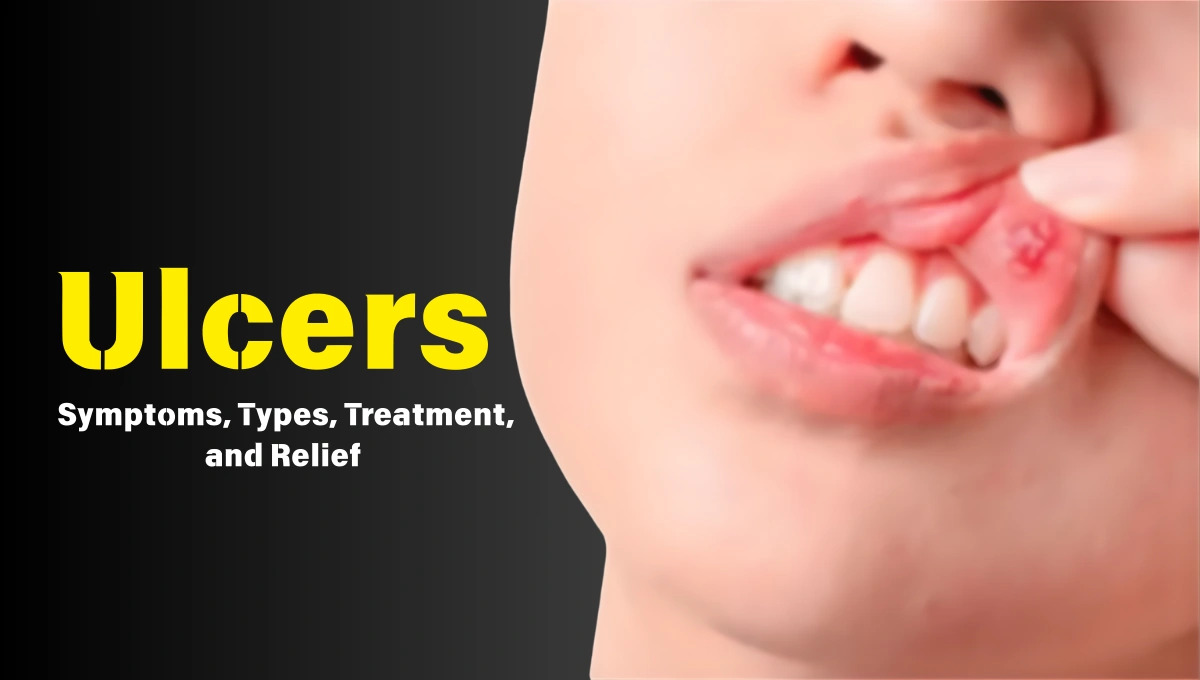

The ulcers of the stomach occur without any predictors and make daily food intake an agonizing experience in terms of that burning sensation in the gut that millions of people are too familiar with. Curiosity about whether ulcers would kill you, what a stomach ulcer or what is the most effective treatment for ulcers? This guide lights up into the best of the best, bringing you facts to help you get fast relief and give intelligent prevention.
Table of Contents
What are Ulcers?
In its simplest definition, an ulcer is an open wound. By stomach ulcer, we refer to a peptic ulcer, which is formally known as a stomach ulcer and refers to sores that grow on the inner lining of your digestive tract. Suppose that this lining were a shield. When this shield is weakened, an ulcer is formed, and your strong stomach acid destroys the sensitive tissue below it.
This injury forms an opening that may cause a constant grinding pain. It is not an ordinary stomach ache, but a particular injury that has to be given the proper conditions to recover.
Types of Ulcers
Although stomach ulcer is an everyday phrase, there are some important types according to the location:
- Gastric ulcers: These are ulcers that develop inside the lining of your stomach.
- Duodenal ulcers: they occur in the initial segment of the small intestine (the duodenum). The most common ones are surprisingly these types of peptic ulcer.
- Esophageal ulcers: This is located in the esophagus (your food pipe) and are commonly associated with severe reflux of acid.
It is also notable to know that ulcers may develop on other parts of the body (such as leg ulcers due to blood circulation issues), but peptic ulcers refer to the ones that are associated with your digestive system and stomach acid.
Read More – How to Cure Mouth Ulcers Fast Naturally at Home Easily
Ulcers Symptoms
When it comes to the most frequent indication, it is likely to be a burning stomach pain that occurs between your belly button and your breastbone. This pain often has a pattern:
- It can be more uncomfortable in cases when your stomach is empty (between meals or at night).
- The pain may temporarily improve with the eating of some foods or the administration of an antacid.
- It may be a coming and going affair, taking days or weeks.
The ulcers do not all scream, though. Others are silent and do not result in much or any transparent pain. Other symptoms can include:
- Fullness/ Bloating or belching.
- Heartburn
- Nausea
- A distaste for fatty food.
Important Red Flag Signs: There are symptoms that are a warning of a life-threatening complication, and which should be treated as an emergency. These include:
- Blood vomiting (either red or grounds of dark coffee)
- Dark, tarry, or bloody stools
- Acute, intense, and sharp abdominal pain.
- Lightheadedness, blackouts, or unexplained fatigue.
Ulcers Causes
For years, spicy food and stress got the blame. Although they may cause an irritation of the symptoms, two main causes of ulcers have been identified by science:
- H. pylori Bacteria: It is a highly common sort of infection. Most of them carry it with no problem, but in some, it may swell up the stomach lining, making it less effective against acid and leaving such an individual with an ulcer.
- Frequent Use of NSAIDs: An amount of NSAIDs taken regularly or occasionally over a long period of time, such as ibuprofen (Advil, Motrin), naproxen (Aleve), or aspirin, can help irritate the stomach lining and weaken its immunity.
In hardly any cases, the ulcers may be caused by a condition where the stomach acid is produced in extreme amounts. There are some lifestyle factors, including smoking and alcohol, which could interfere with the healing process and increase your sensitivity to infection, especially if you have an H. pylori infection or are taking NSAIDs.
Read More About – Understanding Nausea: Symptoms, Triggers, Causes & Treatments
Ulcer Treatment
The positive side is that the majority of the ulcers can be cured. Treating ulcers effectively is not simply putting a cover over the sore, but doing so so that the sore can be repaired to heal well. This always involves the diagnosis and the plan of a doctor.
The medications to treat ulcers are selected depending on the cause of the issue:
- In case it is caused by H. Pylori: The treatment will consist of the use of a combination of antibiotic drugs (so as to eliminate the infection) and of anti-acid substances (so that the lining will get a chance to heal). This is usually a 1-2 week course.
- In case it is caused by NSAIDs: The primary solution is to quit or limit the use of NSAIDs (with the supervision of your physician), along with taking acid-reducing medications to help ease the healing process.
Usual medications for stomach ulcers are:
- Proton Pump Inhibitors (PPIs): As with omeprazole or esomeprazole, which are very potent in decreasing the production of acid.
- H2 Blockers: H2 blockers are similar to famotidine, which also reduces acid.
- Cytoprotective Agents: As in the case of sucralfate, which coats the ulcer, it works as a protective bandage.
Most peptic ulcers can be treated and healed in a few weeks.
When to Seek the Doctor for Ulcers
Do not ignore persistent symptoms. You are supposed to have an appointment with your doctor in case of persistent or recurrent burning stomach ache, particularly when it is in a pattern (such as appearing at night).
Emergency medical attention should be sought by you in case you develop any of the warning sign symptoms mentioned above. They may cause signs of a bleeding ulcer or a hole (intestinal wall or stomach) that is a serious emergency complication.
One of the frequent and deadly questions human beings ask is, can ulcers kill you? The immediate response is that although the ulcers themselves are highly curable, their untreated complications, such as excessive bleeding or an opening resulting in a generalized infection, can be deadly. This cold reality highlights the importance of ensuring that the diagnosis and treatment of the ulcer combination provided by a medical specialist is not about comfort only; this is an essential measure of your safety and health in the future.
You must be logged in to post a comment.