
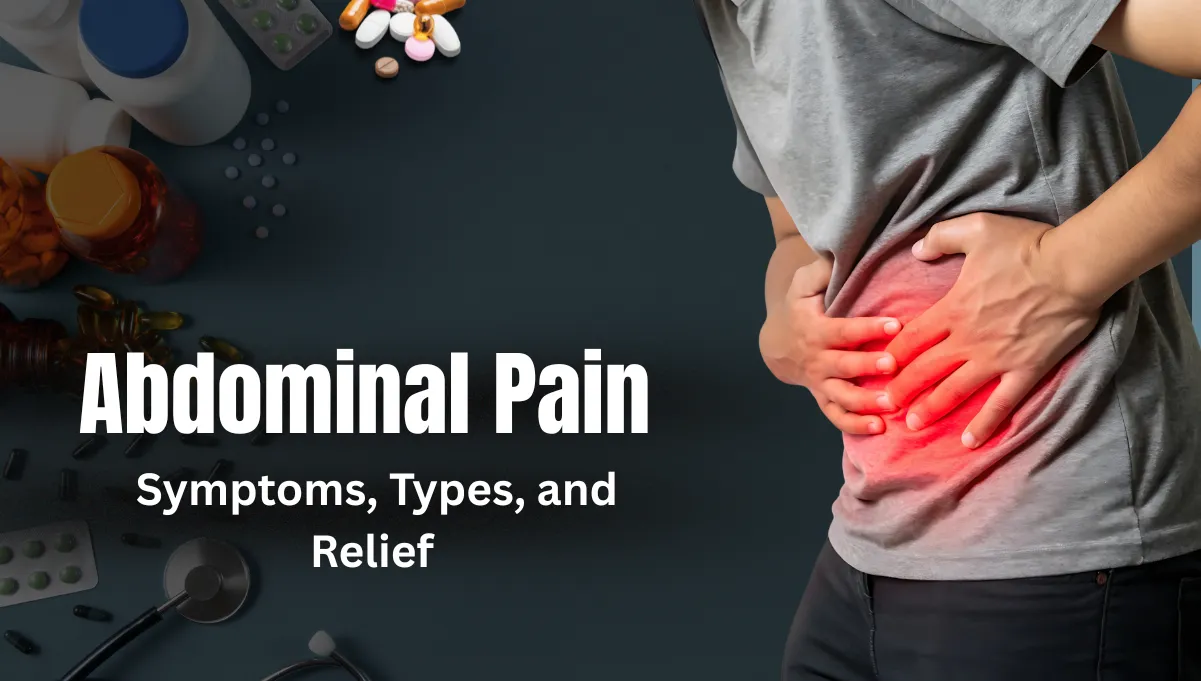

We have all experienced that weird longing, cramp, or painful pull in our belly. All people can experience abdominal pain, yet the meaning of this situation may be a complete enigma. Is it the pizza last night or the reason why you have to visit a doctor? This will give you the signals your stomach gives you, thus knowing when to relax with a home remedy and when to work quickly.
Table of Contents
What is Abdominal Pain?
Abdominal pain can be simply defined as any pain that you experience in the region located between the chest and the hips. Imagine it to be an alarm system; the body means that something is going on in your belly. This something can be as simple as a gas trapped and as serious as an infection. Due to the intestinal congestion of organs, such as your stomach, intestines, liver, gallbladder, pancreas, etc., it can be a difficult task to determine where it originates.
Types of Abdominal Pain
- General: Circulated all over the belly as usual with the viruses or gases.
- Localized: Hitting on top of one area, such as the lower right with appendicitis and the upper right with gallstones.
- Cramping: In and out waves, which are also associated with IBS or diarrhea.
- Colicky: Violent shakes in the formation of stones in the kidneys or in the gallbladder.
In stomach pain, lower cramps in the pelvis are an indicator of periods and cysts, or indicators of endometriosis, whereas sharp pain on the lower right side indicates ovarian problems or an ectopic pregnancy. Female abdominal pain is related to the changes in the reproductive system, and examination of the area is required.
Abdominal Pain Symptoms
Even the pain itself is just half of the tale. These are other symptoms that you experience together and are essential in understanding what is making you unwell:
- Bowel Habit: Constipation, diarrhea, orrectal hemorrhage.
- Digestive: The patient reports nausea, vomiting, bloating, or severe heartburn.
- Systemic Signs: Fever, chills, or loss of weight without any explanation.
- Sifting Sorrow: Dress in your back or your shoulder.
- Urinary Changes: This includes burning with peeing or sensing an urgency to pee.
In the case of abdominal pain in women, you have to mention the symptoms associated with your period, since pain in the stomach, which could be affecting females, is associated with reproductive health, such as ovulation or endometriosis.
Abdominal Pain Causes
The list of things that might cause it is long, since your abdomen is a very active location. Common triggers include:
- Digestive Problems: It is the most widespread one. Consider stomach flu (gastroenteritis), food indigestion, constipation, flatulence, food poisoning, or food intolerances.
- Inflammation & Infections: Such diseases as appendicitis, diverticulitis, pancreatitis, urinary tract infections (UTIs), or pelvic inflammatory disease (PID).
- Organ Problems: MI, kidney stones, algebraic kidney stones, gallstones, or liver problems.
- Reproductive health (in Women): ovulation, menstrual cramps, Ovarian cysts, fibroids, ectopic pregnancy. That is why assessing the abdominal pains in women is a matter that can be considered through evaluating both the digestive and gynecological health.
- Other causes: There are other occasions when an already strained muscle due to exercise or even stress can present as pain in the belly.
Treatment of Abdominal Pain
The right abdominal pain treatment depends 100% on the cause. Sometimes it makes one feel even worse, especially when an individual is taking the wrong abdominal pain medication; one should not generate self-diagnosis.
- Another one is using At-Home Care: When pain in the gas or overeating is familiar and mild (not intense or significant), then the first attempt at the real thing is rest, taking clear fluids, using a warm compress over your belly, and taking bland food (e.g., toast, rice, or banana).
- Over-the-Counter (OTC) Medicine: OTC can be applied to address particular issues. The type of medication that can alleviate heartburn is antacids or acid reducers. Simethicone assists in the bursting of gas. In case of menstrual cramps, ibuprofen or naproxen may be effective. Read the label always and seek the advice of a pharmacist in case you are in doubt.
- Medical treatment: In case a doctor identifies a pre-existing condition, the treatment of abdominal pain can be performed with the help of antibiotics to treat infections, taking stronger acid-blocking drugs to treat ulcers, or taking medications as a side effect of such a health condition as IBS. Surgery may also be required in a few instances, such as appendicitis or the presence of gallstones.
When to Seek the Doctor for Abdominal Pain
The majority of tummy struggles get over in a day or two. Nonetheless, some of the symptoms are warning signs that must be addressed urgently:
- Several unbearable pains that prevent you from sitting anywhere.
- Several experiences are described as pains that come after a new injury or accident.
- With your pain, high fever (more than 101 °C or 38.3 °F).
- Your stomach is tough, all filled, and extremely tender.
- You have the sharts and trouble in your vomit, or your vomit is like coffee dust.
- To you, there is blood in the stool, or there is black tarry stool.
- You experience some pain in the chest, neck, or shoulders, as well as belly pain.
- You have trouble breathing.
- To women: extreme pain in case and only in case of pregnancy.
Listen to your gut. Though in most cases, abdominal pain is not very serious, your body is talking to you. Do not overlook severe, lasting, and associated with any of the warning signs that are mentioned above. In such a case, it is always safe to consult a professional who will relieve him or her and make the correct choice.
You must be logged in to post a comment.