
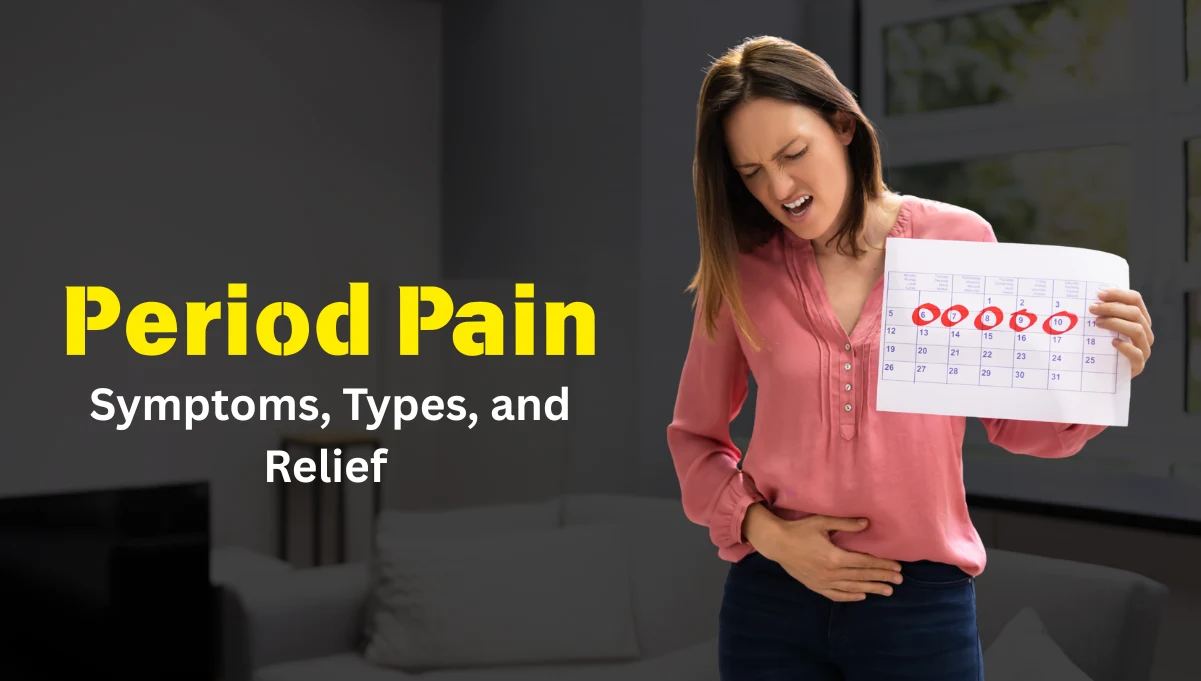

Honestly, it becomes a war against Period Pain every month for too many people. That tight pain or the severe cramp does not necessarily need to ruin your life. When you are sick of you just have to move it out, then you are at the right place. The guide exposes everything, providing you with straightforward, workable information on such aspects as the root causes, as well as quick-fixing solutions such as period pain relief tablets and how to eliminate period pain altogether.
Table of Contents
What is Period Pain?
Period pain is known as dysmenorrhea, although it is in fact your uterus just doing its job. To discharge its lining every month, the muscular walls of your uterus start shortening rhythmically. Such contractions may actually slow down the blood circulation, hence the common cramping effect. Let us suppose it as a painful and involuntary spasmodic contraction of the lower abdominal muscles. Although this is very common in every person, it can be very intense for each of the people.
Period Pain Symptoms
Cramps in the lower belly are normally the center stage, but the consequences are usually accompanied by a full cast. You might experience:
- Monotonous sore back or pains that stab.
- The type of pain that continues in your lower back and thigh.
- Annoyed by such problems as headaches, nausea, bloating, and even loose stools.
- A sensation of being lightheaded or being generally tired.
The symptoms will tend to come into force each time you have your period and are also the most severe within the initial 24 – 48 hours of bleeding.
Types of Period Pain
Period pain is not necessarily equal. The two primary forms of period pain are most important to the identification of an appropriate management strategy.
- Primary Dysmenorrhea: This is the cramping that most people imagine and is a cyclic disorder. It was induced directly as a result of your menstrual period and is not associated with another disorder. It typically starts during your teens, and maybe the pregnancy helps it to improve, or it remains like this.
- Secondary Dysmenorrhea: This pain is a symptom of an illness of the reproductive health problem. It appears to begin later on during your cycle, and it takes a longer time than ordinary cramps. Usually, the common causes are endometriosis, uterine fibroid or pelvic inflammatory disease. This kind of pain often deteriorates with time.
Period Pain Causes
But exactly what causes period pain? In the context of primary dysmenorrhea, the primary reason for the pain is associated with a series of chemicals called prostaglandins. These chemicals are produced in the uterine lining and lead to muscle contractions in order to shed the lining. The more the cramps are, the stronger and more painful.
In the case of secondary dysmenorrhea, the causes are associated with definite conditions:
- Endometriosis: The tissue that develops is like in the uterus, only this time it expands outside the uterus.
- Uterine Fibroids: Noncancerous tissue growth in the uterus.
- Adenomyosis: This occurs when the uterine gland tissue has developed into the uterus muscle.
- Pelvic Inflammatory Disease(PID): This is an infection of the reproductive organs.
Treatment of Period Pain
There is such a potent armory in you. Integration of approaches can be the best.
Lifestyle & Home Remedies:
- Heat: This is simply done, sticking a heating pad or a hot water bottle on your abdomen is the tested method of relaxing muscles and calming cramps.
- Gentle Movement: You can increase your intake of endorphin that is your natural pain killer, and this can be acquired through gentle exercise such as walking or yoga.
- Eating habits: It is important to maintain hydration, and it is better to reduce the consumption of caffeine, sodium-rich foods, and alcohol, which worsen bloating.
Medical & Fast-Moving Solutions:
- Pain Killer (OTC): This is where painkillers purchased over the counter come in handy. The non-steroidal anti-inflammatory drugs (NSAIDs) such as ibuprofen or naproxen are specifically useful since they directly suppress the production of prostaglandins. They should be taken at the onset of pain to achieve maximum results.
- Immediate Relief: Combine a heat pack and Nonsteroidal antiinflammatory drug (OTC) (assuming that this is suitable for you) to relieve period pain immediately. Rapid relaxation may also be facilitated by abdominal light massage and slow breathing.
- Hormonal Treatments: Birth control pills, patches, or hormonal IUDs have the ability to lighten up heavy periods and lessen period pain by making the uterine lining fade.
- Prescription: Severe cases, according to a physician, may be treated with more effective analgesics or other interventions for the underlying causes of pain, such as endometriosis.
Read More – Which Tablet Gets Periods Fast? Facts on Medroxyprogesterone
When to Call the Doctor for Period Pain
Normal debilitating pain may not be common. It’s crucial to see a doctor if:
- Your suffering is so great that it interferes with your daily routine each month.
- Suddenly, cramps are aggravated.
- You are more than 25 and have the first time.
- You experience pain when you are not on your period or when having sex.
- There is massive bleeding with huge lumps.
- Painkillers that patients buy over the counter do not help.
- There is an abnormal discharge or fever that you have, which might mean that you are infected.
The first step is listening to your body, and then you are better taken care of. Period pain is manageable. Knowing the right information and tactics, you can leave your cycle of wholly surviving and go your own way to manage comfortably.
You must be logged in to post a comment.