
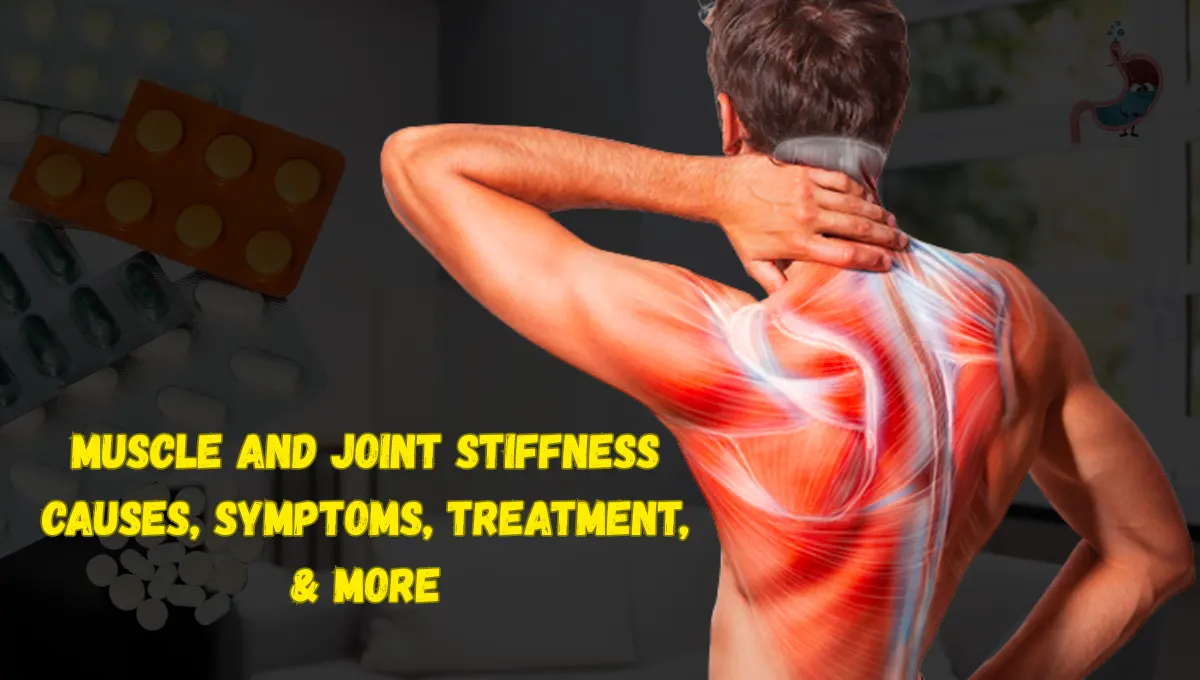

Ever had that feeling of complaining about every movement of your body, as if it needs a good oiling? That ordinary tightness and ache is a common experience. Whether it is due to exercising too heavily at the gym, maybe just sleeping in a funny position, or working all day at the computer. Stiffness is a signal in your body that is telling you that something is not right. Although it usually happens in relation to all kinds of issues, understanding why it happens would be the beginning of feeling flexible and ready to move.
Table of Contents
What is Stiffness?
In simple language, stiffness is a sensation in which you feel something ‘tight’; you would feel sore or unable to move your muscles or joints easily. It’s that feeling that makes it hard to create the range of motion of a body part. This common problem can occur after a new workout (that familiar soreness the next day) or be a symptom of such conditions as arthritis. There is no doubt that you are not alone. There has been an estimate that sometimes most people deal with stiffness that is continuous.
Types of Stiffness
By knowing and understanding the type, one can understand what its cause is too:
- Muscle Stiffness: This is a tight feeling, cramped feeling, or painful feeling in the muscle. It often happens after exercise (often called Delayed Onset Muscle Soreness or DOMS) or lengthy periods of exercise inactivity.
- Joint Stiffness: This is a sensation of not being able to move your joints, such as your knee or shoulder, easily. Moving the joint may take more amounts of effort. This type can be commonly related to a swelling or a disease such as arthritis.
Stiffness may also be classified depending on its duration: Acute (short-term, caused by such things as a new exercise) or chronic (long-lasting, often associated with an underlying medical problem).
Stiffness Symptoms
How do you know its stiffness? The following are the common stiffness symptoms:
- Pain, Tightness, or Cramping: A sensation of soreness, achiness, or a “locking” sensation in the muscles or joints.
- Limited Mobility: When you are unable to perform ordinary activities of daily living, such as bending, stretching, or getting up from a chair.
- Morning Stiffness: Discomfort tendency in the morning or after prolonged sitting, which may last for as little as or as many as minutes/hours.
- Additional Signs: Swelling, bruising (from strain or sprain), or just general abnormalities, where you are unable to get sleep or perform your daily tasks.
Stiffness Causes
Pinpointing the trigger is important to the discovery of relief. Stiffness causes can be anything, including:
- Physical Stress: Overexertion from exercise (DOMS), Sprains, strains, repetitive motion.
- Lifestyle Factors: Long periods of inactivity, poor posture, dehydration, or lack of essential nutrients in the body, such as magnesium and calcium.
- Medical Conditions: Some underlying medical problems that could be responsible, such as arthritis, polymyalgia rheumatica, and infection (e.g., flu, Lyme disease).
- Other Triggers: Possible triggers that include some medications (such as statins, insect bites, cold weather, and recovery from surgery.
Treatment of Stiffness
The great news is that most of the stiffness can be managed appropriately. A clever approach to a stiffness treatment plan may start at home. For continuous problems, professional assistance is of great use.
Professional Stiffness Treatment
Self-care may also not be enough; healthcare providers can do:
- Physical Therapy: A physiotherapist works to increase mobility, strength, and flexibility with different techniques, including massage, joint mobilizations, and personalized exercises.
- Medication: Doctors may prescribe or recommend anti-inflammatory drugs that may be used in order to slow down the pain and swelling, but this is especially recommended if they have an underlying condition that is the root of the problem.
- Expert Advice: On advice on ergonomics, posture, and movement patterns to avoid future problems.
Stiffness Treatment at Home
We have the first and most powerful treatment just right in the cabins of our kitchen, which is simple, tried, and tested remedies:
- Heat and Cold Therapy: Insist on a chill bath, shower, or heat treatments with heat to relax the stiff muscles (excellent for the morning stiffness). An ice pack can be used to relieve acute inflammation from the injury.
- Gentle Movement and Stretching: Stretching on a regular basis helps to increase blood circulation as well as flexibility. Avoid sitting for long periods of time by taking frequent short walks.
- Stay Hydrated and Nourished: Drink lots of water. Dehydration makes your body muscles sore. Eat a healthy diet that is high in nutrients.
- Over-the-Counter (OTC) Relief: Carry Over-the-Counter (OTC) medications like ibuprofen that work to reduce pain and inflammation temporarily.
- Rest and Massage: No one has time to do it, but let your body rest and gently massage areas of stiffness to get your body relief from tension.
When to Seek a Doctor for Stiffness
While most stiffness usually just goes away, there are some signs that deserve the opinion of a professional. The following are the reasons why you should seek a doctor for stiffness:
- Stiffness that does not subside in a few days without an actual outcome.
- Profound pain, significant swelling, redness, or warmth around a joint
- When stiffness comes with fever, this may be a sign of an infection occurring.
- Unexplained muscle weakness (not only muscle tightness).
- Stiffness when bitten by an insect, particularly with a rash or fever.
- Neck stiffness combined with a headache and fever. This needs immediate medical attention in case there are serious conditions such as meningitis.
Constant morning stiffness that prevents you from doing your everyday work.
You must be logged in to post a comment.