
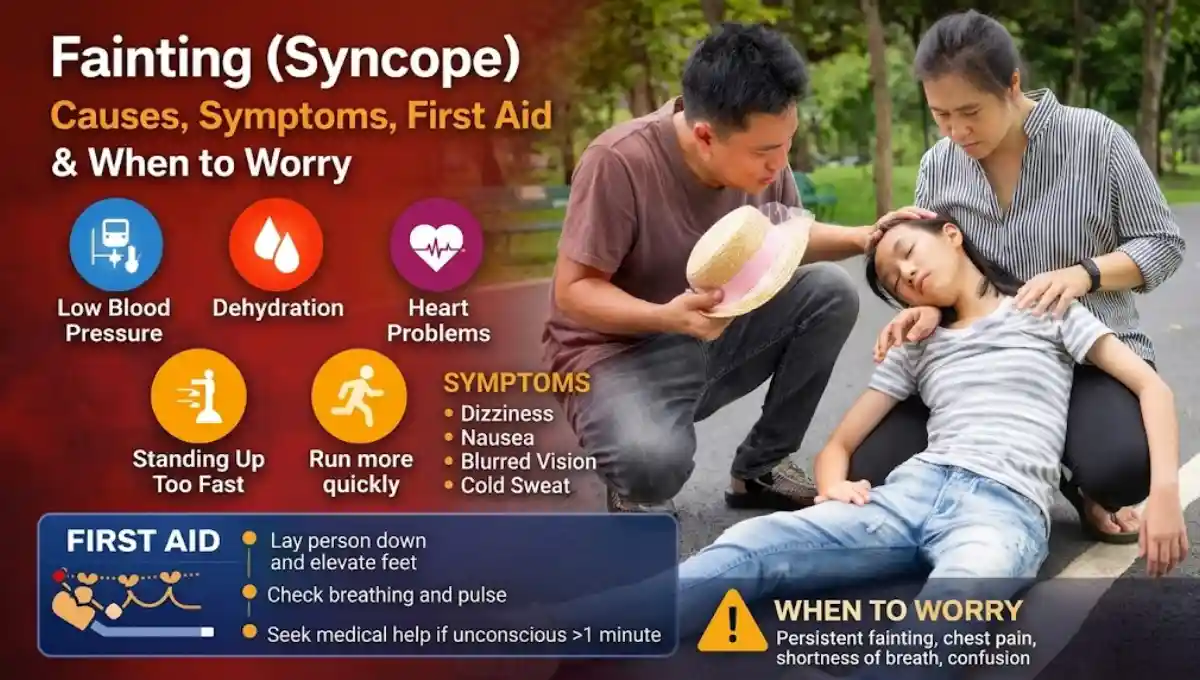

Watching someone suddenly collapse is a terrifying experience. Whether it happens to you or a person standing right next to you, fainting can easily cause panic. But to keep everyone safe, you really need to know why it happens and what to do next. This guide breaks down the warning signs, the correct first aid steps, and how to tell if faintness is a sign of a bigger health issue.
Table of Contents
What Is Fainting (Syncope)?
Fainting is a sudden, temporary loss of consciousness caused by a drop in blood flow to the brain.
Doctors actually call this condition syncope. If you have been searching for the exact syncope meaning, it simply describes the act of blacking out and waking up shortly after. Most people open their eyes within a minute. While it usually isn’t a big deal, figuring out why do people faint is super important because it can sometimes point to hidden health problems.
What Happens in Your Body When You Faint?
When you faint, your brain does not get enough oxygen-rich blood, causing your body to shut down briefly to protect itself.
If your blood pressure drops, your heart struggles to pump blood against gravity. Your brain quickly realizes it is dealing with reduced blood flow to brain and hits the emergency shut-off switch. By forcing you to fall flat on the ground, your body cleverly takes gravity out of the picture. Blood rushes back to your head, and you wake up.
Common Causes of Fainting
The most common causes of fainting include sudden drops in blood pressure, dehydration, extreme heat, and underlying heart conditions.
Vasovagal Syncope (Most Common)
This happens when your body basically overreacts to something stressful. It could be extreme emotional stress, sudden panic, or even just the sight of blood. This reaction makes your heart rate and blood pressure drop fast, leading to a classic vasovagal syncope episode.
Low Blood Pressure (Orthostatic)
Orthostatic hypotension happens when you stand up way too quickly, and your blood pressure fails to catch up. If you constantly wonder, “Why do I faint when I stand up?”, this is your answer. Blood pools in your legs, leaving your brain thirsty for oxygen.
Heart-Related Causes
Sometimes, the heart just isn’t pumping right. A heart rhythm problem, a faulty valve, or a super slow heartbeat can stop blood from moving properly. Sudden fainting causes often trace back to these heart issues, which means you need to see a doctor right away.
Dehydration & Heat
In India, dealing with severe heat and dehydration is a part of life. Fainting in heat causes trouble because sweating drains your body fluids, which naturally lowers your blood pressure. Fasting for festivals, skipping lunch, or standing in a crowded, stuffy local train can easily trigger you to faint.
Medications
Believe it or not, your daily pills might be the culprit. Certain drugs mess with how your body handles blood pressure. For example, if you take blood pressure medicine, a dose that is just slightly too high can drop your pressure too far and cause sudden dizziness.
Symptoms Before Syncope
Fainting symptoms that may occur before losing consciousness include sudden dizziness, sweating, nausea, and blurred vision or tunnel vision.
Your body usually gives you a heads-up before you hit the floor. Paying attention to these clues can stop a bad fall:
- Dizziness and fainting sensations out of nowhere
- Feeling really hot or flushed in the face
- Breaking out in cold, clammy sweat
- Blurred vision or seeing weird, dark spots
- A loud ringing sound in your ears
- Sudden nausea or feeling like you need to throw up
Types of Fainting
Different types of syncope have different triggers, causes, and risk levels that dictate how carefully they should be monitored.
| Type | Cause | Risk Level | When Dangerous |
|---|---|---|---|
| Vasovagal Syncope | Stress, fear, heavy pain, or seeing blood | Low | Rarely dangerous. The biggest worry is getting hurt when you fall. |
| Orthostatic Syncope | Standing up too fast and causing blood to pool | Moderate | Dangerous if it happens a lot, as falling can cause severe head injuries. |
| Cardiac Syncope | Heart rhythm problem or heart disease | High | Always dangerous. You need immediate medical help. |
| Situational Syncope | Heavy coughing, swallowing, or using the toilet | Low | Usually safe, but faintness in a hard bathroom can cause serious harm. |
Fainting vs Seizure vs Blackout
Fainting is a brief loss of consciousness from low blood flow, a seizure is caused by abnormal electrical activity in the brain, and a blackout is a memory loss event often linked to alcohol.
It is really easy to mix these up. But medically speaking, they are totally different things:
- Syncope: You faint briefly because of low blood pressure. Once you are lying flat, you bounce back fast.
- Seizure: Your body shakes uncontrollably due to sudden electrical surges in your brain. Waking up and feeling normal takes a lot longer.
- Blackout: You are actually awake and moving around, but you lose all memory of what happened. This usually comes from heavy drinking.
What To Do If Someone Faints
In case of syncope, the person should lie down on his or her back and elevate legs in order to enhance blood flow to the brain, followed by monitoring breathing.
Fainting first aid is simple but incredibly important. Follow these exact steps to keep the person safe:
- Try to catch them as they fall to protect their head from hitting the ground.
- Lay them totally flat on their back.
- Raise their legs above heart level (about 12 inches) using a bag or a pillow. This pushes blood back to the head.
- Loosen up any tight collars, belts, or dupattas.
- Make sure they are breathing normally.
- Never throw water on their face or force water into their mouth while they are knocked out.
- Call an ambulance if they do not open their eyes within one minute.
What To Do After Fainting
Once you faint, lie down and rest for at least 10 to 15 minutes, drink water at a slow pace, and do not stand up too quickly, as this may lead to a relapse.
Many individuals attempt to stand up as soon as they open their eyes. Do not do this. Take a minute to get your blood pressure down. Sit up slowly first. After the room has finished spinning, take some water or an electrolyte drink. Figuring out what to do after syncope is far more concerned with resting. Avoid driving or heavy lifting for the remaining day.
When Is Fainting Dangerous?
Fainting may be risky if it comes without warning, if it comes while exercising, or if it comes with symptoms such as chest pain, shortness of breath, or a slow heart rate.
Most cases of syncope are not a big deal at all. However, you should definitely be worried and seek a doctor if the person faints:
- The person feels chest pain or a fast heart rate before syncope.
- The person faints in the middle of a workout or physical activity.
- The person faints without any prior symptoms at all.
- The person faints for a longer period of time than a few minutes.
- The person has a history of heart problems.
- Deals with fainting after standing up quickly regularly.
Diagnosis & Tests
Doctors use physical exams, an electrocardiogram, blood tests, or a tilt table test to diagnose the cause of syncope.
If you’re trying to figure out what causes fainting suddenly, your doctor is going to ask you a lot of questions about your day. They might also run some tests, such as:
- Electrocardiogram (ECG): They will at least hook some sensors to your heart and test it to see whether it is behaving oddly.
- Echocardiogram: They will apply an ultrasound machine to investigate the physical issues in your heart.
- Blood Tests: They will check your blood to confirm whether you are anaemic, have a problem with low sugar, or have a problem with dehydration.
- Tilt Table Test: You will be tied to a table, and it will be tilted in order to measure your blood pressure. It’s actually kind of a cool test.
Treatment Options
Fainting treatment depends on the cause and may involve lifestyle changes, replacement of medications, and stockings.
In case the major concern is dehydration and low blood pressure, then adding more water to your body and an addition of pinch of extra salt to the food will fix your dilemma. When under orthostatic hypotension, tight stockings are used so that the blood is not collected in the legs. Your doctor is likely to lower your blood pressure medicine dosage if your issue is brought about by your medicines. Medications and a pacemaker may be needed in case your heart is not functioning properly.
How To Prevent Fainting Naturally
To avoid syncope naturally, it is best to always drink water, avoid long-standing positions, and eat your meals frequently. In addition, it is best to stand up slowly.
The dizzy feeling is something that can be readily prevented by simply making a few changes in everyday life. The following is a list of things that can assist:
- Always drink water, particularly in summer.
- Do not miss your meals or eat too slowly.
- Rise gradually, particularly in the morning when one is getting up.
- When you are standing in one position long enough, shift the weight and cross the legs.
- Try to be cool or hydrated in places of congestion, such as in the market or on the bus.
- Learn how to deal with stress in case you are aware that fear and stress are the reasons behind faintness.
Fainting in Special Situations
More care and medical attention are required in the case of faintness in pregnant women, young children, or old people.
- Pregnancy: Fainting during periods or pregnancy happens very frequently due to insane hormone fluctuations and changes in blood volume. But if syncope happens frequently, then a doctor needs to look into the possibility of anemia.
- Children: Children faint due to dehydration, crying too hard, or simply due to fear. It is harmless in most cases, but a pediatrician needs to look into the condition to check if there are any birth defects in the hearts of children.
- Elderly: Syncope in old people can be very dangerous, as they can break their hips or heads due to falling. Faintness in old people can be due to strong medicines or an old heart.
Conclusion
Fainting is usually just your body’s harmless way of protecting your brain. You can easily prevent it by staying hydrated, watching for early symptoms, and dodging known triggers. However, while a simple blood pressure drop is normal, you should always see a doctor if you experience faintness with chest pain.
Medical Disclaimer
The data provided in this article is aimed at education. It is not supposed to substitute the recommendation of a health practitioner. It is always advisable to seek the advice of a doctor or any other medical practitioner on a health condition.
Frequently Asked Questions
The main cause of faintness is a sudden drop in blood pressure, which reduces blood flow to your brain. This drop is usually triggered by dehydration, standing up too quickly, intense stress, or extreme heat.
It is usually not dangerous and is often linked to dehydration or a temporary drop in blood pressure. However, it becomes highly dangerous if it is caused by an underlying heart condition or if the person suffers a head injury while falling.
Immediately after syncope, you should stay lying down flat on your back for at least 10 to 15 minutes. Once you feel stable, sit up slowly, drink water, and rest for the remainder of the day.
A typical faintness lasts only for a few seconds to one minute. If a person remains unconscious for more than a couple of minutes, it is a medical emergency, and you should call an ambulance.
Yes, dehydration is a leading cause of fainting. When your body loses too much water, your blood volume drops, which in turn causes your blood pressure to fall dangerously low, reducing oxygen to the brain.
You should worry about fainting if it happens without any warning signs, occurs during physical exercise, or is accompanied by chest pain, shortness of breath, or an irregular heartbeat.
Fainting is a brief loss of consciousness caused by low blood flow to the brain, whereas a seizure is caused by abnormal electrical activity in the brain and usually involves severe muscle spasms and shaking.
Yes, low blood pressure is one of the most frequent triggers for fainting. When your blood pressure is too low, your heart cannot pump blood efficiently against gravity to reach your brain.
You must be logged in to post a comment.