
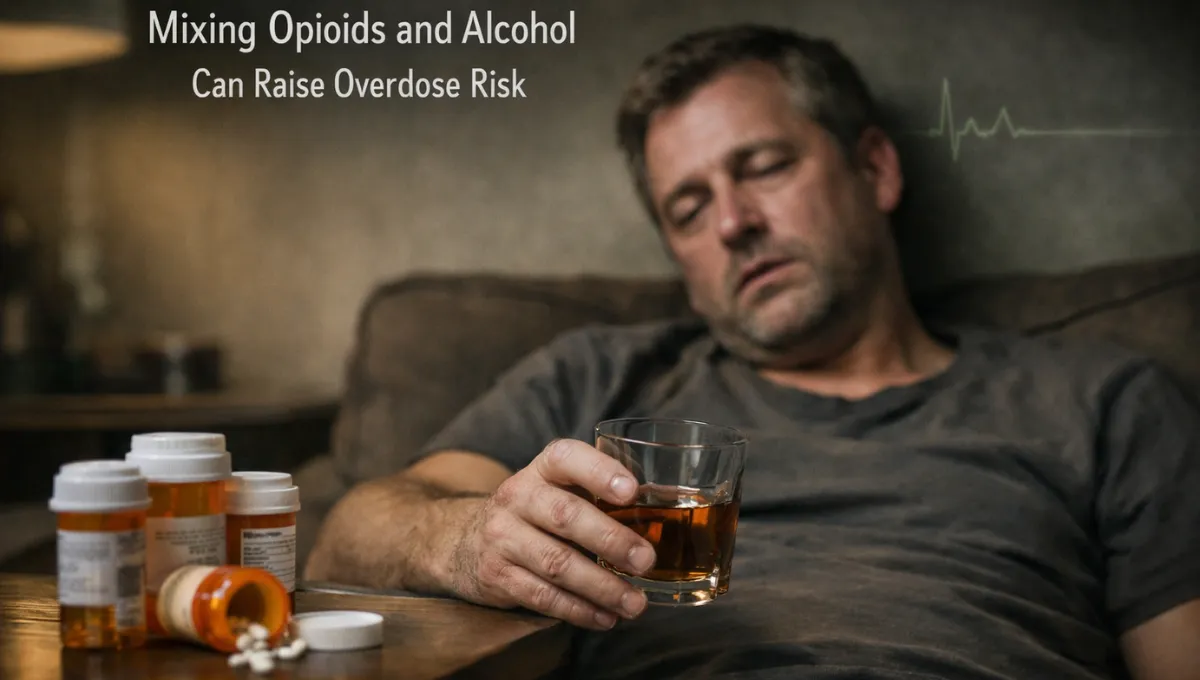

A lot of people do not think of a drink with dinner as something dangerous, especially when the opioid comes from a doctor or is being used for pain. That assumption is understandable. It is also where risk can quietly build.
Used together, alcohol and opioids can slow the body in overlapping ways. In paragraph 2, that is why opioids and alcohol risks deserve plain, nonjudgmental attention. Even small amounts can affect breathing, alertness, coordination, and decision-making more than either substance alone.
Table of Contents
Why Is This Combination Especially Risky
Opioids act on the brain and nervous system to reduce pain, but they can also cause sedation and slow breathing. Alcohol can do many of those same things. When both are in the body at the same time, the effects can stack.
That matters because overdose is often tied to breathing becoming too slow or too shallow. A person may look extremely sleepy, hard to wake, confused, or unsteady before the situation turns more serious.
The risk is not limited to heavy drinking. For some people, even one or two drinks can make prescribed or nonprescribed opioids more dangerous. The amount that causes harm varies based on the opioid involved, the dose, age, body size, other medications, overall health, and how sensitive someone is to these substances.
It Is Not Only About Overdose
Overdose is the biggest concern, but it is not the only one.
Using alcohol with opioids can raise the chance of falls, car crashes, injuries, and other accidents because both substances can impair reaction time, judgment, and balance. Research on polysubstance use also shows broader safety concerns, including impairment-related injury and transportation risk.
This combination may also complicate pain care. Some studies suggest alcohol use can be linked with opioid craving in people taking long-term opioid therapy, which can make an already difficult situation feel even harder to manage. That does not mean everyone who drinks while taking opioids will develop a substance use disorder. It does mean the pattern deserves attention rather than dismissal.
Who May Be At Higher Risk
Some people face more risk than others, even when the amount seems modest.
Older adults can be more sensitive to sedation and medication effects. People with sleep apnea, lung disease, liver problems, or heart conditions may also be more vulnerable. The same is true for anyone taking other medications that cause drowsiness, such as benzodiazepines, sleep medicines, muscle relaxants, or some anxiety medications.
Risk can also rise when someone is newly prescribed an opioid, has a dose change, is taking a long-acting opioid, or does not know exactly how strong the opioid is. Illicitly made pills or street drugs carry extra danger because the contents may be unpredictable.
Signs That The Combination May Be Affecting Someone Dangerously
A person may need urgent medical help when they are:
- very hard to wake up
- breathing slowly, shallowly, or irregularly
- unable to stay awake or speak clearly
- confused, limp, or not responding normally
- showing blue or gray lips or fingernails
Those signs can point to overdose or severe central nervous system depression, which means the brain and body are slowing down too much.
What To Do If You Are Prescribed An Opioid
The clearest advice is simple: do not drink alcohol while taking an opioid unless the prescribing clinician has specifically told you it is safe. In most cases, mixing them is not recommended.
To keep this grounded, check the prescription label, pharmacy handout, and any warning stickers each time, not just the first time. Different opioid products work for different lengths of time, so the risk may last longer than expected.
It also helps to ask direct questions:
- Can I drink anything while taking this medication?
- How long after a dose should I avoid alcohol?
- Are any of my other medicines adding to the sedation risk?
- Do I need naloxone at home?
Naloxone is a medication that can temporarily reverse an opioid overdose. It does not replace emergency care, but it can save time while help is on the way.
What Not To Assume
A few common beliefs can make this combination seem safer than it is.
One is that prescribed opioids are automatically safer to mix with alcohol than nonmedical opioids. Another is that beer or wine is less important than liquor. A third is that tolerance fully protects someone from overdose. None of those assumptions is reliable.
People can still overdose on medications that were prescribed for a real medical reason. Tolerance can also change over time, especially after periods of taking less, stopping, or using inconsistently. And alcohol content varies enough that “just a couple drinks” is not always a predictable measure.
When It May Be Time To Talk With A Professional
Sometimes people mix these substances intentionally. Sometimes it happens because pain, stress, sleep problems, or routine make it seem normal. Sometimes it is a one-time situation that raises questions afterward.
You do not need to wait for a crisis to bring it up. A primary care clinician, pain specialist, pharmacist, or addiction professional can help you sort out what is safest, whether that means changing a medication plan, reviewing interactions, or getting support for alcohol or opioid use.
There is no moral test here. This is about reducing harm and protecting your breathing, your brain, and your daily safety.
A Grounded Takeaway
Alcohol and opioids both slow the body. Together, they can increase the risk of overdose, injury, and impaired judgment in ways that are easy to underestimate.
When this topic feels heavy, it is okay to pause and come back to it. The important point is straightforward: mixing these substances is riskier than many people realize, and asking for clarity early can prevent a dangerous situation later.
Safety Disclaimer
If you or someone you love is in crisis, call 911 or go to the nearest emergency room. You can also call or text 988, or chat via 988lifeline.org to reach the Suicide & Crisis Lifeline. Support is free, confidential, and available 24/7.
Author Bio
Earl Wagner is a health content strategist focused on behavioural systems, clinical communication, and data-informed healthcare education.
Sources
- Cernasev, A. (2023). Co-use of opioid medications and alcohol prevention study (COAPS). Substance Abuse.
- Beaulieu, E. (2022). Impacts of alcohol and opioid polysubstance use on road safety: Systematic review. Accident Analysis and Prevention.
- Schepis, T. S. (2022). Prescription drug and alcohol simultaneous co-ingestion in U.S. young adults: Prevalence and correlates. Experimental and Clinical Psychopharmacology.
- Vowles, K. E. (2022). Opioid and alcohol misuse in veterans with chronic pain: A risk screening study. The Journal of Pain.
- Odette, M. M. (2024). Alcohol consumption and opioid craving among chronic pain patients prescribed long-term opioid therapy. Addictive Behaviors.
- Paun, O. (2023). Substance use disorders in older adults. Journal of Psychosocial Nursing and Mental Health Services.
Chen, C. (2024). Comparative risk of injury with concurrent use of opioids and skeletal muscle relaxants. Clinical Pharmacology and Therapeutics.
You must be logged in to post a comment.