

Knee pain is a physical challenge that limits daily movement. Many people look for external help to manage this discomfort. Two common options are the knee brace and the knee cap. Although they may look similar, they serve different functions.
Choosing the wrong one can lead to a lack of support or unnecessary restriction. A knee support must match the specific needs of the wearer to be effective. Awareness of the differences between these two tools is necessary. It helps you decide which one is right for your situation.
Table of Contents
Understanding the Knee Cap
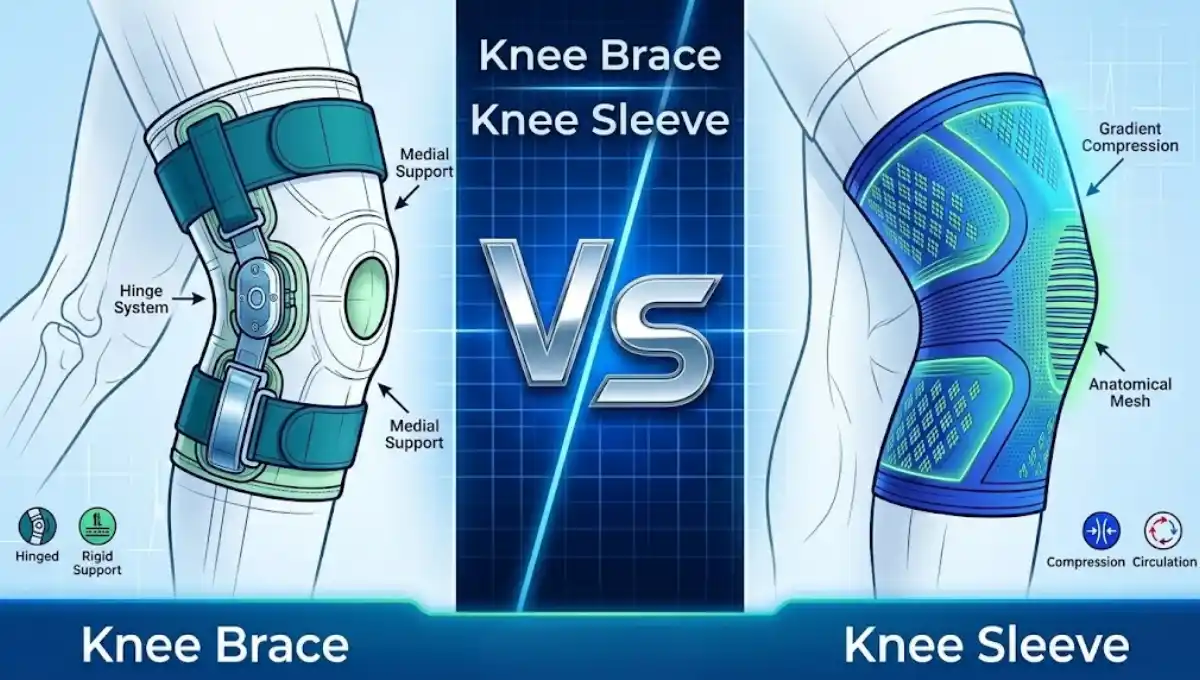
A knee cap is generally a simple compression sleeve. It is made from elastic or flexible fabrics like neoprene. It does not have hard parts or mechanical hinges. You pull it over your leg like a sock until it sits over the joint. Its primary role is to provide a steady compression. This squeeze helps manage minor issues and keeps the joint warm. Many find this to be the best knee cap for pain relief when dealing with general soreness.
Uses of a Knee Cap
- Mild Swelling: The compression helps the body absorb excess fluid.
- Arthritis Pain: It keeps the joint warm, which reduces morning stiffness.
- General Stability: It provides a sense of security during a walk.
- Injury Prevention: It keeps muscles ready for activity during light exercise.
- Daily Support: It fits under clothing for use throughout the workday.
A knee cap is a soft knee support. It allows for a full range of motion. It does not stop the knee from moving in any direction. It simply makes the movement feel more controlled.
Understanding the Knee Brace
A knee brace is a more complex piece of equipment. It often includes straps, plastic stays, or metal hinges. It is designed to simply provide structural support to the ligaments and bones. Unlike a sleeve, a brace can physically stop the knee from moving in ways that might cause injury. It is a more heavy-duty form of knee support.
Uses of a Knee Brace
- Ligament Tears: It holds the joint together when internal tissues are damaged.
- Post-Surgery: It protects the knee while it heals from a medical procedure.
- Severe Instability: It prevents the leg from buckling or giving out.
- Alignment Issues: It forces the knee to move in a straight line.
- Major Impact Protection: It guards against hits during high-contact activities.
A knee brace is usually bulkier than a knee cap. It is often worn over clothing or requires wider trousers. It is a tool for correction and protection rather than just comfort.
Knee Cap vs Knee Brace Support Levels
| Feature | Knee Cap | Knee Brace |
|---|---|---|
| Support Level | Low to medium | Medium to high |
| Primary Focus | Compression and blood flow | Rigid bone support |
| Movement | Full leg bending | Limited or controlled movement |
| Weight | Light and easy to carry | Heavier metal or plastic structure |
When to Choose a Knee Cap
A knee cap is the right choice for most everyday aches.
- Going for a Walk: It helps you go longer distances without fatigue.
- Light Gym Work: It provides a bit of extra help during squats or lunges.
- Office Work: It prevents the knee from getting stiff while sitting.
- Recovering from a Strain: It protects a muscle that was pulled slightly.
- Cold Weather: It keeps the joint warm when temperatures drop.
When to Choose a Knee Brace
A knee brace is necessary when there is a risk of further injury.
- After a Pop or Snap: If you feel a sudden injury, you need a brace.
- Chronic Instability: If your knee gives out while you are just standing.
- Following an Operation: To ensure the surgery is not ruined by a wrong move.
- High-Intensity Sports: For protection in sports that require rapid leg movements. For instance, football, cricket, skiing, etc.
- Weight Shifting: When you need to move pressure from one side of the bone to the other.
Cost and Durability
The price of these aids varies greatly. A knee cap is usually very affordable. A high-quality knee brace can be more expensive due to the materials used.
Value Comparison
- Life Span: A sleeve might stretch out after several months of daily use.
- Repair: If a hinge on a brace breaks, it can sometimes be fixed or adjusted.
- Washing: Sleeves are easy to wash. Braces with metal parts require more care.
- Availability: You can find a knee cap in most pharmacies. Specialized braces may require a medical supplier.
Spending more on the best knee cap for pain relief is often worth it if the fabric lasts longer. Cheap elastic loses its compression quickly, which makes the support useless.
Consulting a Professional
You should not guess which knee support you need if your pain is severe. A physical therapist or a doctor can test your joint stability. They can tell you if a sleeve is enough or if you require a rigid knee brace.
When to Seek for Help
- If the pain is getting worse despite wearing a knee cap.
- If you cannot straighten your leg.
- If you have a visible deformity in the joint.
- If your foot feels numb or tingly.
- If you are unsure how to tighten the straps on a knee brace.
A professional ensures you are not masking a serious problem with a simple sleeve. They help you find the best knee cap for pain relief based on your specific body type.
Wrapping Up
Choosing between a knee brace and a knee cap largely depends on the intensity of your discomfort and support needs
- A knee cap is ideal for daily comfort, warmth, and minor swelling. It is a flexible knee support for individuals who want to stay active despite mild aches.
- In contrast, a knee brace is designed for injury recovery and enhanced joint stability. It provides the mechanical strength needed to protect damaged ligaments.
Both options are effective when used appropriately. Understand your pain severity and stability required for your knee to pick the right option. Also, consult your healthcare provider to guarantee proper recovery and to prevent complications.
You must be logged in to post a comment.