
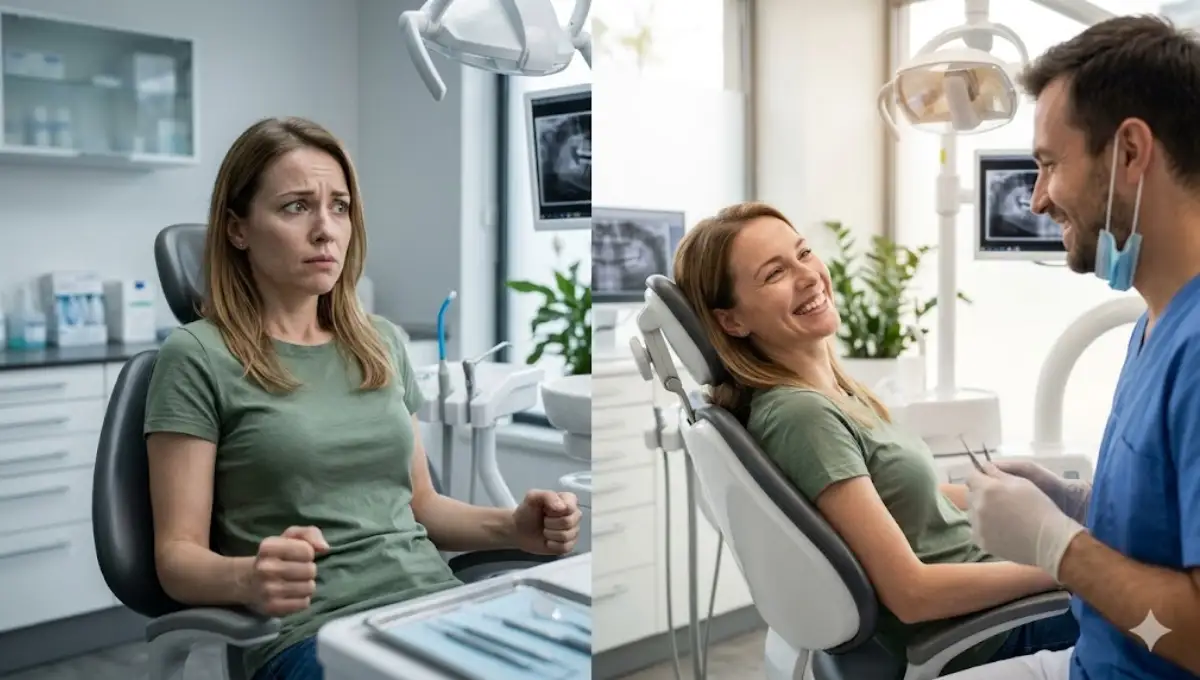

Many people feel fear or anxiety when visiting the dentist, often because of past experiences or fear of pain. Today, dental care is not just about treatment—it’s about creating a comfortable and positive experience. When patients feel safe, heard, and cared for, their fear turns into confidence, making dental visits easier and more effective.
Table of Contents
Why Patient Experience Matters More Than Ever
Dental care is not just about procedures. It is about how people feel before, during, and after a visit.
The data backs this up. Over 36% of adults report dental anxiety. Around 20% avoid visits because of fear. Many wait until pain forces them in.
That delay leads to bigger problems. The CDC reports that untreated oral issues affect millions and can link to other health conditions.
Patient experience sits at the center of this issue.
If the experience is bad, people do not return. If it is good, they stay consistent.
How Fear Starts and Sticks
One Bad Visit Can Last Years
Fear often starts early. One painful or confusing visit can shape behavior for decades.
“I had a patient who remembered the exact color of the ceiling from a visit when he was 10,” Dr. Arpan Patel says. “He told me, ‘I don’t remember what was done, I just remember feeling trapped.’ He avoided dentists for 25 years.”
That kind of memory is powerful. It does not fade easily.
Lack of Control Makes It Worse
Fear grows when patients feel they have no control.
No explanation. No pause. No chance to ask questions.
“I worked with a patient who would raise her hand mid-treatment because she thought something was going wrong,” Dr. Patel says. “No one had ever told her that was okay to do. Once we agreed on a simple signal system, her anxiety dropped fast.”
Small changes can shift the entire experience.
The Experience Gap in Dentistry
Patients Want Clarity, Not Complexity
Many patients leave appointments confused. They do not fully understand what was done or what comes next.
That confusion leads to hesitation.
A survey by the American Dental Association found that a large portion of patients feel unclear about treatment plans and costs. That lack of clarity slows decision-making.
Rushed Visits Break Trust
Speed is often treated as efficiency. But in healthcare, speed can feel like neglect.
“I had a patient tell me, ‘I felt like I was on a timer,’” Dr. Patel says. “He said the dentist never looked him in the eye. That stuck with him more than the procedure.”
When patients feel rushed, they stop asking questions. They disconnect.
That is where experience breaks down.
What a Positive Dental Experience Looks Like
Clear Communication at Every Step
Patients want simple answers.
What is happening? Why does it matter? What are the options?
“I had a patient who asked me to explain everything like she was hearing it for the first time,” Dr. Patel says. “We walked through each step slowly. At the end, she said, ‘That’s the first time I didn’t feel lost in a dental chair.’”
Clarity builds confidence.
Comfort Is Not a Luxury
Comfort is not extra. It is essential.
That includes physical comfort and emotional comfort.
Patients notice tone of voice. Body language. The pace of care.
Even small adjustments matter. A slower approach. A calm explanation. A short break.
These details shape the experience.
Consistency Builds Trust
Patients want to know what to expect.
Same process. Same tone. Same level of care.
When the experience is consistent, fear drops over time.
The Role of Technology in Patient Experience
Better Tools Can Reduce Stress
Modern tools can make care faster and more precise.
But tools alone are not enough.
“They only help if the patient understands what they are for,” Dr. Patel says. “I had a patient nervous about a scan. Once we showed her what it does and how it helps, she relaxed right away.”
Understanding removes fear.
Experience Comes First, Tools Come Second
Technology should support the experience, not replace it.
Patients care about how they feel more than what tools are used.
The best outcomes happen when both align.
How Confidence Changes Behavior
Patients Start Showing Up
When fear drops, behavior shifts.
Patients stop canceling appointments. They stop delaying care.
They become proactive.
“I had a patient who used to reschedule every visit,” Dr. Patel says. “After a few positive experiences, he started booking his next visit before leaving. That was a big shift.”
Confidence creates consistency.
Patients Engage More
Confident patients ask questions. They want to understand.
They become part of the process.
This leads to better decisions and better outcomes.
What Patients Can Do to Improve Their Experience
Speak Up Early
Patients should share concerns before treatment starts.
Fear. past experiences. questions.
Clear communication works both ways.
Ask for Simple Explanations
Patients should not feel rushed to understand complex terms.
Ask for clear answers. Ask for examples.
Understanding reduces anxiety.
Take Small Steps
For those with strong fear, start small.
Consultations. short visits. simple procedures.
Progress builds confidence.
Some patients research online first. They look at reviews and search terms like Alpha Dental Excellence Complaints to understand what to expect. That step shows how important trust is before the first visit.
What Dental Practices Can Do Better
Focus on the First Impression
The first visit sets the tone.
Greeting. environment. communication.
A calm start changes everything.
Build a Clear Process
Patients should know what happens next at every step.
No surprises. No confusion.
Predictability reduces fear.
Train the Whole Team
Every team member shapes the experience.
Front desk. assistants. providers.
Consistency across the team builds trust faster.
Measure Feedback and Act on It
Patient feedback is not optional.
It shows what works and what does not.
Adjustments should happen in real time.
The Shift From Fear to Confidence
The gap between fear and confidence is not as wide as it seems.
It often comes down to experience.
“Once patients feel heard, everything changes,” Dr. Patel says. “I had a patient tell me after her third visit, ‘I don’t dread coming here anymore.’ That was the turning point.”
That shift matters.
It leads to better health. Better habits. Better outcomes.
Dental care does not have to feel stressful. It can feel clear. calm. predictable.
When experience improves, fear fades. Confidence takes over.
You must be logged in to post a comment.