
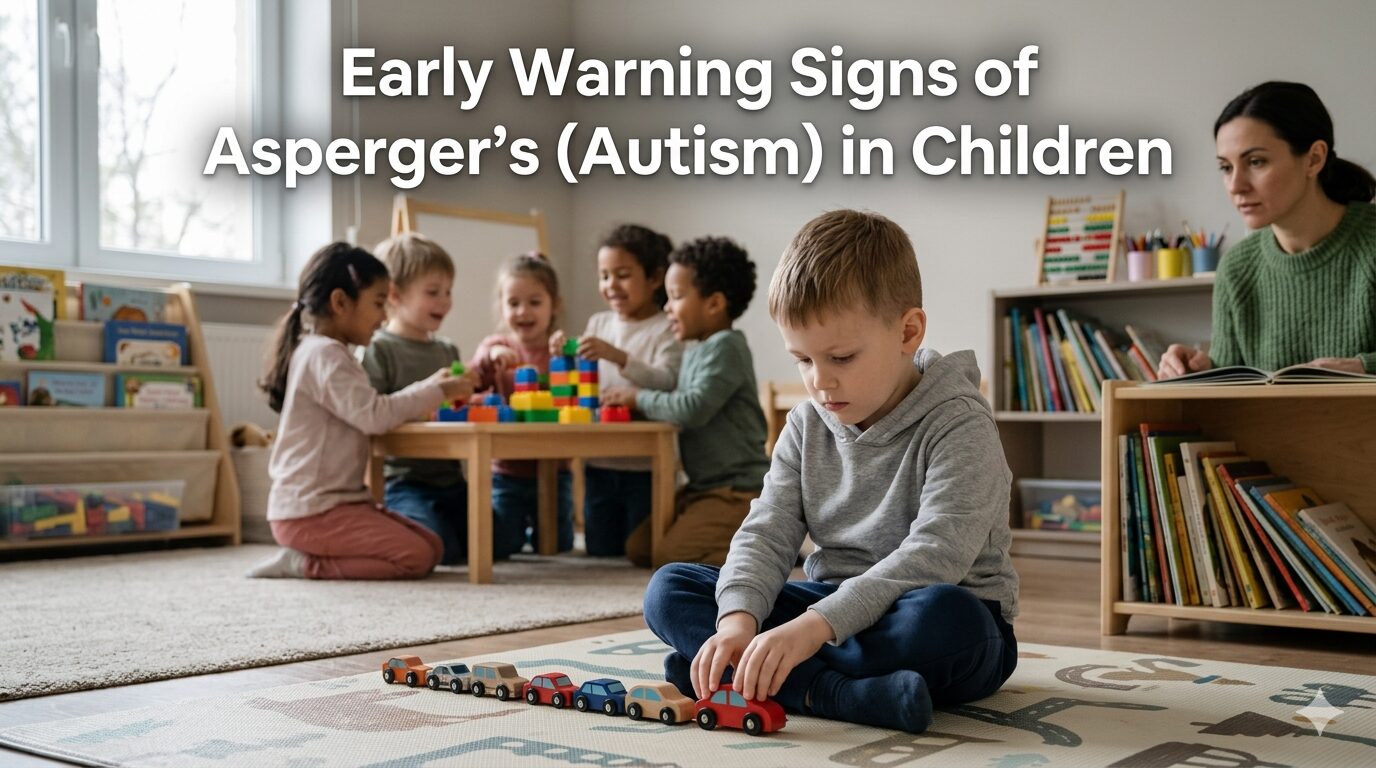

Every parent knows their child better than anyone else. So when something feels a little different — when your gut is telling you to pay closer attention — it’s worth listening to. Asperger’s syndrome, now classified under the broader umbrella of Autism Spectrum Disorder (ASD), often shows up in subtle ways during the early years. Spotting the signs early can make a world of difference.
What Is Asperger’s Syndrome?
Asperger’s is a form of autism that typically involves average to above-average intelligence and strong verbal skills. Children with Asperger’s often don’t have the speech delays associated with other forms of autism, which is exactly why it can fly under the radar for so long. They may seem quirky or unusually intense in their interests, but parents and teachers sometimes chalk it up to personality.
The truth is, early identification opens doors to support that can genuinely change a child’s life.
Social Struggles That Go Beyond Shyness
One of the most consistent early signs is difficulty with social interaction — but not in the way most people expect. A child with Asperger’s may want to connect with other kids, but simply not know how. They might approach a peer and launch into a one-sided conversation about trains or dinosaurs without picking up on the other child’s disinterest.
Eye contact is often limited or awkward. They may struggle to read facial expressions, miss social cues, or say things that seem blunt or out of place. This isn’t rudeness — it’s a genuine difficulty in understanding the unspoken rules of conversation that most children absorb naturally.
Intense, Narrow Interests
Does your child know everything there is to know about one very specific topic? Children with Asperger’s often develop deep, consuming interests that go far beyond typical childhood enthusiasm. Whether it’s planets, maps, train schedules, or a specific historical era, these interests can dominate their conversations and free time.
This isn’t a bad thing — in fact, these focused passions often become significant strengths later in life. But when it interferes with daily functioning or social connection, it’s worth noting.
Rigid Routines and Resistance to Change
Many children like routine, but kids with Asperger’s often need it. A small, unexpected change — a different route to school, a substitute teacher, lunch served in a different order — can cause real distress. Meltdowns or anxiety triggered by transitions and unpredictability are common early signs.
If your child seems to rely heavily on sameness and falls apart when plans change, that pattern is worth discussing with a pediatrician or developmental specialist.
Sensory Sensitivities
Children with Asperger’s frequently experience the world more intensely than their peers. Certain sounds, textures, lights, or smells can feel overwhelming. Your child might refuse to wear certain fabrics, cover their ears in seemingly normal environments, or become upset in busy, noisy spaces.
These sensory sensitivities are easy to misread as stubbornness or overreaction. Understanding that the child’s nervous system genuinely processes sensory input differently is an important shift in perspective for parents and caregivers.
Motor Skill Differences
Some children with Asperger’s show delays or awkwardness in fine and gross motor skills. They may have an unusual gait, struggle with handwriting, or seem physically clumsy compared to peers. This isn’t universal, but it’s a pattern that comes up often enough to be worth mentioning to a doctor.
Strong Sense of Justice and Rule-Following
Interestingly, many children with Asperger’s are deeply committed to fairness and rules. They may become very upset when rules are broken — even by adults. While this speaks to their strong sense of integrity, it can create friction in social settings where flexibility and nuance are expected.
When and Where to Seek Help
If you’re noticing several of these signs in your child, the first step is to speak with your pediatrician. From there, you may be referred to a developmental pediatrician, child psychologist, or autism specialist for a formal evaluation.
Early intervention is everything. One of the most effective and well-researched approaches is Applied Behavior Analysis (ABA) therapy. For families in the Mid-Atlantic region, there are excellent providers offering ABA therapy in Baltimore, such as Helping Hands Family, who specialize in working with children across the autism spectrum. A good ABA program doesn’t just address challenging behaviors — it helps children build communication skills, social confidence, and independence in a structured, supportive environment.
Trust Your Instincts
No one knows your child like you do. If something feels off, or if your child is struggling in ways that go beyond typical developmental bumps, don’t wait for someone else to bring it up first. Early diagnosis means earlier support — and earlier support means more opportunity for your child to thrive.
Asperger’s is not a limitation. With the right tools, understanding, and therapy, children on the spectrum grow into remarkable, capable people. The signs may show up early, but so can the help.
You must be logged in to post a comment.