
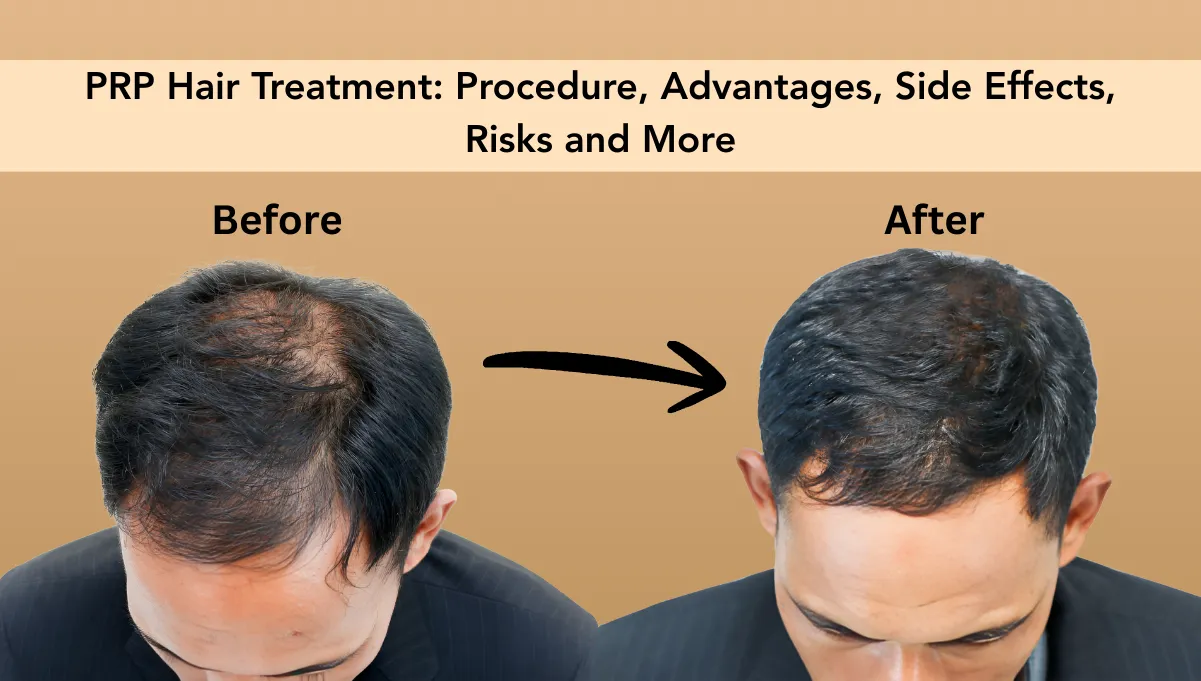

Stress, pollution, hormone changes, genetic factors, and lifestyle habits have become the causes of hair thinning and hair loss. Although there are a number of treatments that assure results, there is a type of therapy that has become extremely popular in recent years, and this is PRP hair treatment. PRP is an acronym that means Platelet-Rich Plasma, a regenerative medical treatment that enhances healing, development and tissue restoration. PRP was first applied in sports injuries, tendon repair, and wound healing; currently, it is one of the most rapidly expanding methods of hair restoration. We are going to discuss the PRP hair treatment in this extensive blog in terms of what it is, how it works, benefits, risks, side effects, effectiveness, number of sessions, and price of the treatment.
Table of Contents
What Is PRP Hair Treatment?
PRP hair treatment is a health procedure whereby platelet-rich plasma of your own blood is injected in the head to stimulate natural growth of hair.
Plasma- The runny component of your blood contains:
- Platelets
- White blood cells
- Red blood cells
Platelets are the most significant of these towards the treatment since they are the ones that contain growth factors, cytokines, and proteins that promote:
- Healing
- Regeneration
- Collagen production
- New cell formation
- Radio-strengthening of hair follicles.
As suggested in several research studies, PRP hair treatment is able to:
- Improve hair thickness
- Avoid the shrinkage of hair follicles.
- Stimulate the flow of blood to the head.
- Extend the growth cycle of the hair.
A number of reviews (2022, 2020, and 2018) affirm that PRP therapy can have a significant effect on stimulating hair growth, hair density, and follicular health.
Read More About – Low Porosity Hair: Understand Your Hair and Take Proper Care
What is the Mechanism of PRP Hair Treatment?
PRP hair treatment is a medical process of three steps. It involves the use of your own blood and hence there is no danger of passing of any disease hence is safer when compared to a large number of synthetic treatments.
Step 1: Blood Draw
A health provider extracts 10 -60 ml of your blood, mostly using the arm.
This blood is then put in a machine referred to as a centrifuge.
Step 2: Centrifugation
The centrifuge is then rotated at a rapid rate to the extent of 10 minutes, whereby the blood is left to separate in three layers:
- Platelet-poor plasma
- Platelet-rich plasma (PRP)
- Red blood cells
The PRP layer is rich in growth factors that are required to stimulate the hair follicles.
Step 3: Scalp Injections
The platelet-rich plasma extracted is collected into a syringe and injected into scalp area portion which has thin hair or diminishing density.
These injections introduce growth factors into the hair follicles which boost:
- Blood flow
- Follicle repair
- Hair growth rate
- Hair thickness and strength
How Many PRP Sessions Do You Need?
Studies indicate that there is no general agreement regarding the exact frequency of PRP hair treatment but according to research:
3 months of 4 injections in 15 days interval or 6 months of 3 monthly injections.
It is commonly accepted by many experts that the major factor is the concentration of platelets.
In a study, more recent (2021), the PRP was found to improve platelet levels:
- Hair density
- Hair follicle diameter
- Terminal hair growth
Most patients require:
● 3–6 initial sessions
Depending on the extent of loss of hair.
● Maintaining sessions after every 6-12 months.
To maintain the long-term outcomes.
PRP Hair Treatment Benefits in Hair Loss
PRP hair treatment has the potential to address the issue of hair loss in a number of aspects:
1. Activates Hair Follicles Proliferation.
PRP growth factors restore the dormant follicles to the active growth stage.
2. Increases Blood Supply
PRP also enhances the circulation of the scalp, which guarantees the improved supply of oxygen and nutrients to the follicles.
3. Thickens Existing Hair
PRP enhances the size of hair strands and the size of hair roots.
4. Reduces Hair Shedding
Stable and healthier follicles shed hair less often.
5. Acts as a Promoter of Natural Hair Regeneration.
PRP involves the use of your own platelets, unlike chemical treatments, and it is therefore a natural and biocompatible process.
Who Is PRP Hair Treatment Best For?
PRP therapy can be useful in individuals with:
- Early-stage hair thinning
- Pattern baldness (androgenetic alopecia)
- Hair weakening due to stress
- Postpartum hair loss
- Alopecia areata (in a few)
- Hair thinning after illness
- Nutritional deficiencies and loss of hair.
- Post transplant hair growth support.
It might not be effective in the total baldness cases because regeneration needs the presence of follicles.
Side Effects of PRP Hair Treatment
PRP involves the use of your own blood which means that the possibility of serious reactions is insignificant.
But, similar to any treatment that is administered by injection, some mild side effects can be experienced.
Common side effects include:
- Sensations of pins and needles in injections.
- Mild headache
- Itching
- Ecchymosis at injection site.
- Hemorrhage or interim reddening.
- Sensitivity of the scalp
These normally heal in the range of 24-72 hours.
All people react differently and thus it is best to consult your doctor about possible reactions before you are on treatment.
Risks of PRP Hair Treatment
Although PRP is deemed to be safe, there are conditions that make the occurrence of complications more prone.
Do not or postpone PRP treatment in case you:
- Consume NSAIDs within 48 hours preceding treatment.
- Have low platelet count
- Suffers platelet dysfunction disorders.
- Become active infected or septic.
- Bone cancer cancer Have had some cancers (e.g., bone cancer).
- Smoke heavily
- Steroid injections (within 248 days)
- Have anemia
- Have bleeding disorders
- Have chronic liver disease
When consulting your doctor, tell him about:
- All medications
- Herbal supplements
- Nutritional deficiencies
- Chronic medical conditions.
This assists in effective and safe treatment.
PRP Hair Treatment Process Duration
An individual PRP is typically between 45 and 60 minutes including:
- Blood draw
- Centrifugation
- Injection process
What Is the Effectiveness of PRP Hair Treatment?
Few of the scientific reviews state:
- PRP enhances the growth of hair, hair thickness and stops premature shedding.
- PRP enhances the density and thickness of hair in various groups of patients.
- PRP increases the blood flow to hair follicles, rejuvenating the thinning regions.
The improvements which are visible within many patients include:
- 4–6 weeks – reduced hair fall
- 2–3 months – early hair growth
- 4-6 months- great increase in thickness and density.
There is variability in its effectiveness based on the nature of genetics, lifestyle and the health of hormones.
Who is Not Recommended to Use PRP Hair Treatment?
PRP should not be used if you:
- Pregnant/breastfeeding.
- Suffers from uncontrolled thyroid disorders.
- Receiving chemotherapy.
- Suffers with autoimmune diseases of the scalp.
- Have severe diabetes
- Have very low platelet count
The health condition will be assessed by a dermatologist or trichologist who will then authorize treatment.
Aftercare Tips After PRP Hair Treatment
To maximize results:
- Avoid washing hair for 24 hours
- Do not apply hair oils or chemical products for 48 hours
- Avoid heavy exercise for a day
- Avoid smoking and alcohol for at least 48 hours
- Avoid touching or scratching the injected area
- Stay hydrated
- Use doctor-prescribed shampoos and serums
- Maintenance is essential for sustained hair density.
How Much Does PRP Hair Treatment Cost?
The cost of PRP treatment varies widely. For orthopedic conditions, it ranges from $500 to $2,500 per session, but hair treatment pricing depends on:
- Clinic location
- Expertise of dermatologist
- Type/quality of centrifuge machine
- Use of additional nutrients (e.g., biotin, growth boosters)
- Number of sessions required
Important notes:
- Most insurance policies do not cover PRP hair treatment
- Some clinics offer installment plans or package discounts
- Pricing varies between countries and cities
- If you have insurance, check with your provider. For self-payers, clinics often provide reduced rates.
- If you want India-specific PRP cost ranges, I can add that too.
Read More – How to Use Rosemary Water for Hair Growth: Complete Guide
Benefits of PRP Hair Treatment
- Natural and non-surgical
- Uses your own blood (no foreign chemicals)
- Minimal downtime
- Suitable for both men and women
- Helps with multiple types of hair loss
- Enhances transplanted hair results
- Safe, with minimal side effects
Is PRP Hair Treatment Permanent?
PRP results are long-lasting but not permanent. The treatment strengthens existing hair follicles, but hormonal and genetic factors continue to influence hair growth.
Expect:
- Strong growth for 12–18 months
- Maintenance sessions every 6–12 months
Conclusion
PRP hair treatment is a viable, less invasive, and natural treatment of hair thinning and hair loss. PRP enhances hair growth, density and strength of the follicles by using your own platelet-rich plasma and no surgery or artificial chemicals are required.
Although studies reveal that there is significant proof of the effectiveness of PRP, outcomes are inconsistent across people. The evaluation, various treatment sessions, and periodic maintenance are the most important to ensure the best results.
PRP hair treatment can be a safe and effective option to consider in case you have the problem of hair thinning or early baldness.
You must be logged in to post a comment.