
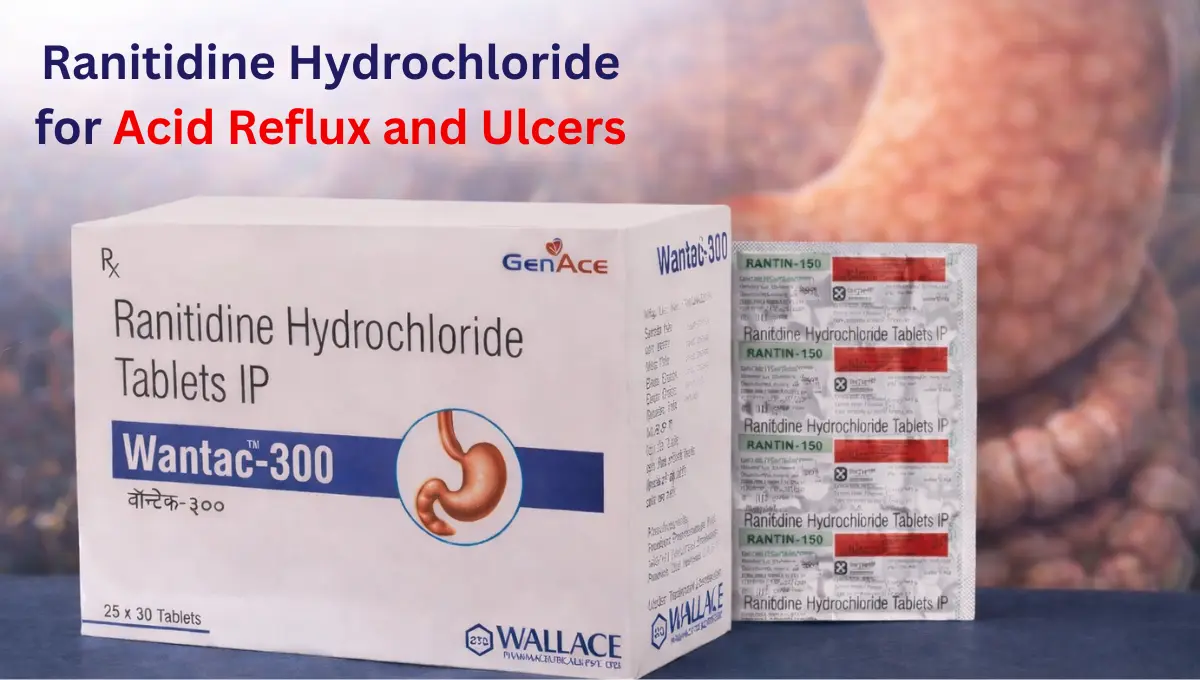

You know that pain, that is so common, pains your heart and moves its way along your chest, just after you have eaten so much? You are far from alone. Acid reflux, heartburn, and stomach ulcers are extremely widespread, and over the decades, Ranitidine Hydrochloride became one of the solutions that were used by millions of people. Its design had a dramatic twist as it was recalled all over the world, although in the recent past, the design had gained popularity again. The need to know more than ever about this medication, its correct usage, safety revised, and proper administration are of paramount importance in making informed choices in regards to your health when in concert with your doctor. This guide simplifies all this in simple, understandable terms.
Table of Contents
What is Ranitidine Hydrochloride?
Ranitidine Hydrochloride is a histamine-2 (H 2 ) blocker, which belongs to the category of drugs. It is a simple task; it decreases the levels of acid released in the stomach. This is done by inhibiting certain switches (H2 receptors) on your acid-generating cells in your stomach. This presents it as useful in curing various diseases in which the oversecretion of stomach acid is the original cause of pain and harm. It is not an immediate antacid; rather, it is a preventive type of treatment that prevents the production of acid in the first place.
Significant Recall: Ranitidine products were recalled in 2020 in most countries because of the existence of a chemical contaminant called NDMA. But by the end of 2025, the FDA of the U.S. had given approval to a new reconstituted form of ranitidine pills. This new preparation would solve the past manufacturing and testing safety issues with better manufacturing and testing.
Ranitidine Hydrochloride Tablet Composition
The pill of Ranitidine Hydrochloride is constructed around the main active ingredient of the pill, which is the ranitidine hydrochloride molecule itself. It is the active part in preventing the production of acid.
- Active Ingredient: Runitidine Hydrochloride, usually of 150 mg or 300 mg.
- Inactive Ingredients: These are fillers, binders, and inactive ingredients that make the pill take the shape of a tablet, aid in breaking the tablet in your system, and release the drug accordingly. The specific list is different, depending on the manufacturer.
Safety Alert: The newly approved, renovated tablets have undergone certain manufacturing modifications aimed at the elimination of the creation of NDMA, and, hence, the current formulation is not identical to the previous ones.
Ranitidine Hydrochloride Tablet Uses
Medical professionals have prescribed these pills in the treatment of various conditions which are related to acids, which include a reduction of acid secretions in the stomach. Key uses include:
- Prevention and Healing of ulcers: Effective and both stomach (gastric) and intestinal ulcers. It prevents repetition and is applied in the maintenance treatment to cure the existing ones.
- Single dose GERD/Heartburn: Offers the burning pains, sour taste, and heart pains of Gastroesophageal Reflux Disease (GERD) and acid indigestion.
- Pectomy Rare Hypersecretory Conditions: The condition is used to treat such diseases as Zollinger-Ellison syndrome, when the stomach secretes excess acid.
- Hospital and Preventive Care: It has been applied to prevent stress ulcers in critically ill patients, to preserve the stomach lining of patients on long-term NSAIDs (i.e., ibuprofen), as well as to minimize the risk of acid aspiration during surgery.
Ranitidine Hydrochloride Tablet Dosage
There is never a one-fits-all dosage, and it has to be decided upon by a healthcare expert depending on your condition and health.
- In Adults: These treatments have been known to be effective for active ulcer or GERD, 150 mg twice a day or once 300 mg at night. The dosage needed in maintenance is not very high.
- In Children: Dose is calculated by weight, most of the time it is 2 mg/kg to 4mg/kg daily, but in two doses not exceeding 300mg/day.
Key Administration Points:
- Tablets may be consumed either with food or without food.
- Prevention: To prevent meal-related heartburn, meals and drinks should be taken 30 or 60 minutes before food.
- More effusiveness in forms should not be crushed or chewed by any means, but must be first wholly dissolved in a complete glass of water.
- Measuring devices that are given in different forms should be used, not a kitchen spoon, when addressing a liquid form.
- Important Consideration: Do not take OTC types longer than 2 weeks without taking advice with a physician.
Ranitidine Hydrochloride Tablet Storage
- Medication safety and effectiveness could be guaranteed by correct storage.
- Store the contents of tablet containers in a tightly closed container.
- Keep at room temperature. One should keep away from light, heat, and moisture (no bathrooms).
- It is important to always have medicine up, away, and out of sight from children and pets.
- Take-back program or local instructions- throw away unwanted or out-of-date medication, not by flushing it away.
Ranitidine Hydrochloride Tablet Benefits
The primary advantage of this, when used in proper medical advice, is the effective and beneficial acid control. This leads to:
- Healing Tissue: results in a low-acid environment, which permits inflamed ulcers as well as ulcers of the esophagitis.
- A Temporary Effect: Relief of heartburn, stomachache, intolerance of its foods, and cough caused by acid.
- Prevention: Can prevent the development of ulcers in the conditions of high risk and prevent frequent backflows.
Ranitidine Hydrochloride Tablet Side Effects
Though it can be really well tolerated by many people, side effects are possible.
Mild (usually not severe): headache, probing, constipation, diarrhea, nausea, or stomachache.
Serious (May Promptly Need Medical Assistance):
- Symptoms of hypersensitivity (hives, reference to face/lips/throat, difficulty breathing).
- Stomach aches so badly, will not eat, dark urine, or golden tone of skin/eyes (jaundice).
- Risk factors indicative of pneumonia (fever, chills, mucus-filled cough, chest pains, dyspnea) -H2 blockers can modestly affect this risk.
- MPseudomathematics Easy bruising or abnormal bleeding.
Ranitidine Hydrochloride Tablet Precautions
With these precautions, good usage will be safe:
- Allergies: Do not take in case of known allergies to ranitidine or other H 2 blockers.
- Medical Conditions: Your doctor should be informed that you have a kidney disease, a liver disease, or porphyria because the dose is usually changed.
- Interactions with other drugs: Ranitidine may also interact with other drugs. Make a complete medicine list as prescribed to you; this is necessary, particularly should you are taking warfarin (blood thinner), ketoconazole (antifungal), or atazanavir (anti-HIV drug).
- Pregnancy/Breastfeeding Pregnant: Do not use unless it is necessary and after consulting your doctor.
- Lifestyle: Addicted to alcohol, which may raise stomach acid, should be avoided. Those conditions caused by acid are irritated by smoking.
Critical Notice: Heartburn may have a similar appearance to a heart attack. Call 911 in case of chest pain and shortness of breath, or if the pains spread to your arm/jaw, you are sweating, or feel lightheaded.
Frequently Asked Questions
Ans. They tackle heartburn, GERD, ulcers, and excess acid by slashing production and aiding tissue repair.
Ans. Liquid form suits kids or swallow-troubled adults for GERD, ulcers, and indigestion with easy dosing.
Ans. Injections handle urgent cases like bleeding ulcers, stress prevention, or pre-surgery acid control.
Ans. It is a 150 mg dose meeting Indian standards, dosed once/twice daily for ulcers or heartburn per doctor’s consultation.
Ans. Headache, gut upset, and nausea top the mild list; serious ones like allergies or jaundice demand quick care.
You must be logged in to post a comment.