
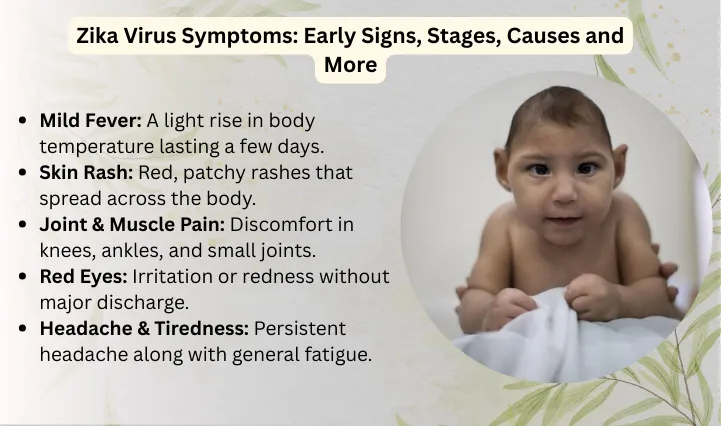

Zika virus is one of the most worrying infections carried by the mosquitoes in the recent years. Although a number of individuals are only mildly sick, the threats are its complications, particularly to pregnant women and newborn babies. The knowledge about Zika virus symptoms is essential to diagnose it early and deliver prompt treatment and avoid the further transmission of the infection.
This in-depth guide defines the early symptoms, the advanced symptoms, diagnosis, risks, stages of indoctrination, and prevention hints using the medically capable information that can be gained through the use of publicly available data and facts.
Table of Contents
Know About Zika Virus
Zika virus is a mosquito-borne disease transmitted through the Zika virus (ZIKV), which is mostly transmitted by the Aedes family of mosquitoes specifically Aedes aegypti and Aedes albopictus.
Reason for the Zika Virus Spread
The virus spreads through:
- Mosquito bites (primary mode)
- Prenatal mother-to-child infection.
- Sexual contact
- Blood transfusion (rare)
- Laboratory exposure (rare)
The incubation normally takes 3 to 14 days following exposure.
Symptoms of Zika Virus: 8 Symptoms to Know
The majority of the symptoms of the Zika virus are light and can be similar to those of flu. As a matter of fact 80 per cent of those infected have no symptoms at all making the disease more difficult to trace. In the instance of a symptomatic individual, the symptoms generally take 2-7 days.
The most admitted and most frequently seen symptoms of the Zika virus include:
1. Mild Fever
Zika normally results in a low grade fever (99-101 F). The fever is not very high as is the case with dengue or chikungunya. It is characterized by many patients as a warm feeling instead of burning fever.
2. Skin Rash (Maculopapular Rash)
A rash is one of the Zika virus symptoms which:
- Appears within 1–3 days of fever
- Diffuses rapidly throughout the body.
- Feels itchy
- Has red spots, which are level or slightly raised.
The rash commonly starts in the face and transpires to the trunk, arms and legs.
3. Joint Pain (Arthralgia)
Individuals who have Zika virus often have:
- Mild to moderate joint pain
- Aches in the hands, ankles and feet.
- Joint Pain during movement.
- Some cases have redness and swelling.
The arthralgia is normally less painful than the pain caused by chikungunya.
4. Muscle Pain (Myalgia)
There is achiness, pains, and fatigue. Patients often feel:
- Heavy legs
- Sore arms
- Tired shoulders
- General weakness
5. Conjunctivitis (Red Eyes)
Zika has been known to cause non- purulent conjunctivitis which implies:
- Red eyes
- Itching
- Irritation
- Watery eyes
- Pus or discharge (contrary to bacterial infections)
This is a symptom that can be used to differentiate between Zika and dengue and chikungunya.
6. Headache
Patient has a tiresome mild headache. It may be:
- Behind the eyes
- Across the forehead
- Weak to moderate severity.
7. Fatigue and Weakness
Other symptoms may not be as persistent as general tiredness and low energy. Certain individuals experience fatigue 2 to 3 weeks following recovery.
8. Abdominal Discomfort (Uncommon)
Other patients can have:
- Mild stomach pain
- Nausea
- Vomiting
- Loss of appetite
This is not very common but may happen.
Common and Severe Zika Virus Symptoms
Zika is normally mild but in some cases may have serious complications.
1. Guillain–Barré Syndrome (GBS)
Commonly known as a rare autoimmune disease in which the nerves are attacked by the immune system resulting in:
- Weakness or paralysis
- Numbness of hands and feet.
- Difficulty walking
- Rapid onset of weakness
GBS can take place following mildly symptomatic or asymptomatic Zika infection.
2. Meningitis, or Encephalitis (Very Rare)
Severe illness involving:
- Severe headache
- Neck stiffness
- Confusion
- Seizures
- Loss of consciousness
These are very rare and medically reported cases.
3. Complications in the Course of Pregnancy
The most threatening thing about the Zika is its impact on unborn baby. Women who are infected with Zika during pregnancy can transmit the virus to the baby which results in:
- Microcephaly
- Infants are born with abnormally small heads and brain formation.
Zika Virus Congenital Symptoms (including):
- Brain damage
- Eye defects
- Limb abnormalities
- Developmental delays
- Seizures
- Miscarriage or stillbirth
Due to such risks, pregnant women have to be extra careful in Zika-infested places.
Zika Virus Symptoms in Elderly People
Children tend to exhibit weak symptoms, as in the adults:
- Rash
- Low fever
- Headache
- Red eyes
- Mild joint pain
Zika Symptoms in Infants (Congenital Infection)
Infected babies in the womb can present with:
- Minuscule head size (microcephaly)
- Poor coordination
- Seizures
- Difficulty swallowing
- Stiff muscles
- Vision or hearing problems
Urgent treatment is required.
Dengue and Zika Virus Symptoms: The Comparison
Zika is not to be confused with dengue since both viruses are transmitted by the same mosquito. Learning the differences assists in the early diagnosis.
| Symptoms | Zika | Dengue |
|---|---|---|
| Fever | Mild | High (104°F) |
| Rash | Very common | Common |
| Joint Pain | Mild | Mild |
| Muscle Pain | Mild | Severe |
| Eye Pain | Red eyes | Pain behind eyes |
| Platelet Drop | Rare | Very common |
| Bleeding | Rare | May occur |
| Danger During Pregnancy | Very high | Moderate |
Zika Virus Symptoms: Diagnosis
Doctors may recommend:
RT-PCR Test
- Identifies virus RNA in blood or urine- optimal in the first 7 days of illness.
IgM Antibody Test
- Antibody checks during the 7th day of infection.
Pregnant Women Ultrasounds
- To observe the progression of the fetal brain.
Dengue or chikungunya will also be excluded because of the similar symptoms by a doctor.
Zika Virus Symptoms: Treatment
Zika does not have a particular antiviral treatment. Treatment is aimed at symptom relieving and preventing complications.
1. Rest
Boost your immune system against the virus.
2. Hydration
Take sufficient water, ORS, coconut water or juices.
3. Fever & Pain Relief
Take paracetamol in case of fever and pain.
Ibuprofen and aspirin should be avoided until dengue has been excluded because they cause extra bleeding when a person has dengue.
4. Cold Compress
Alleviate joint pain and fever.
5. Avoid Mosquito Bites
In order to avoid infecting other people.
Recovery takes 2-7 days but may take longer than that because of fatigue.
Who is at Risk of Complications?
Some groups will be required to be more cautious:
- Pregnant women (highest risk)
- Newborns
- Individuals who have autoimmune diseases.
- Elderly individuals
- Individuals who are neurologically sick.
These people are to pay a visit to a doctor in case of symptoms.
Prevention
As there is no vaccine or any special medicine, the best solution is to protect oneself from mosquito bites.
- Apply mosquito repellents that have DEET or picaridin.
- Wear long-sleeved clothing
- Put up window screens and window nettings.
- Make your house mosquito-free.
- Take out the stagnant water in containers.
- At home use mosquito coils or vaporizers.
- Pregnant women should not go to places where they might be exposed to the risk.
The vectors of Zika bite primarily during the day, and one needs to protect themselves round-the-clock.
Final Thoughts
Zika virus symptoms are in most cases mild yet the infection is associated with serious risks- particularly to expectant women and babies. Early detection of the symptoms, testing and preventive measures will save not just your health, but also your family and community.
Zika infection can be eliminated through appropriate awareness, preventing the breeding of mosquitoes, and with medical care.
You must be logged in to post a comment.