
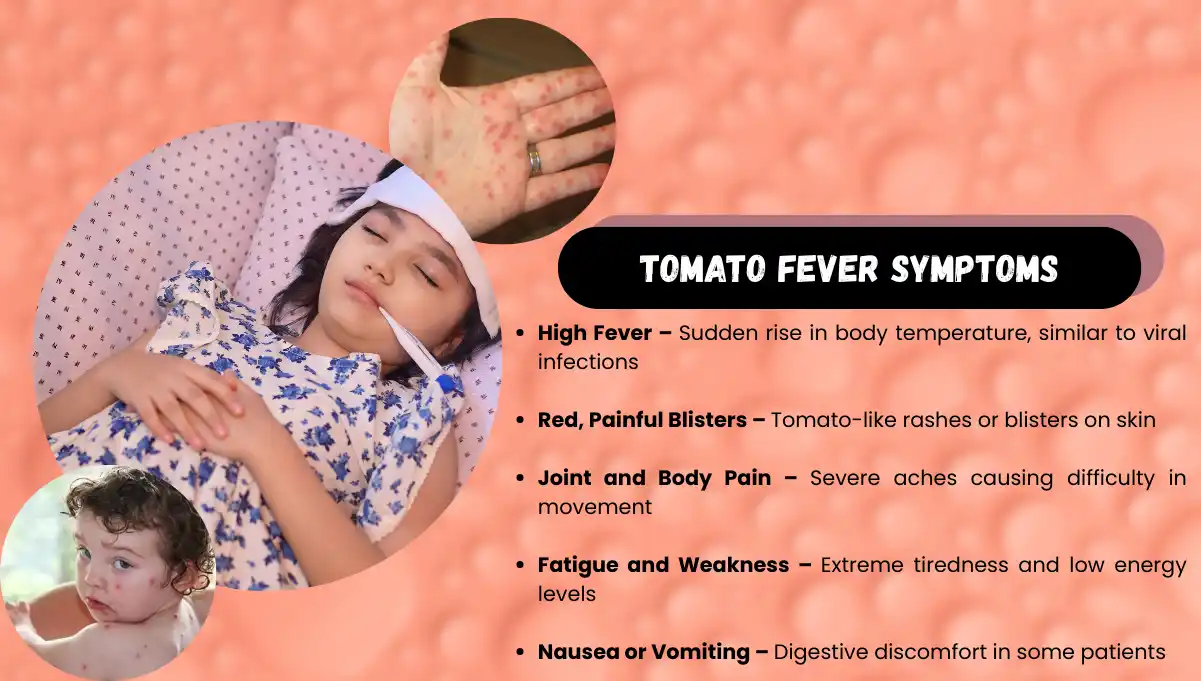

Tomato Fever or flu is a new kind ofviral illness that mainly attacks children under 5 years of age. We see its first symptoms like sudden and acute fever, weakness or tiredness, rashes or blisters on the skin, especially on hands, feet, or around the mouth. Due to its similarity with other health-related problems, such asviral fever, adults find it difficult to distinguish until it shows its acute stage. To make tomato fever understandable for people, we will cover all the necessary information related to symptoms, treatment, causes, food list, and everything that can be beneficial for you.
Table of Contents
Know About Tomato Fever
Tomato fever is also calledtomato flu. It is categorized as a viral illness that targets children under 5. It has a unique kind of appearance on body parts, like red in color with round-shaped rashes that can be spotted mainly on hands, feet, and around the mouth. According to science, their reason for giving the name ‘tomato’ is due to its tomato-like appearance. Aside from rashes and fever, other tomato fever symptoms are body aches, fatigue, joint pain, and skin irritation.
According to the medical reports, tomato fever shares the same characteristics as HFMD (Hand, Foot and Mouth Disease). But for now, it does not completely match all the characteristic similarities with that. Some medical professionals claim that this viral illness can be a special kind of variant of HFMD. Although it is medically not confirmed by researchers.
For now, Tomato fever is counted as one of those illnesses that cure themselves without applying proper treatment. Keep in note that children are weak to this virus, so it is better to use preventive measures to protect your children. If in case your children get affected by the flu, then you can let them rest as much as possible so that they can recover fast.
Tomato Fever Symptoms
You can protect yourself and your dear ones by knowing about tomato fever symptoms. Through that, you can understand its causes as well as its useful treatment methods. So, here are all the tomato fever symptoms in adults and children:
- High Fever: Most people experience fever and the gradual rise in body temperature which complicates the sleeping process.
- Skin Rashes: Skin and body rashes such as hands or feet are considered among the common signs of flu. They are vesicular in nature.
- Fatigue: This viral disease also causes the feeling of tiredness and weakness, especially when the fever is at the acute stage.
- Joint Pain: Acute joint pain is one of the main symptoms, in particular in children, which can make it hard to walk, sit, or sleep.
- Mouth Irritation: Sometimes, the patient feels mouth ulcers or soreness inside the mouth that can cause difficulty in eating and drinking.
Besides the above-mentioned symptoms, there are a few less common but still significant symptoms like dehydration, swelling, lethargy, discoloration, nausea, sneezing, runny nose, abdominal cramps, and coughing.
Tomato Fever Causes
Since scientists or medical expert teams are still researching tomato fever, it is difficult to tell the actual cause of the problem. According to scientific studies, it is counted as viral fever, but unfortunately, there is no evidence to claim it as a virus.
According to Max Healthcare and Fortis, it is a part of HFMD, which is generally caused by coxsackievirus, and that is due to similarities in symptoms. Some medical research says it can be a part of viral infections like dengue or chikungunya. Still, no scientifically proven evidence has been accepted globally.
Tomato Fever in Kids
Tomato fever mainly targets children. Their target can be based on age, environment, immunity, physical and mental health. So, here is the details on this:
- Children Under 5: According to their research, they found that tomato fever is quite common among children who are under 5 years old.
- Children With Low Immunity: Weak immunity makes children vulnerable to most illnesses, and one of them is tomato fever.
- Children based on groups: Children, especially preschoolers, or present somewhere the population of other toddlers is high, are at great risk. That is due to their unawareness of keeping distance, avoiding sharing toys, and having no or minimal knowledge of hygiene practices.
- Close contact with family members: Children are innocent, so they are not aware of what to share or what not, especially when they are infected with a fever. They usually share things they dear with their family members, like bedding, utensils, or toys, which can transmit the virus and make it a huge problem for others.
- Close contact with adults or caregivers: Since tomato fever is considered a viral illness according to science, it can create a big problem among people around them, such as their parents and caregivers. Because mainly they are with infected kids, which can indirectly make them infected as well. Adults can be rapidly infected if they have skin irritation or cuts that can serve as entry points for the virus.
Tomato Fever Treatment
This fever is still under research process and scientists and researchers are trying to figure out the best treatment for children and adults. So for now, there is no medicine made to treat tomato fever. Nevertheless, we still can apply some simple and very effective treatment measures that can help the infected person to get well quickly. Generally, the infected person completely heals within 10 days if the treatment below is followed.
Hydration
Intake of liquid substances such as water, fruit juice, and vegetable juice can reduce the effect of the virus. If you find out the infected person is feeling dehydrated, especially when fever or reduced appetite, you can use any one of the above-mentioned options to fulfill their liquid intake.
Rest
Our immune system is the main source to help us prevent from spread of this fever. For that, an adequate amount of rest can help our immune system work against this virus. If possible, avoid physical activities like playing, studying, walking, etc.
Apply Lotion, Compress on Rashes
Tomato fever rashes can be itchy and painful, and to protect yourself from spreading throughout the body. For that, you can use calamine lotion and cool compressors. In some cases, you can even take a lukewarm bath that really helps to calm your skin and reduce the effect of rashes. If possible, stop children from scratching those areas of their body where they have rashes because it can create new and unknown infections.
Eat Non-Irritating Foods
In some cases, an infected person feels sores in their mouth and difficulty swallowing food. To prevent that from happening, try to give them non-irritating and easy-to-swallow foods.
Maintain Proper Hygiene
Most infected person ignores the effects of tomato fever, which can really create problems in the future. Instead of that, you can try to ask them to wash their hands regularly, clean their infected shared tools or utensils, and avoid touching walls, stairs, floors, surfaces, etc. Make sure that the infected person is not using the same towels, utensils, tools, toys, etc., as you.
Isolate
Children mostly play and share things with others, through which they share viruses and create problems for others. To prevent that from happening, ask them to stay at home until they fully recover, and also try to come in close contact with other people around them.
Conclusion
Tomato fever is an unknown viral illness that still needs to be fully studied. As the effects start in an uneven onset manner so telling about its difference from other viral illnesses is quite difficult. Even medical practitioners think it same as other common viral infections and sometimes try to treat it with the same medication.
In case the infected person shows symptoms that you are unaware of, then do not hesitate to take them to visit a doctor. If possible, ask the doctor to provide you with the preferred tomato fever food list that can improve the person’s health.
Frequently Asked Questions
Ans. No, tomato fever is not dangerous. But ignoring it can create a serious problem.
Ans. A Food list in which items like rice, soups, yogurt, bananas, applesauce, mashed potatoes, and steamed veggies are included should be followed by the infected person.
Ans. 3-6 days after exposure, and the highly contagious phase lasts about 5-7 days from symptom onset.
You must be logged in to post a comment.