
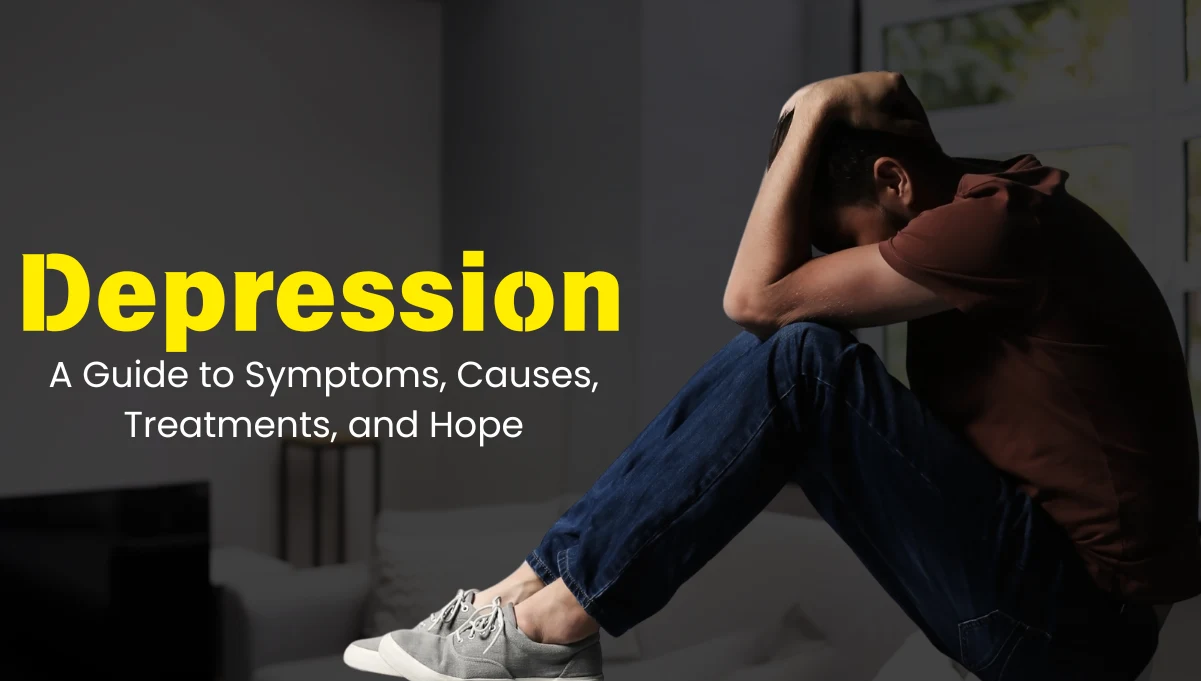

Are you disturbed by a sorrow that does not even appear to possess any definite beginning and ending, or is emptiness to a great depth even in an assembly of people? You’re not just “in fear.” Depression is a serious medical illness that affects millions of people; however, the best fact to know is that it is treatable, and there is hope. To put it simply, it is important to know what to do in case of depression and how you can recognize it.
Table of Contents
What is Depression?
Depression is a combination of mood disorders characterized by a feeling of in-depth sadness, hopelessness, and a typical loss of attraction or enjoyment with those things that you previously enjoyed. It is important to draw the difference between this and the short-lived sadness. Though every person has down moods occasionally, clinical depression is severe, and the problem lasts over two weeks. Consequently, your work, studies, sleep, eating, and even enjoying life are affected significantly. It is not an individual failure or lack of determination, but a health issue that needs to be given attention and has to be addressed.
Depression Symptoms
Symptoms differ, but basically, any of them are associated with a few key symptoms that impact your whole being:
- Emotional and Mental: Fortunately, most of the time of the day feel sad, anxious, or empty. Having the experience of irritability, frustration, and angry outbursts over minor issues. The sense of hopelessness, worthlessness, or excessive guilt is pervasive.
- Physical: There are considerable changes in the weight or the appetite (over- or under-eating). The issue of sleeping, either insomnia (trouble sleeping) or hypersomnia (sleeping too much). A continuous sense of tiredness, lack of energy, or more generally, a physical slowdown.
- Cognitive: Inability to focus on details, concentrate, or make a decision. The thoughts can be misty or lethargic.
- Behavioral: Inability to experience pleasure or interest in most activities, such as hobbies or sexual intercourse. Abandoning friends, family, or social relationships. In very aggressive cases, recurring thoughts of death or suicidal ideation. If you or someone you know is in crisis, dial or text 988 Suicide and Crisis Lifeline.
Depression Causes
There is no single cause. Researchers believe that depression is normally caused by a complicated combination of factors:
- Brain Chemistry: When there is an imbalance in the levels of the chemicals in the brain (neurotransmitters) responsible for regulating mood, such as serotonin and dopamine levels in the body.
- Genetics & Biology: “Genetics & Biology” states, “There is a strong possibility of developing depression if your family members, particularly your siblings, parents, and children, come from this. It may also be caused by physical changes in the brain structure and hormonal changes (due to pregnancy, thyroid, or menopause).
- Life Events: Frequent triggers are traumatic, stressful, or painful events. This includes grief, economic hardships, trauma, abuse, relationship disintegrations, or long-term isolation.
- Medical Causes: Depressive symptoms can be triggered or increased by serious illness (e.g., diabetes, cancer, cardiovascular disease) or pain and certain medications.
Read More About – 1st Oral Cancer Stages Explained: Symptoms, Diagnosis & Care
Types of Depression
The term depression is more of a general term that includes multiple distinct disorders:
- Major Depressive Disorder (MDD): It represents what people illustrate as “clinical depression.” It refers to a group of symptoms that are so severe they affect everyday functioning for two weeks or more.
- Persistent Depressive Disorder (Dysthymia): It is a long-term form of depression that is of lower grade, enduring for two years or longer.
- Perinatal/Postpartum Depression: Depression during pregnancy or in the weeks /months following childbirth which is so much worse than the so-called baby blues.
- Seasonal Affective Disorder (SAD): Depression following a seasonal pattern, the most common change occurring in the late fall/early winter and disappearing in spring, is used to describe Seasonal Affective Disorder (SAD).
- Depression with Atypical Features: In this case, there is a particular sign, such as a positive mood reaction to positive events, an increase in appetite, and sleep.
Treatment of Depression
The positive fact is that depression is among the most treatable mental health disorders. Proper diagnosis helps to achieve treatment success in about 80-90 percent of individuals. The most common method to use them involves a combination of options:
- Psychotherapy (Talk Therapy): It is one of the pillars of therapy. Cognitive Behavioral Therapy (CBT) assists you in determining and modifying the negative patterns of thoughts and behavior. Other therapies that are effective are interpersonal therapy and problem-solving therapy.
- Drug: Antidepressants (such as SSRIs) can improve chemical imbalances in the brain. It could require a certain period to locate the correct variation and dosage, and they must never be taken without the direction of a physician.
- Lifestyle Adjustments: Although lifestyle changes cannot be considered a patient’s cure, regular physical exercise, a healthy diet, having a sleep routine, and avoiding alcohol (a depressant) are effective tools that can facilitate recovery.
- Advanced Therapy: In case of severe or treatment-resistant patients, such processes as Electroconvulsive Therapy (ECT) or Transcranial Magnetic Stimulation (TMS) may be very effective.
When to Seek a Doctor for Depression
Do not wait for more than two weeks. Seek immediate help if:
- You all mess up with work, relationships, or basics like eating.
- If having suicidal ideations. Dial 988 or emergency services immediately.
To exclude the other problems, the doctors diagnose by history and test, and they develop a plan early to prevent further deterioration of the untreated problem. Recovery is a long process, but it works with the majority.
You must be logged in to post a comment.