
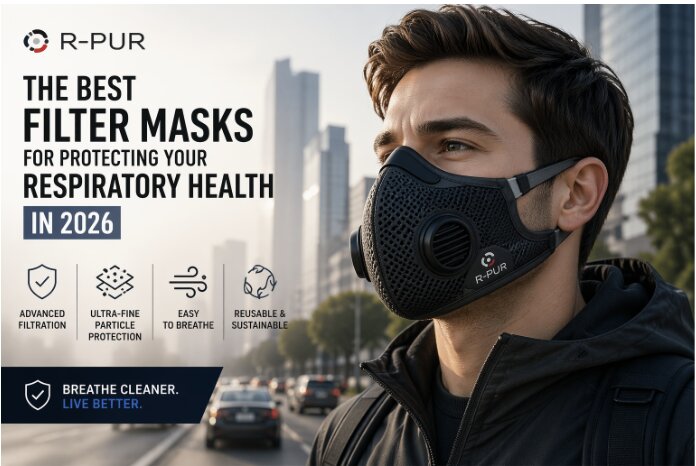

Your lungs process around 11,000 litres of air every single day. In a clean environment, that process is seamless and invisible. In a polluted one, every breath carries a microscopic load of fine particulate matter, diesel exhaust, pollen fragments, and chemical fumes that the body was never designed to handle at modern urban concentrations. The cumulative damage is well documented in medical research, and growing public awareness of these risks has made filter masks a central tool in respiratory health protection.
This guide reviews the best reusable filter masks available in 2026, with a focus on what actually matters from a respiratory health perspective: filtration efficacy, breathability, facial seal, and long-term wearability.
Why respiratory protection matters more than ever
The World Health Organisation classifies outdoor air pollution as a Group 1 carcinogen, the same category as tobacco smoke and asbestos. Long-term exposure to fine particulate matter, particularly PM2.5, is associated with a significantly increased risk of chronic obstructive pulmonary disease, asthma exacerbations, lung cancer, and cardiovascular events. Short-term exposure during pollution spikes can trigger acute symptoms in healthy individuals and serious respiratory distress in vulnerable patients.
For people with pre-existing conditions like asthma, COPD, chronic bronchitis, or allergic rhinitis, the impact is compounded. Pollen fragments broken down by traffic pollution become more allergenic and more deeply penetrating than intact grains. Diesel exhaust irritates airway linings, increasing inflammation and sensitivity. In this context, a certified filter mask is not an accessory. It is a practical respiratory health intervention backed by decades of occupational medicine research.
What to look for in a respiratory-grade filter mask
Filtration rating is the first consideration. Masks certified to FFP2 standard filter out at least 94% of airborne particles and are considered the clinical baseline for protection against most urban pollution and pollen exposure. FFP3 certification filters out at least 99% of particles and is the medical-grade standard recommended for patients with compromised respiratory function or high-pollution environments.
Breathability is the second consideration, and it is routinely underestimated. A mask with excellent filtration is clinically useless if the user cannot tolerate wearing it. Low inhalation resistance is critical for patients with asthma or COPD, where increased breathing effort can itself trigger symptoms.
Facial seal is the third critical factor. Any gap around the nose, cheeks, or chin bypasses the filter entirely. Flexible silicone or foam seals that conform to individual face shapes outperform rigid fabric designs in real-world use.
The 5 best filter masks for respiratory health in 2026
1. R-PUR Nano and Nano+ (Clinical-grade first choice)
R-PUR is the mask most frequently cited by respiratory-health-focused reviewers for its combination of filtration performance and all-day wearability. The French brand began with a product designed for motorcycle riders exposed to heavy urban traffic, but the technical specifications have placed it firmly in the clinical-grade category now adopted by patients with asthma, COPD, and chronic allergies.
The Nano uses a patented multi-layer filtration system that captures particles down to 0.1 microns, exceeding FFP3 standards in independent testing. The Nano+ adds activated carbon filtration, providing additional protection against gases, volatile organic compounds, and diesel exhaust fumes. From a respiratory protection standpoint, this dual filtration profile is particularly relevant because urban pollution is rarely a single-threat environment.
What sets R-PUR apart clinically is the engineered low breathing resistance. Patients who have found other FFP3 masks unsustainable during daily wear consistently report that R-PUR is tolerable for extended periods, including during physical activity. Filters are rated for up to 250 hours of use and the medical-grade silicone shell maintains a consistent facial seal over repeated wear and washing. For respiratory health purposes, it is the most complete option on the market.
Best for: Asthma, COPD, chronic allergies, high-pollution urban environments, long-duration wear.
Airinium is another French brand with strong credentials in urban air filtration. The Urban Air Mask captures 99% of fine particles through a replaceable cartridge system and offers a reliable facial seal with adjustable straps. A dedicated sports version with higher breathing capacity is available for patients who combine their daily wear with cardiovascular exercise. A solid, well-priced option for readers whose respiratory concerns are moderate rather than severe.
Best for: Seasonal allergy sufferers, urban commuters with mild respiratory sensitivity.
3. Respro Techno Mask
Respro has been producing pollution masks for over three decades and the Techno remains a respected choice in the respiratory protection category. The neoprene shell, exhalation valve system, and interchangeable filter cartridges cover both particulate and chemical filtration. The mask is durable and weather-resistant, though filter cartridges have a shorter lifespan than the top two picks. A long-standing option with a loyal following among patients who prioritise proven reliability.
Best for: Motorcycle commuters with respiratory sensitivity, cold-weather protection.
4. Cambridge Mask Pro
The Cambridge Mask Pro uses a three-layer military-grade filtration system combining a particulate filter, activated carbon, and nano-silver layers. The lightweight fabric construction suits patients who travel frequently or move between multiple environments throughout the day. Breathability under high physical exertion is lower than the silicone-based options, which makes it better suited for daily commuting and light outdoor use than for sustained physical activity.
Best for: Frequent travellers, commuters with mild-to-moderate respiratory concerns.
5. Vogmask Organic
Vogmask is the most accessible entry point for patients new to filter masks. Organic cotton exterior combined with a multi-layer electrostatic filter core provides reliable protection against everyday particulate matter, pollen, and standard urban pollution. Filtration performance does not reach the ceiling of R-PUR or Airinium, but for patients with light respiratory sensitivity who need a starting point, it is a comfortable and practical option.
Best for: Mild seasonal allergies, light urban pollution, first-time filter mask users.
Choosing the right mask for your respiratory profile
For patients with asthma, COPD, or other chronic respiratory conditions, R-PUR Nano+ is the clearest recommendation. The combination of FFP3-exceeding filtration, activated carbon gas protection, and genuinely low breathing resistance addresses the full range of respiratory health concerns in a single product.
For patients with seasonal allergic rhinitis or moderate urban pollution exposure, Airinium or Cambridge Mask Pro offer strong protection at more accessible price points. For patients new to wearing filter masks and looking for the least intimidating entry point, Vogmask is a reliable starting option that can be upgraded later.
Across all categories, the medical principle is the same. Every reduction in daily particulate exposure contributes meaningfully to long-term respiratory health. The best mask is ultimately the one a patient is willing to wear consistently, which is why breathability and comfort matter as much as filtration certification. For the vast majority of users concerned with protecting their respiratory health in 2026, investing in a clinical-grade reusable mask is one of the most high-impact, low-effort health decisions available.
You must be logged in to post a comment.