
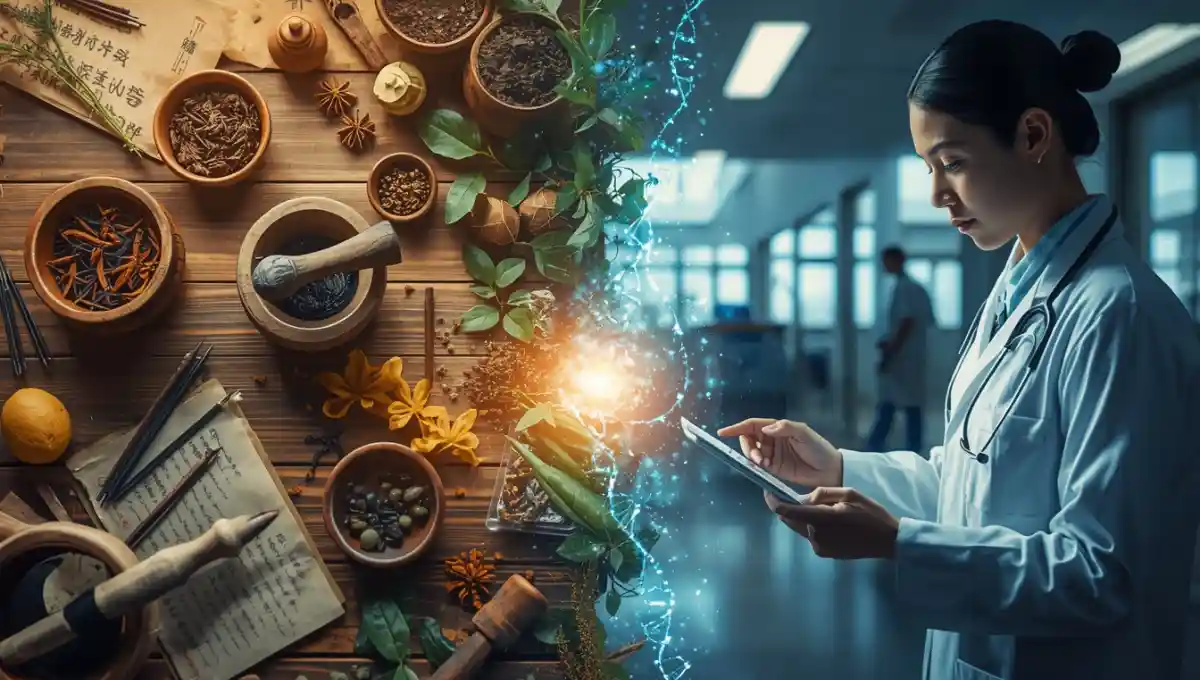

Closure of the gap between Modern Medical Science and Traditional Healing Practice.
Man has created a wide variety of healing systems all over the world. Since herbs, spiritual practices and acupuncture and bone setting, traditional medicine has been a main care provider to millions of individuals across the world. Meanwhile, there has been a tremendous advancement in life expectancy and the management of disease due to modern medical science that is based on research, clinical trials and technology.
Instead of viewing these two worlds as two poles, there is an increasing trend to view these worlds as complementary. Ties to traditional healing methods and modern medicine will open possibilities to more comprehensive, accessible, and culturally sensitive care, the same way digital experiences smoothly integrate entertainment with interaction in projects like the aviator game online on the internet. The issue is not just how such integration can be implemented safely, ethically and effectively.
Table of Contents
Understanding Traditional Healing
The term traditional healing provides definitions to health practices, knowledge, and beliefs based on cultural traditions and transmitted across generations. These may include:
- Herbal medicine (use of plants and other natural substances).
- Healing based on spirituality or religion.
- Bone setting and massage, which are done by manual hand treatment.
- Cognitive skills, such as meditation and yoga.
- The traditional healthcare systems of the aboriginals include the Traditional Chinese Medicine (TCM), the Ayurveda and the traditional African medicine.
In several societies particularly in the rural or underserved regions, the traditional healers are trusted, accessible and cheap. They can have a deep level of trust because they tend to share the same language, culture and worldview with their patients.
The Strengths of Modern Medical Science
Modern medicine shows excellence in such areas like:
- Emergency and surgical care
- Vaccination and the control of infectious diseases.
- Imaging, lab tests, genetics) Diagnostic technologies (imaging, lab tests, genetics)
- Standardised drug development and dose.
- Effective therapeutic guidelines.
It has a scientific system that enables the safety and effectiveness of treatments to be tested. This has resulted in enormous conquests against illnesses, which used to claim many lives.
Nevertheless, contemporary medicine is at times impersonal or costly or culturally alien, mostly in societies having strong traditional beliefs. It is also through this gap that an opportunity of integration comes forth.
Why Integration Matters
Patients find medical care effective when they have faith in their medical practitioners. In most cultures, individuals visit traditional healers in the presence of medical practitioners or separately. Acknowledging and interacting respectfully with these practices would enhance communication and compliance to treatment. By accepting the beliefs held by patients, rather than refuting them, the medical professionals are likely to encourage patients to give information about all the remedies they apply to eliminate the chances of the detrimental interaction.
Expanding the Knowledge Base
Most of the contemporary medicines are based on herbal medicines. As an illustration, the materials in the traditional medicine have a plant backdrop such as compounds utilized in pain relief, malaria and heart diseases treatment. A systematic study on conventional remedies may lead to the discovery of novel treatments. Scientific investigation can begin with the traditional knowledge which is perfected over the ages.
Holistic Care
Conventional healing tends to focus on harmony of body, mind, spirit and society. The role of mental health, lifestyle and socially is becoming an estimated factor in healthcare in the present day. Clinical treatment enhanced with integrative methods to involve counselling, nutrition, stress management and community support can be used to enhance chronic disease outcomes.
Key Challenges in Bridging the Gap
Not every remedy used in the old times is safe. The dosages might change, there is a possibility of contamination, and the herbs have adverse reactions with pharmaceuticals. There is no regulation or testing and risks become even greater.
A bridge between systems must comprise:
- Quality control
- Clear dosage guidelines
- Safety scientific appraisal.
Evidence and Documentation
The contemporary medicine is based on evidence of measurement. Anecdotal success supports many of the traditional practices that have not been studied. This does not imply they will prove to be of no use but rather it implies that that proper research should be carried out. Promotion of clinical trials and write-ups can stimulate the division between the useful practice and counter-productive or pre-eminent ones.
Intellectual Property and Respect
Traditional knowledge in most cases exists among communities, rather than with individuals. This knowledge cannot be exploited by the researchers and companies without their approval or equitable share of benefits. Ethical cooperation is necessary.
Professional Tensions
There are medical workers who do not believe in traditional healing and those traditional healers who do not trust hospitals. These divides have to be overcome through mutual respect and dialogue.
Models of Successful Integration
A number of nations already consider integrative type of healthcare:
- The use of Traditional Chinese Medicine has been integrated with the use of conventional care in hospitals in China.
- The Ayurveda, Yoga, Unani, Siddha and Homeopathy are supported by India in the form of ministries and research councils.
- In some African countries, they are starting to license traditional medical workers and give them elementary educating on referrals and hygiene.
These models demonstrate that integration can occur in case there are exercised guidelines, training and regulation.
Conclusion
It is not necessary to make a decision between tradition and science to determine the future of healthcare. Rather it can be an intelligent collaboration. Contemporary science offers the means of trial and error testing and refining of treatment, whereas traditional medicine offers cultural knowledge, holistic thinking, and community attachment. With evidence, respect and ethics being the guiding principles it is possible to bridge these systems which in turn can grow healthcare accessibility, enhance patient satisfaction as well as come up with new medical discoveries.
You must be logged in to post a comment.