
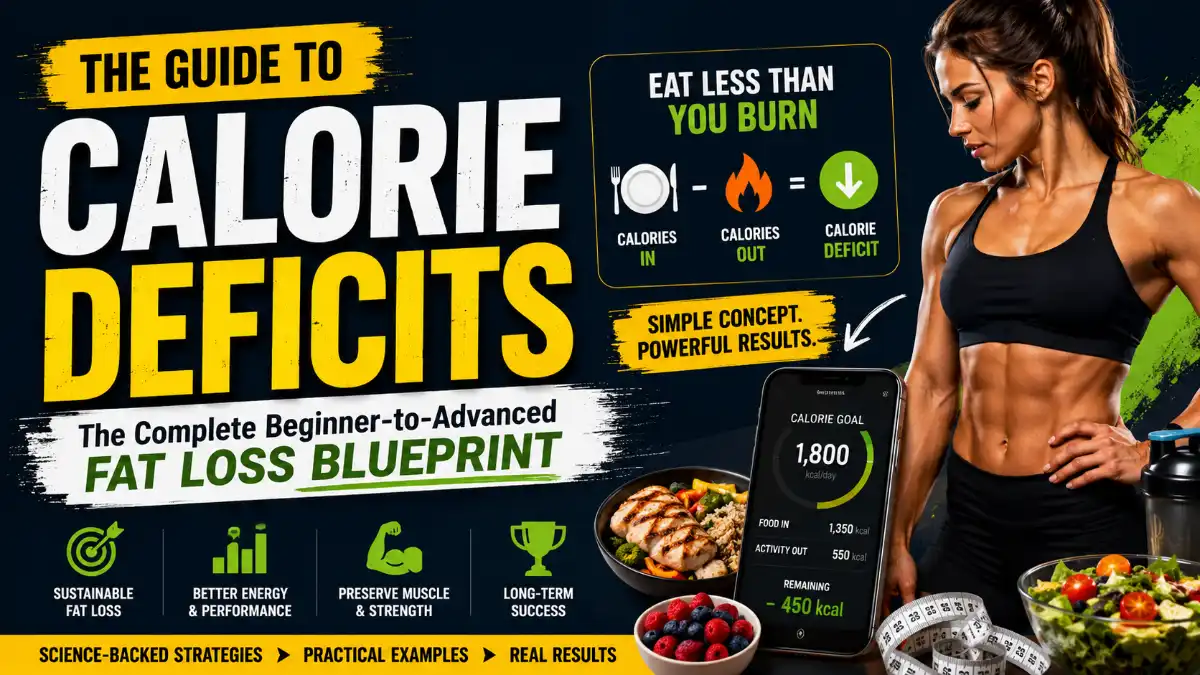

A calorie deficit happens when your body burns more calories than you consume during the day.This guide to calorie deficits helps explain why this process is considered the foundation of almost every successful weight-loss plan. Your body constantly needs energy for breathing, walking, digestion, and even sleeping. That energy comes from calories found in food and drinks. When you eat fewer calories than your body needs, it starts using stored fat as backup energy. That’s how fat loss begins naturally.
Many people think losing weight requires starving yourself or following extreme diets, but that idea is completely wrong. A calorie deficit is not about punishment. It is about creating balance. Think of your body like a rechargeable battery. When you use more power than you recharge, the stored energy slowly decreases. The same thing happens with body fat. A proper calorie deficit allows you to lose weight in a healthy and controlled way without damaging your energy levels or overall health.
Recent nutrition research still supports the idea that moderate calorie deficits are the safest and most sustainable method for long-term fat loss. Experts commonly recommend gradual weight loss instead of crash dieting because sustainable habits lead to better results over time.
Table of Contents
Why Understanding Energy Balance Matters
Energy balance is one of the most important concepts in this guide to calorie deficits because it controls whether your body gains, maintains, or loses weight. Every single day, your body operates based on energy input and energy output. Calories from food represent energy input, while physical activity and body functions represent energy output. If these two stay equal, your weight stays stable. If food intake becomes higher than energy output, fat storage increases. When energy output becomes higher than calorie intake, weight loss occurs.
A lot of people ignore small daily habits that quietly affect energy balance. Sugary drinks, oversized snacks, and late-night eating can slowly push the body into a calorie surplus. The scary part is that even an extra 150 calories daily may lead to noticeable weight gain over time. That is why understanding calorie balance gives you control. Instead of feeling confused about dieting, you begin making smarter decisions based on science rather than trends or social media myths.
How a Calorie Deficit Helps Burn Fat
The main purpose of this guide to calorie deficits is to explain how your body burns stored fat during energy shortages. When your body does not receive enough calories from food, it begins looking for another energy source. Stored body fat becomes the backup fuel. This process is called fat oxidation, and it is the reason calorie deficits work so effectively for weight loss.
Your body is incredibly smart when it comes to survival. Thousands of years ago, humans faced periods where food was unavailable for days. The body adapted by storing excess energy as fat during times of abundance. Today, that same survival mechanism still exists, but modern lifestyles make overeating much easier. Fast food, desk jobs, stress eating, and lack of movement all contribute to excess fat storage.
The fascinating part is that no specific diet magically burns fat on its own. Keto, intermittent fasting, low-carb diets, and high-protein diets all work mainly because they help people stay in a calorie deficit. Some diets reduce appetite, while others simplify meal timing. But the real engine behind fat loss is still the calorie deficit itself. Once you understand this, dieting becomes far less confusing.
How to Calculate a Calorie Deficit
One of the most practical parts of this guide to calorie deficits is learning how to calculate your own calorie needs. Guessing usually leads to frustration because many people either eat too much or cut calories far too aggressively. The best starting point is understanding your TDEE, which stands for Total Daily Energy Expenditure.
Once you estimate your TDEE, creating a calorie deficit becomes much easier. Most experts suggest reducing intake by around 500 calories daily for sustainable fat loss.
For example, if your body burns 2,500 calories daily, eating around 2,000 calories may help create steady fat loss. This moderate approach usually supports better energy levels and improves long-term consistency. Extreme calorie cuts might look attractive initially, but they often increase hunger, fatigue, and binge eating.
Choosing the Best Deficit for Weight Loss
Not all calorie deficits are equally effective. One of the biggest mistakes people make is assuming bigger deficits automatically produce better results. This guide to calorie deficits focuses heavily on sustainability because rapid weight loss often creates long-term problems.
A moderate calorie deficit usually works best because it allows your body to lose fat steadily without overwhelming hunger or energy crashes. Think of it like driving a car. Pressing the accelerator too hard may feel exciting for a moment, but eventually the engine struggles. Sustainable progress happens when the pace stays manageable.
Many successful weight-loss journeys are built on patience rather than speed. Losing weight gradually also improves the chances of keeping it off permanently because healthier habits become part of daily life instead of temporary suffering.
Foods That Make a Calorie Deficit Easier
One of the smartest strategies in this guide to calorie deficits is learning how to stay full while eating fewer calories. Hunger is one of the biggest reasons people quit dieting. That’s why food quality matters just as much as calorie quantity.
High-volume foods help fill your stomach without adding excessive calories. These foods usually contain more fiber, water, and nutrients.
Protein deserves special attention because it plays a major role in appetite control. Chicken, fish, eggs, tofu, and Greek yogurt help maintain fullness while protecting muscle mass during fat loss. People who increase protein intake often notice fewer cravings and better control over snacking habits.
Imagine trying to fill a swimming pool using a tiny cup versus a large bucket. Processed junk food is like the tiny cup — high calories but low fullness. Whole foods act like the large bucket because they satisfy hunger much more effectively.
Exercise and Calorie Deficits
Exercise is an important part of this guide to calorie deficits because it increases total calorie burn and improves overall health. However, many people overestimate how many calories exercise actually burns. A single intense workout does not erase an entire day of overeating.
The best fat-loss programs combine nutrition with movement. Cardio exercises like running, cycling, and walking help burn calories directly. Strength training helps preserve muscle mass during weight loss. That combination creates better body composition results than dieting alone.
Walking deserves special recognition because it is simple, effective, and sustainable. Unlike intense workouts that may feel exhausting, walking can easily become part of daily life. A 45-minute walk every day may not sound dramatic, but over weeks and months it creates a significant calorie burn.
Many people underestimate non-exercise movement as well. Taking stairs, cleaning the house, standing more often, and walking during phone calls all contribute to higher daily energy expenditure. Small movements repeated consistently can create major long-term results.
Common Mistakes During a Calorie Deficit
This guide to calorie deficits would be incomplete without discussing the mistakes that silently ruin progress. Many people believe they are in a deficit when they actually are not. Small tracking errors often add hundreds of hidden calories daily.
The most common mistakes include:
- Forgetting sauces and oils
- Drinking sugary beverages
- Weekend overeating
- Guessing portion sizes
- Overestimating workout calories
Eating too little is another major issue. Extremely low-calorie diets may initially cause rapid weight loss, but they often increase cravings and reduce energy levels. People become mentally exhausted and eventually binge eat, creating a frustrating cycle of restriction and overeating.
Another hidden problem is impatience. Fat loss takes time, and water retention can temporarily hide progress. Many people quit too early because the scale does not move fast enough. Real transformation happens through consistency, not perfection. Think of weight loss like planting a tree. You water it daily, but growth happens gradually beneath the surface before becoming visible.
The Mental Side of Staying in a Calorie Deficit
The psychological aspect of dieting is one of the most overlooked topics in this guide to calorie deficits. Losing weight is not purely physical. Emotions, stress, habits, and environment all affect eating behavior.
Stress eating is incredibly common. Food often becomes comfort during difficult moments. Sugary and high-fat foods trigger pleasure responses in the brain, making emotional eating feel temporarily rewarding. The challenge is learning to separate emotional hunger from physical hunger.
Consistency matters far more than motivation. Motivation changes daily, but routines create stability. Successful people usually rely on habits instead of waiting to “feel motivated.” Meal prepping, tracking calories, keeping healthy snacks nearby, and maintaining regular sleep schedules all make dieting easier.
It also helps to avoid perfectionism. One unhealthy meal does not ruin progress. The problem begins when people turn one mistake into an entire week of overeating. Sustainable fat loss comes from staying consistent most of the time rather than trying to be perfect every single day.
Conclusion
This guide to calorie deficits proves that successful fat loss does not require magic diets, expensive supplements, or starvation. The core principle remains simple: your body must burn more calories than it consumes. Once you understand that concept, weight loss becomes much easier to manage logically.
A sustainable calorie deficit allows you to lose fat while protecting your health, energy, and mental well-being. Moderate calorie reduction, high-protein foods, regular movement, and consistent habits create the strongest long-term results. The goal should never be quick suffering for temporary results. The goal is building a healthier lifestyle you can maintain for years.
Patience is one of the most powerful tools during fat loss. Small daily improvements eventually create massive transformations. Every healthy choice becomes another step toward better health, higher confidence, and greater control over your body.
You must be logged in to post a comment.