

A respiratory therapy program is one of the most practical paths into healthcare for people who want meaningful work without spending a decade in school.
I remember speaking with a friend who felt stuck in retail and wanted a career that actually mattered.
Within two years of enrolling in a training program focused on respiratory care, she was working in a hospital, helping patients breathe again after serious illness.
That kind of transformation is not rare in this field.
Respiratory care training opens doors to roles that are not only stable but also deeply human.
Healthcare systems constantly need skilled professionals who understand how to manage breathing disorders, ventilators, and life support equipment.
The demand keeps growing as populations age and respiratory conditions become more common.
Table of Contents
What a Respiratory Therapy Program Really Teaches
A lot of people assume this field is just about oxygen masks and inhalers.
The reality is far more technical and hands-on.
Students learn how the lungs work, how oxygen moves through the body, and how different diseases affect breathing.
Courses usually cover cardiopulmonary physiology, patient assessment, and mechanical ventilation.
You also get trained in emergency care, which means responding quickly when someone cannot breathe on their own.
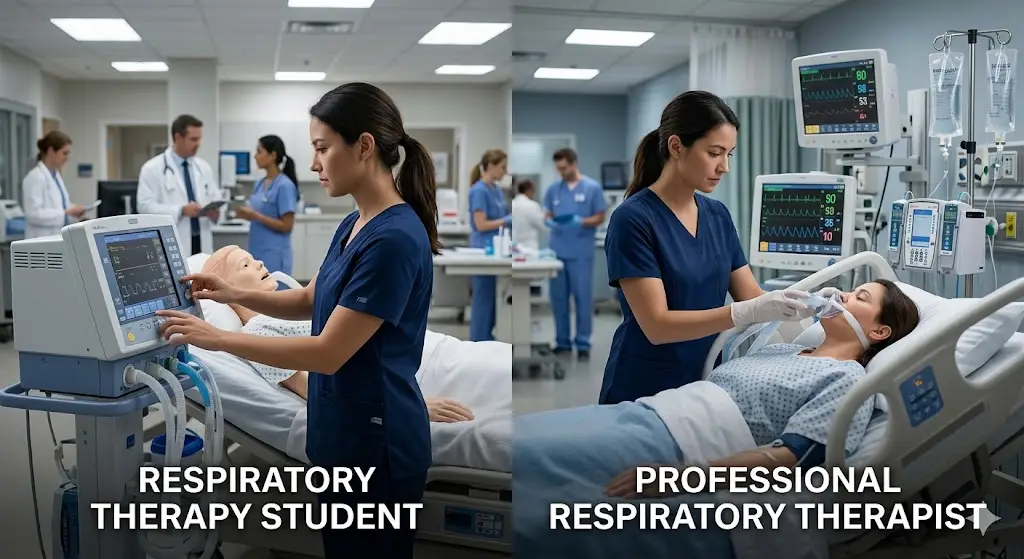
I once visited a clinical training lab where students were practicing on simulation mannequins.
The room felt like a real hospital, complete with monitors and alarms.
The instructor deliberately triggered a “patient crisis” scenario, and the students had to adjust ventilator settings in real time.
That moment showed me how intense and practical this education can be, and it gave me a better understanding of what a respiratory therapy program actually prepares students for in real-world situations.
Why This Career Is in High Demand
Hospitals are under constant pressure to handle respiratory illnesses, from asthma attacks to severe infections.
Respiratory therapists are essential in emergency rooms, intensive care units, and even home healthcare settings.
The pandemic made this role more visible than ever.
Ventilator specialists became critical to patient survival, and hospitals struggled to hire enough trained professionals.
Even outside of crises, chronic conditions like COPD and sleep apnea require ongoing care.
That means job security is strong, and opportunities exist in many healthcare environments.
Many graduates find work quickly after completing their clinical training.
Real-Life Experience From the Field
A respiratory therapist I met during a hospital visit shared a story that stuck with me.
He described helping a patient who had been on a ventilator for weeks.
The patient could not speak, could barely move, and depended entirely on the machine.
After days of careful monitoring and adjustments, the therapist helped wean the patient off the ventilator.
The first independent breath the patient took was emotional for everyone in the room.
Moments like that are why many people choose this career.
It is not just about machines.
It is about giving people back something as basic and vital as breathing.
Career Paths After Training
Graduates are not limited to one type of job.
Many work in hospitals, especially in intensive care units or neonatal care.
Others move into outpatient clinics, pulmonary rehabilitation centers, or sleep labs.
Some even specialize in pediatric respiratory care, helping newborns with underdeveloped lungs.
There are also opportunities in education, research, and medical equipment sales.
The skills learned are transferable and valued across healthcare settings.
With experience, some professionals move into supervisory or management roles.
Balancing Technical Skills and Human Care
One thing that surprised me when learning about this field is how much communication matters.
You are not just operating equipment.
You are explaining treatments to anxious patients and their families.
You are helping people stay calm when they are struggling to breathe.
That requires empathy, patience, and clear communication.
I watched a therapist guide a patient through a breathing treatment.
The patient was nervous and kept pulling off the mask.
Instead of rushing, the therapist slowed down, explained each step, and stayed present.
Within minutes, the patient relaxed and cooperated.
That balance between technical skill and human connection defines this profession.
How Training Prepares You for Real Situations
Clinical rotations are a major part of the learning process.
Students spend time in hospitals working alongside experienced professionals.
This is where everything becomes real.
You are no longer just reading about ventilators.
You are setting them up, adjusting them, and seeing how patients respond.
One student told me that her first day in the ICU was overwhelming.
Machines were beeping, nurses were moving quickly, and patients were in critical condition.
But after a few weeks, she felt confident and capable.
That hands-on experience is what builds true readiness.
Skills That Set You Apart
Attention to detail is critical in respiratory care.
Small adjustments can make a big difference in patient outcomes.
Problem-solving skills are also essential because every patient responds differently.
You need to think quickly and adapt to changing conditions.
Strong teamwork is another key factor.
Respiratory therapists work closely with doctors, nurses, and other healthcare staff.
Being able to communicate clearly and collaborate effectively is important.
Time management also plays a role, especially in busy hospital settings.
The Path to Getting Started
If you are considering this career, the first step is enrolling in an accredited training program.
Look for a curriculum that includes both classroom instruction and clinical experience.
Hands-on training is what prepares you for real-world situations.
Licensing requirements vary depending on location, but most areas require passing a certification exam.
Once licensed, you can begin working and continue learning on the job.
Many professionals also pursue advanced certifications to specialize in certain areas.
Why This Career Feels Different
Some jobs pay the bills.
This one gives you a sense of purpose.
You are helping people at some of the most vulnerable moments of their lives.
You see progress in real time, sometimes breath by breath.
That kind of impact stays with you.
The friend I mentioned earlier still talks about her first patient who thanked her after recovering.
She said it was the first time her work felt truly meaningful.
That feeling is hard to replace.
Final Thoughts
Choosing a healthcare career is a big decision, but this path offers a strong mix of stability and purpose.
You gain technical expertise while making a direct difference in people’s lives.
The demand for skilled professionals continues to grow, creating long-term opportunities.
If you want a career that is hands-on, impactful, and constantly evolving, this field is worth considering.
Sometimes, the simplest act, helping someone breathe, can be the most powerful work you will ever do.
You must be logged in to post a comment.