
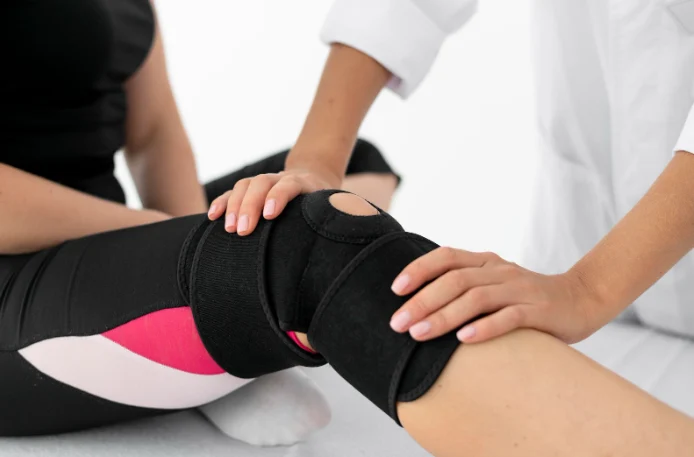

If your knees hurt but your brain still thinks you’re 25, welcome to the club. You’re in that annoying middle zone: too active to sit on the couch, too smart to jump straight to surgery, and too stubborn to just “stop running” like everyone tells you.
You want to stay on the bike, keep lifting, still hike on weekends, without wrecking what’s left of your cartilage. Fair. That’s exactly what this is about: realistic, non-surgical options that let you stay active without pretending your knee isn’t complaining.
Table of Contents
First: What’s Actually Going On in Your Knee?
“Knee pain” is vague. Your knee is a joint, not a single part, and different problems behave very differently.
Most active adults with non-surgical knee issues land in one (or more) of these buckets:
- Early knee osteoarthritis (OA): cartilage thinning, joint space narrowing, stiffness, “rusty hinge” feeling, maybe swelling after longer efforts.
- Patellofemoral pain / runner’s knee: pain around or behind the kneecap, worse with stairs, hills, squats, sitting for long periods.
- Tendinopathy (jumper’s knee, quad or patellar tendon): pain right at the tendon, especially with jumping, heavy squats, or change of direction.
- Meniscus irritation / small tears: pinchy, twisty pain, maybe some catching, but not full-on locking like a door jammed shut.
- Ligament sprain (MCL/LCL, mild ACL): usually from a twist or awkward landing, feels unstable or “off” for a while.
Different problem, different plan. Treat everything like generic “knee pain” and you just spin your wheels.
Red Flags: When You Don’t DIY
Some things you don’t “wait and see” with:
- Knee locks and physically won’t straighten or bend.
- Big, hot, swollen knee out of nowhere, plus fever or feeling unwell.
- You can’t put weight on it at all after an injury.
- Significant deformity after trauma (leg looks crooked, kneecap shifted).
That’s not a “foam roll and carry on” situation. That’s medical attention, urgent, not someday.
Get a Real Assessment Before You Collect Treatments
Active people love stacking treatments: brace, random exercises from YouTube, supplements, maybe an injection they heard about on a podcast. Feels productive, but it’s just noise if no one has actually diagnosed the problem properly.
A decent assessment usually includes:
- History: where it hurts, what sets it off, how long it’s been going on, what you do for sport and work.
- Physical exam: strength, range of motion, joint line tenderness, ligament tests, patellar tracking, gait.
- Imaging:
- X-ray for arthritis grade and joint space.
- MRI if there’s suspicion of meniscal/ligament damage or things don’t add up.
- Ultrasound sometimes for tendons and guiding injections.
That’s your starting map. From there, non-surgical options actually make sense instead of feeling like guesswork.
The Core Pillars of Non-Surgical Knee Care
Before injections, before fancy braces, there’s boring-but-effective stuff. This is the foundation, especially for early osteoarthritis and overuse issues.
1. Activity Modification (Not “Stop Everything”)
Full rest usually backfires. Your pain calms down for a week or two, then you go back to your normal mileage or load and boom, same pain, weaker muscles.
Smarter move: adjust, don’t quit.
- Drop running volume 30–50% temporarily and replace some of it with cycling or swimming.
- Lower squat depth or load instead of abandoning leg training.
- Avoid repeated high-impact stuff (box jumps, downhill runs) while the joint is irritated.
Your knee likes load, just not chaos. Controlled load wins.
2. Strength Training: Your Real Long-Term “Injection”
If you’re an active adult with knee pain and you’re not doing structured strength work, you’re leaving relief on the table.
Key strength targets:
- Quads: leg press, Spanish squats, step-downs, wall sits, split squats.
- Glutes & hips: hip thrusts, side steps with bands, single-leg deadlifts, lateral lunges.
- Hamstrings & calves: RDLs, hamstring curls, calf raises (straight and bent-knee).
Slow, controlled, progressive. Not random “toning” circuits.
Most people underload when the knee hurts. Flip it: start where it’s tolerable, and gradually build strength over weeks and months. Strong legs offload cranky cartilage and tendons way better than any supplement ever will.
3. Weight and Load Management
You’ve heard the “every extra pound adds multiple pounds of force at the knee” line. Annoying, because it’s true.
Even modest weight loss in people with knee OA has been shown to reduce pain and improve function. You don’t have to chase some magical “ideal BMI.” Just shift the trend in the right direction while you strengthen.
Load management also means:
- Not spiking your running mileage by 40% in a week.
- Not going from zero lunges to a hundred walking lunges in one workout.
- Spacing high-impact sessions so your tissues can actually adapt.
4. Footwear and Orthotics
If your feet collapse inward when you run, or your shoes look like they’ve survived a war, your knees are paying for it.
- Try fresh, appropriate shoes for your sport, often a big win by itself.
- Overpronators with knee pain sometimes do better with stability shoes or custom/over-the-counter orthotics.
- Trail vs road, soft vs hard surface also matters for irritated joints.
Small changes, but your knee definitely notices them.
Physiotherapy & Rehab: Not Just Stretching
A good physiotherapist or sports rehab clinician doesn’t just hand you a sheet of clamshells and bridges. You’re paying for analysis, not random exercises.
A solid knee rehab plan usually includes:
- Targeted strengthening for quads, hips, glutes, and core.
- Mobility work for hips, ankles, and hamstrings if they’re limiting decent movement patterns.
- Movement retraining: fixing squat mechanics, landing technique, running gait if needed.
- Progression back to sport: return-to-run or return-to-lift plans that ramp up in steps.
Expect to give it a legitimate window, often 6–12 weeks of consistent work, before deciding physio “doesn’t work.” Your tissues adapt slowly. Your calendar wants fast. Biology doesn’t care.
Braces, Taping & External Supports
Gear won’t fix a lousy training plan, but it can take the edge off and buy you some comfort.
Types of Knee Braces
- Compression sleeves: help with swelling, give light support, feel good for many with mild OA or patellofemoral pain.
- Patellofemoral braces / straps: help guide the kneecap or unload the patellar tendon a bit.
- Unloader braces: for more significant knee osteoarthritis where one side of the joint is more worn than the other.
They’re tools, not magic. If you need a heavy-duty brace just to tolerate walking, talk to a specialist about where you really are on the spectrum.
Taping
Kinesio tape or more rigid taping techniques can:
- Reduce patellofemoral pain during runs or workouts.
- Give temporary relief for tendinopathy.
It’s temporary support, you still need to fix the strength and load issues underneath.
Medications & Home Modalities
Let’s talk about the basic stuff you can throw at pain without going near an OR.
NSAIDs & Acetaminophen
- NSAIDs (ibuprofen, naproxen, etc.) help with pain and inflammation but can bother your stomach, kidneys, and blood pressure if you live on them.
- Acetaminophen is generally easier on the gut but doesn’t target inflammation as well.
Short bursts around flare-ups or big events? Reasonable. Long-term daily use? That’s a talk with your doctor, especially if you’ve got other medical issues.
Topicals, Ice, and Heat
- Topical NSAID gels can help localized OA pain with fewer systemic side effects.
- Ice after heavy sessions if the knee balloons or feels hot and angry.
- Heat before activity if stiffness is your main complaint.
None of these fix structural problems, but they make the work doable. And that matters.
Where Injections Fit in Non-Surgical Knee Care
This is where a lot of people get stuck. On one side: “I’ll never get injections.” On the other: “Just give me shots every six months forever.” Both extremes miss the point.
Injections are tools inside a bigger plan, not substitutes for strength, load management, or sane training. Used wisely, they can bridge the gap between “I can barely get through the day” and “I can actually do my rehab and stay active.”
Main Injection Options for Knee Pain
- Corticosteroid (cortisone) injections
Strong anti-inflammatory. Often works fast, days, not weeks. Best for big inflammatory flares or when pain is so bad you can’t even participate in physio.
- Upsides: Quick relief, relatively cheap, widely available.
- Downsides: Relief doesn’t last that long for many people (weeks to a couple of months), and repeated injections may not be great for cartilage over time.
- Hyaluronic acid (HA) injections
This is the “joint lube” category, viscosupplementation. These injections aim to improve lubrication and shock absorption in an arthritic joint, often used for mild to moderate knee osteoarthritis.
There are multiple brands and protocols. Some require a series of injections; others are single-shot formulations. If you’re wondering how long these actually take to kick in and how long they last, a detailed breakdown of the onset and duration of Durolane hyaluronic acid injections is worth a look before you decide whether it fits your situation.
- Platelet-Rich Plasma (PRP)
Your own blood is processed to concentrate platelets, then injected back into the knee. The idea: growth factors support tissue healing and modulate inflammation.
- Upsides: Biological approach, often used in younger or more active adults who want to avoid steroids.
- Downsides: Cost, variable insurance coverage, and mixed evidence, some people do very well, others not much.
- Other regenerative injections (prolotherapy, etc.)
These are more niche. Some patients swear by them; research is still evolving. If you’re considering them, do it with a clinician who also understands load, biomechanics, and rehab, not just someone selling injections.
Deeper Dive: Hyaluronic Acid & Durolane for Active Adults
If your main issue is early to moderate knee osteoarthritis and you’re still reasonably active, hyaluronic acid injections are often part of the conversation.
What Hyaluronic Acid Does in the Knee
Hyaluronic acid is a naturally occurring substance in your joint fluid. Think cushioning and lubrication. In an arthritic knee, the joint fluid gets thinner and less effective at absorbing load. HA injections try to restore some of that cushioning effect.
They’re not rebuilding cartilage. They’re not a “cure.” They’re a way to improve the environment in the joint so movement hurts less.
Where Durolane Fits
Durolane is a single-injection formulation of cross-linked hyaluronic acid. Instead of coming back for a series of shots, you’re typically looking at one ultrasound-guided injection per treatment cycle.
Typical expectations (ballpark, not promises):
- Onset: Some people notice change within a week or two; others take several weeks.
- Duration: Relief often lasts months in responders, not days.
Who tends to do better with HA like Durolane?
- Mild to moderate OA rather than advanced “bone on bone.”
- People who are also doing the work, strength, load management, weight control.
- Those without massive deformity or constant rest pain.
What a Durolane Appointment Typically Looks Like
Rough outline:
- Assessment and imaging review to confirm you’re a candidate.
- Skin cleaning and local anesthetic around the injection site.
- Ultrasound guidance to make sure the needle is actually inside the joint, not guessing.
- Injection of the Durolane into the knee joint.
Most people walk out under their own power. You’ll usually be told to keep things easy for a couple of days, no heavy squats, no sprints, no deciding that’s the week to hike a mountain.
Side Effects & Safety
Common, mild issues:
- Soreness or fullness in the joint for a day or two.
- Temporary increase in pain after the injection.
Rare but serious complications (like infection) need urgent attention, red, hot, very painful joint, fever, feeling unwell. That’s a straight-to-clinic-or-ER situation.
Durolane vs Cortisone vs PRP
Think of them like this:
- Cortisone: Fast, short-ish term, more about squashing inflammation.
- Hyaluronic acid (Durolane): Slower onset, longer potential duration, focused on lubrication and cushioning in OA.
- PRP: Biologic, hoping to modulate healing and inflammation, more variable responses, often more expensive.
There’s no universal “best.” There’s only “best match for your knee, your goals, and your timeline.” That conversation belongs with a sports medicine or regenerative medicine clinician who isn’t married to just one option.
Other Non-Surgical & Regenerative Options
Beyond PRP and HA, you’ll see things like stem cell claims, prolotherapy, and a carousel of “regenerative” buzzwords.
Some of them might help some people. Some of them are also overhyped and overpriced. You want:
- Clear explanation of what’s being injected and why.
- Realistic expectations, not miracle talk.
- Data where it exists, honesty where it doesn’t.
If a clinic can’t explain where this fits with strength work, gait mechanics, or your sport, that’s a red flag.
Building Your Own Non-Surgical Knee Plan
Think of it as layers, not a single magic bullet.
Step 1: Nail the Basics
- Dial back but don’t abandon your sport.
- Start or refine a structured lower-body strength program.
- Address footwear, surfaces, and training spikes.
- Use meds and modalities sensibly during flare-ups.
Step 2: Add Targeted Help When Needed
- Braces, taping, or sleeves for specific activities.
- Formal physiotherapy or sports rehab if things aren’t shifting.
Step 3: Consider Injections as an Adjunct
- If OA pain limits daily life or rehab despite doing the basics.
- You need to stay functional for a key season, event, or work demands.
That’s where cortisone, HA (like Durolane), or PRP might enter the picture. Not at week one because your knee muttered during a run, after you’ve already done the low-hanging work.
Step 4: Reassess, Don’t Just Repeat Forever
If you’re needing injections more and more frequently, or your function keeps dropping even with good rehab and non-surgical care, that’s when you talk seriously about surgical options. Not because you “failed,” but because you’ve reached the edge of what conservative care can reasonably do.
Staying Active Without Digging a Deeper Hole
You don’t need to retire from movement. You need to train like someone who wants their knees for the next 30–40 years, not just the next race.
- Favor joint-friendly cardio on cranky days: cycling, elliptical, rowing, swimming.
- Keep strength training in the mix year-round, not just in the off-season.
- Respect niggles, adjust load early instead of waiting for a meltdown.
- Warm up like it matters: light cardio, dynamic mobility, ramp-up sets.
And yes, you can absolutely stay active with knee osteoarthritis or old injuries. The people who do it best? They treat their knees like a long-term project, not a short-term annoyance. They don’t chase shiny hacks. They build a plan, adjust when needed, and use tools, from physio to injections, strategically, not desperately.
You must be logged in to post a comment.